
Players who participated in the PC open beta for Marvel Tōkon: Fighting Souls encountered a host of technical problems, leading to widespread frustration. The development team, Arc System Works, confirmed on X (formerly Twitter) that they are 'actively investigating these issues and working on a fix.' This suggests an immediate focus on diagnosing and rectifying the underlying problems. For those who pre-ordered or are anticipating the game's full release on August 6, 2026, the situation creates uncertainty about whether these critical performance flaws will be resolved in time. The apology implies that the issues are significant enough to warrant public acknowledgment and dedicated resources for a solution.
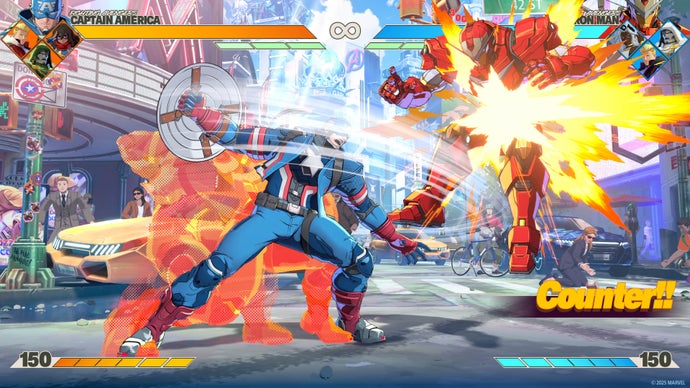
Image: courtesy of EuroGamer
Marvel Tōkon: Fighting Souls PC Port Faces Backlash Over Performance, Raising Questions on Sony's Anti-Datamining Strategy
The developers behind *Marvel Tōkon: Fighting Souls* have issued an apology for significant 'gameplay and performance issues' plaguing the PC version's open beta. Players reported severe technical problems including low frame rates, stuttering, and high CPU usage. The apology comes amidst reports suggesting these issues may stem from aggressive anti-datamining measures implemented by publisher PlayStation Publishing LLC, raising concerns about the game's launch on August 6, 2026.
Outlook
Background
The open beta for Marvel Tōkon: Fighting Souls, a 4v4 tag team fighter, was widely available in July 2026, giving players a chance to experience the game before its official launch. While reports suggest the PlayStation 5 version offered a largely smooth experience, the PC port was a different story entirely. Users reported consistent low frame rates, noticeable stuttering, and unusually high CPU usage, even on powerful hardware. Eurogamer.net cited one player describing the PC demo's performance as akin to a 'retired stripper,' highlighting the severity of the user experience.
Adding a layer of complexity to the performance woes, Vice reported that the game's technical problems on PC are reportedly linked to efforts by Sony, through its publishing arm PlayStation Publishing LLC, to prevent datamining. Datamining involves players sifting through game files to uncover unreleased content, story elements, or future plans. If these aggressive security measures are indeed the cause, it would represent a trade-off: protecting future content at the expense of current game performance. This strategy, if confirmed, indicates a clear institutional priority on content control, potentially overlooking the technical strain on PC hardware and the user experience. The timing is particularly sensitive, with the full game's release just around the corner on August 6.
See also
Precedents
The struggles of Marvel Tōkon: Fighting Souls on PC are not an isolated incident within Sony's broader push into the PC market. PlayStation Studios has a growing history of porting its console exclusives to personal computers, often with mixed initial results. Titles like The Last of Us Part I and Horizon Zero Dawn both faced significant performance issues upon their PC debut, drawing criticism from players and reviewers. While these games eventually received patches that improved stability and performance, their rocky launches created a perception of inconsistent quality control for PlayStation PC ports.
This pattern suggests a recurring challenge in optimizing complex console titles for the diverse and often fragmented PC hardware ecosystem. It also raises questions about Sony's internal testing protocols for PC versions and the resources allocated to ensure a smooth launch. The alleged link to anti-datamining measures in Marvel Tōkon: Fighting Souls introduces another dimension, implying that strategic corporate objectives, such as intellectual property protection, might be influencing technical decisions in ways that negatively impact performance. This creates a tension between business imperatives and player expectations for a high-quality product.
The performance issues surrounding Marvel Tōkon: Fighting Souls carry significant stakes for several parties. For PC players, it is another example of a high-profile title launching with frustrating technical flaws, eroding trust in pre-release promises and beta experiences. This repeated pattern can lead to reduced pre-orders, delayed purchases, and a general reluctance to engage with new PC ports from specific publishers.
For PlayStation Publishing LLC, the publisher, and by extension Sony, the situation jeopardizes its expanding PC strategy. Sony has been vocal about growing its presence in the PC market to reach new audiences and diversify revenue. A string of poorly optimized PC ports, especially one where performance issues are linked to an anti-consumer measure like aggressive anti-datamining, can severely damage its reputation among PC gamers. This could lead to long-term skepticism, impacting sales of future PlayStation titles ported to PC.
Furthermore, for Arc System Works, the developer known for critically acclaimed fighting games, these issues could overshadow their work and craftsmanship, even if the underlying cause is a publisher-mandated security measure. Ultimately, this situation highlights the critical balance developers and publishers must strike between protecting intellectual property, meeting release deadlines, and delivering a polished, enjoyable experience to players across all platforms. Failing to do so can have lasting consequences on brand loyalty and market perception.
Scenarios
AnalysisThe immediate future for Marvel Tōkon: Fighting Souls on PC presents several possible paths, each with varying implications for players and the publishers involved.
One possible outcome is that Arc System Works and PlayStation Publishing LLC could release a substantial day-one patch on August 6, 2026, that addresses the most severe performance issues. This would be a reactive measure, aiming to mitigate the damage of the beta and deliver a more playable experience at launch. However, such a patch would need to be robust enough to convince skeptical players who experienced the beta's problems. If the alleged anti-datamining measures are indeed the root cause, a quick fix might be challenging without compromising the security objective.
Alternatively, the game might launch on August 6 with many of the performance problems still present. This could lead to a wave of negative user reviews, potentially impacting initial sales and creating a lasting perception of a 'broken' PC port. In such a scenario, the developers would likely continue to release incremental patches post-launch, as seen with other problematic PC ports. This approach, however, forces early adopters to endure a suboptimal experience and could deter new players from buying the game until it is significantly improved.
A third scenario involves PlayStation Publishing LLC publicly addressing the alleged anti-datamining link. If the company were to confirm that these measures contributed to performance issues and outline how they plan to balance security with optimization, it could help rebuild some player trust. However, this is a less common corporate response, as it would involve acknowledging a potentially contentious trade-off. Without such transparency, players may continue to speculate about the underlying causes, further fueling dissatisfaction.
Timeline
2026-07
Open Beta Release
The open beta for *Marvel Tōkon: Fighting Souls* becomes available on PC, revealing significant gameplay and performance issues to players.
2026-07-26
Developer Apology Issued
The official *MARVEL Tōkon: Fighting Souls* X account posts an apology, acknowledging 'gameplay and performance issues' on the PC version and stating the team is investigating.
2026-08-06
Official Game Release
The full version of *Marvel Tōkon: Fighting Souls* is scheduled to launch on PC and other platforms.
Frequently Asked Questions
Players reported a range of problems during the open beta, including consistently low frame rates (FPS), noticeable stuttering, and unusually high CPU usage, even on high-end gaming systems.
Discussion
Be the first to share your thoughts.