
Audiences should prepare for a visual experience that defies the traditional boundaries of fashion photography and film. The project leans into the 'uncanny valley,' a space Kojima has spent decades exploring through his game development, to create environments that feel hyper-real yet fundamentally alien. Unlike standard fashion campaigns, this event functions as an experiment in synthetic storytelling where the algorithm is expected to contribute to the creative vision rather than just execute it. Expect a high-concept, polished aesthetic that forces viewers to question whether they are looking at human-curated art or machine-generated output. The collaboration aims to define the 'look' of the next decade, focusing on experiential impact over simple product placement.
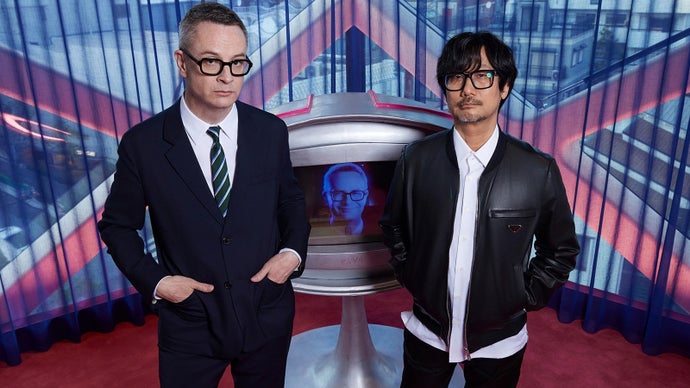
Image: courtesy of EuroGamer
The Silicon Muse: How Kojima and Refn are Redefining Luxury Through AI
Hideo Kojima and Nicolas Winding Refn have entered a high-stakes partnership with Prada, utilizing the 'Prada Mode' platform to experiment with generative AI as a primary creative tool. This isn't just a marketing collaboration; it represents a fundamental shift in how luxury brands plan to integrate synthetic intelligence into their visual and conceptual identities. By blending the cinematic, game-engine-driven obsession of Kojima with the visceral, neon-soaked aesthetic of Refn, the project aims to move beyond simple brand-gaming crossovers. They are attempting to prove that generative tools can be treated as legitimate artistic partners rather than just cost-saving shortcuts.
Outlook
Background
The involvement of Hideo Kojima and Nicolas Winding Refn provides an intellectual weight that is rare in fashion-tech crossovers. Kojima, renowned for his dense, puzzle-like narratives, treats his game engines as cinematic canvases, while Refn brings an intense, stylized mastery of the 'gaze' that has defined contemporary cult cinema. Prada, under the leadership of Miuccia Prada and Raf Simons, has consistently sought to intellectualize its brand, moving away from fleeting trends toward deeper cultural relevance. This project serves as a bridge, allowing these two creative titans to test the limits of AI in a controlled, high-luxury environment. It is a strategic move to position Prada at the vanguard of the digital transformation, signaling that they are not just observers of the AI revolution, but active participants in its artistic evolution.
Precedents
The industry has seen various attempts to merge gaming and fashion, ranging from Louis Vuitton’s 2016 use of Lightning from Final Fantasy XIII to the Balenciaga-Fortnite collaboration in 2021. However, those efforts were largely decorative or aimed at mass-market accessibility. They functioned as billboards in a digital space rather than a fundamental reimagining of the creative process. The current Prada initiative is distinct because it targets the 'how' of creation, addressing the mechanics of authorship. By focusing on generative AI, this partnership moves away from the 'model-as-avatar' trope and toward a future where the logic, design, and narrative are potentially authored by synthetic intelligence. This represents a graduation from digital decoration to deep-tech integration.
The project serves as a critical litmus test for the future of creative labor in the digital age. It asks whether 'human-led, AI-assisted' art can maintain the emotional resonance that audiences demand from high-fashion and interactive media. If this collaboration succeeds, it could validate the use of generative tools in high-end creative work, effectively shifting the role of the director from a hands-on creator to a high-level prompter and curator. This changes the value proposition of human talent, suggesting that the 'vision' is the only asset that remains irreplaceable. Conversely, failure would expose the current limitations of AI, confirming that synthetic art remains trapped in a cycle of soulless, derivative aesthetics that cannot replicate the nuance of true human intent.
Scenarios
Analysis1. The New Standard: The project becomes a benchmark for luxury marketing, compelling competitors to shift toward generative, hyper-real environments that blur the distinction between gaming, film, and fashion retail. 2. The Backlash: The collaboration is criticized for commodifying art and stripping away human intimacy, leading to a public relations struggle where the brand is accused of replacing creative soul with synthetic shortcuts. 3. The Structural Pivot: The experiment serves as a successful proof-of-concept for a permanent transition, where Prada evolves into a multi-hyphenate content studio that produces interactive digital entertainment as a core part of its business model.
Timeline
Frequently Asked Questions
Discussion
Be the first to share your thoughts.