
The immediate success of Assassin's Creed Black Flag Resynced suggests a clear path for Ubisoft: a renewed focus on leveraging its vast back catalog of popular titles through high-quality remakes. Players can likely expect more announcements regarding similar 'faithful recreations' of beloved games, particularly those from the PlayStation 3 and Xbox 360 era, which hold significant nostalgic value. The rapid shift in Steam reviews from 'Mixed' to 'Mostly Positive' also indicates that initial player feedback, even if critical, can be overcome by a strong core product and potentially responsive communication from the developer. This could mean a more cautious approach to initial launches, followed by swift community engagement. For the game itself, the strong launch typically translates into continued post-launch support, including potential new content updates, events, or expansions, designed to maintain player retention and extend the game's revenue-generating lifespan.
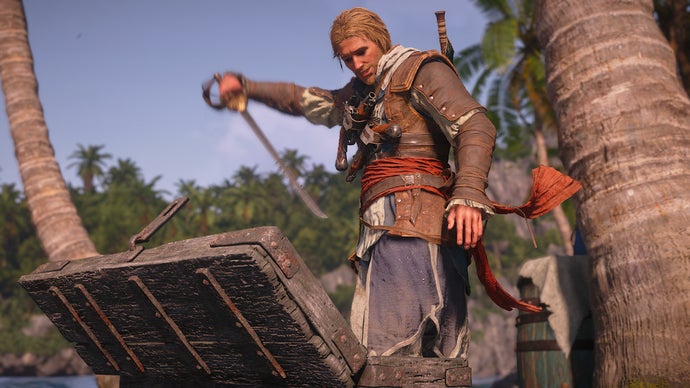
Image: courtesy of EuroGamer
Assassin's Creed Black Flag Resynced's Strong Launch Reaffirms Remake Strategy for Ubisoft
Assassin's Creed Black Flag Resynced, a faithful remake of the 2013 original, sold 2 million copies on its launch day, July 9, 2026. Ubisoft, through its Vantage Studios, announced the significant sales figures on July 10, 2026. The title also topped Twitch viewership charts and achieved the highest concurrent player count for an Assassin's Creed game on Steam, indicating robust player engagement. Initially, the game faced a 'Mixed' reception on Steam, but player reviews quickly shifted to 'Mostly Positive', with 77% of its 3,555 English reviews becoming favorable shortly after launch. This rapid turnaround suggests effective post-launch engagement or a growing appreciation for the game's enhancements.
Outlook
Background
Ubisoft's Assassin's Creed franchise has, for years, walked a fine line between innovation and iteration. Since its inception, the series has delivered a near-annual cadence of releases, evolving from stealth-action to sprawling open-world RPGs. This rapid output, while keeping the brand visible, has at times led to player fatigue and varied critical reception across titles. The original Assassin's Creed IV: Black Flag, released in 2013, stood out as a fan favorite, celebrated for its unique pirate setting, naval combat, and charismatic protagonist, Edward Kenway. Its enduring popularity made it a prime candidate for a remake, rather than a simple remaster, allowing Ubisoft to rebuild the game from the ground up using the latest Anvil Engine.
The broader gaming industry has seen a resurgence in remakes and remasters, driven by both technological advancements and player nostalgia. Titles like the Resident Evil series remakes and Final Fantasy VII Remake have demonstrated that a well-executed remake can achieve critical acclaim and significant commercial success, often surpassing the original's impact. However, the market is also littered with less successful attempts, where remakes either fail to capture the original's spirit, introduce unwanted changes, or simply do not justify their full-price tag. This creates a delicate balance for developers: how to update a classic for modern audiences without alienating the loyal fanbase that cherished the original. For Ubisoft, the challenge was to tap into Black Flag's legacy while delivering a modern experience that felt both familiar and fresh, a task many industry observers watched closely given the franchise's recent trajectory.
See also
Precedents
The launch performance of Assassin's Creed Black Flag Resynced echoes a crucial pattern seen with successful remakes: a blend of nostalgia, technical fidelity, and subtle modern enhancements. Historically, when a remake faithfully recreates a beloved classic while leveraging contemporary graphics and gameplay mechanics, it often resonates strongly with both original fans and new players. We saw this with Capcom's string of Resident Evil remakes, particularly Resident Evil 2 and 4, which were lauded for maintaining the core tension and atmosphere of their predecessors while modernizing controls and visuals. Similarly, Final Fantasy VII Remake captured immense attention by expanding on its source material while staying true to its characters and narrative.
Conversely, remakes that stray too far from the original's essence, or those that merely offer a graphical facelift without meaningful gameplay improvements, tend to underperform. The key distinction for Black Flag Resynced, as confirmed by Ubisoft, is its status as a 'faithful recreation' rebuilt with the 'latest version of the Anvil Engine' and enriched with 'new additions.' This approach, which involves many of the original game's developers from Ubisoft Singapore, suggests a deep understanding of what made the original special. The 2 million launch day sales for Resynced place it among the stronger launches in the Assassin's Creed franchise, especially for a remake. While direct comparisons to original mainline entries can be difficult due to shifting market dynamics over a decade, achieving such numbers on day one for a reimagined title speaks to both the enduring appeal of Black Flag and the quality of the remake's execution. It also highlights the power of a strong community presence on platforms like Twitch and Steam, where high concurrent player counts and positive sentiment can quickly amplify a game's reach, turning initial mixed reviews into widespread positive buzz.
The commercial and critical success of Assassin's Creed Black Flag Resynced represents more than just a win for a single game; it marks a significant validation of Ubisoft's strategic direction for its legacy titles. For a publisher with a deep catalog of intellectual property, the ability to successfully reintroduce a beloved game like Black Flag can unlock substantial new revenue streams and re-engage dormant fanbases. This launch demonstrates that players are willing to invest in remakes, provided they meet a high bar for quality and fidelity to the original vision.
What this changes for Ubisoft is potentially a recalibration of its development priorities. The investment in rebuilding Black Flag from the ground up with a modern engine, rather than simply porting it, has clearly paid off. This could lead to an accelerated pipeline of similar high-quality remakes for other popular titles within the Assassin's Creed universe, or even across other Ubisoft franchises that boast strong fan loyalty. Such a strategy carries lower creative risk than launching entirely new IPs, as it leverages existing brand recognition and a proven gameplay formula.
Furthermore, the positive review turnaround is instructive. It indicates the importance of not just a strong launch, but also the potential for player sentiment to evolve as more people experience the game. This feedback loop, amplified by social media and streaming platforms, can be a powerful tool for reputation management and sustained sales. For the industry at large, Black Flag Resynced reinforces the idea that nostalgia, when paired with thoughtful modernization and technical excellence, remains a potent force in driving consumer interest and purchasing decisions, potentially influencing other major publishers to revisit their own classic offerings with similar ambition.
Scenarios
AnalysisThe immediate success of Assassin's Creed Black Flag Resynced opens up several paths for Ubisoft and the broader gaming industry, each contingent on ongoing market performance and strategic decisions.
One potential outcome is that Ubisoft will significantly increase its investment in high-fidelity remakes of other fan-favorite titles from its extensive back catalog. Given the 'faithful recreation' approach and the involvement of original developers for Resynced, this success could become a blueprint. We might see similar 'Resynced' versions of other Assassin's Creed entries known for their unique settings or protagonists, such as Assassin's Creed II, or even other popular Ubisoft IPs like Splinter Cell or Prince of Persia. This strategy would allow Ubisoft to capitalize on existing brand loyalty, reduce the inherent risks of launching new intellectual property, and potentially attract a new generation of players to its classic franchises. The financial incentive here is clear: proven concepts with modernized execution can deliver strong returns with a more predictable development cycle compared to entirely novel games.
Conversely, another outcome could see Ubisoft cautiously integrate lessons from Resynced's success without making a wholesale pivot to a remake-centric strategy. While 2 million sales on launch day are substantial, the long-term profitability will depend on player retention, potential monetization strategies, and continued engagement. Ubisoft has a history of experimenting with various game models, including live-service elements and diverse open-world designs. This success with Resynced might simply inform a more balanced portfolio, where high-quality remakes coexist alongside new mainline Assassin's Creed titles and other innovative projects. The company may analyze which specific elements of Resynced — the 'faithful recreation,' the technical overhaul, or the community engagement — contributed most to its success before committing to a broader, more aggressive remake schedule. This approach would prioritize measured growth and diversification over an immediate, heavy investment in a single strategic pillar, acknowledging that market conditions and player preferences can shift rapidly.
Timeline
Frequently Asked Questions
Discussion
Be the first to share your thoughts.