
Players should prepare for a drastically different gameplay and narrative experience in 'God of War: Laufey.' The shift to Faye as the central character implies a focus on agility, ranged combat, and possibly more puzzle-solving or environmental interaction, contrasting with Kratos's brutal, close-quarters fighting style. The inclusion of Phranque, the talking cube, and an enchanted ribbon suggests unique companion mechanics and abilities that will likely integrate into both combat and exploration. Game Director Ariel Lawrence has indicated that Phranque will bring 'super cool' gameplay usage, hinting at innovative mechanics rather than just a narrative device. While the game is confirmed to be in development for the PlayStation 5, it is not targeting a 2026 release, meaning fans will need to wait longer for this new chapter.
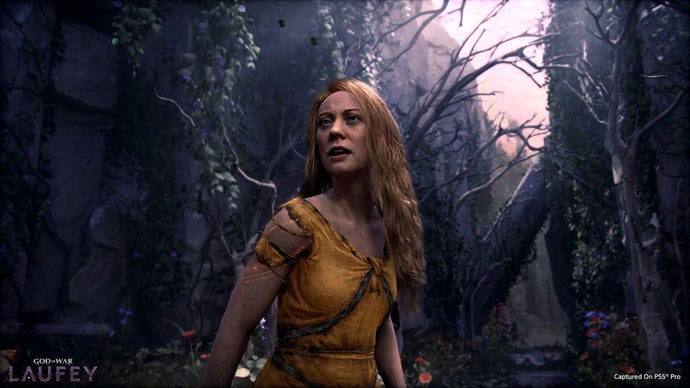
Image: courtesy of EuroGamer
God of War: Laufey Shatters Series Formula, Putting Faye and a Talking Cube at the Forefront
Santa Monica Studio is taking a significant creative risk with its next installment, 'God of War: Laufey,' confirmed to feature Kratos's wife, Faye, as the protagonist alongside an enchanted ribbon and a talking cosmic cube named Phranque. The concept, initially pitched by Head of Creative Cory Barlog in 2018, marks a deliberate departure from the franchise's established Kratos-centric narrative, drawing both intrigue and skepticism from industry figures and fans alike.
Outlook
Background
The 'God of War' franchise has historically centered on the Spartan warrior Kratos, evolving from a Greek mythology hack-and-slash series to a more character-driven, narrative-rich Norse saga. The 2018 reboot and its 2022 sequel, 'Ragnarök,' redefined the series, earning critical acclaim and commercial success by focusing on Kratos's relationship with his son, Atreus. The idea for 'God of War: Laufey,' however, predates 'Ragnarök's' release, having been discussed by Cory Barlog as early as 2018. This suggests that Santa Monica Studio has been planning a significant expansion of its universe and character roster for some time, rather than reacting to recent events. The decision to pivot to Faye, a character mostly seen in flashbacks and as a narrative catalyst in previous games, is a bold move that challenges fan expectations. Faye, a Jotun warrior and Kratos's second wife, is known for her wisdom and connection to the Norse world, qualities that could lead to a very different kind of 'God of War' story. The inclusion of Phranque, the talking jelly cube, and an enchanted ribbon as companions further signals a willingness to experiment with the series' core mechanics and tone. This represents a calculated risk for a franchise built on the visceral action and emotional depth of its main protagonist.
See also
Precedents
The 'God of War' series has a history of reinventing itself, most notably with the 2018 soft reboot that shifted from Greek to Norse mythology and introduced a more mature, character-driven narrative. This willingness to evolve, rather than simply iterate, has been a hallmark of Santa Monica Studio's approach. While previous entries always featured Kratos, the studio has shown a pattern of expanding its universe through spin-off titles and different protagonists in other games (e.g., 'God of War: Ascension' featured a younger Kratos, but still Kratos). However, a full mainline installment without Kratos as the primary playable character would be unprecedented. Other long-running franchises have successfully shifted protagonists, such as 'Assassin's Creed' or 'The Legend of Zelda,' often to inject fresh perspectives or explore different eras within their established lore. The gap between major 'God of War' releases (2018 to 2022 for 'Ragnarök') suggests a development cycle of around four years for these ambitious titles. If 'Laufey' is indeed a full-scale entry, a similar development timeframe would be expected from its 2018 inception, making a release beyond 2026 consistent with the studio's historical pace and the scale of its productions.
The decision to center 'God of War: Laufey' on Faye, rather than Kratos, carries significant implications for the future of one of PlayStation's most valuable franchises. For Santa Monica Studio, it represents a bold creative statement: a willingness to move beyond its iconic protagonist and explore new narrative possibilities within the rich Norse mythology it has built. This could open the door for a wider array of stories, protagonists, and gameplay styles, preventing the series from becoming creatively stagnant. However, it also introduces substantial execution risk. Long-time fans have a deep attachment to Kratos, and pivoting to a new lead, especially one accompanied by a talking cube, could alienate a segment of the audience. Former Blizzard boss Mike Ybarra's comments, suggesting people want to play as Kratos, reflect this sentiment. The success or failure of 'Laufey' will influence future creative decisions for the studio, potentially paving the way for other characters to lead their own stories or, conversely, reinforcing the perceived necessity of Kratos's presence. For the broader gaming industry, it serves as a litmus test for how far a major, established franchise can stray from its core identity while maintaining its audience and critical acclaim. If successful, it could encourage other developers to take similar creative leaps with their own IPs.
Scenarios
AnalysisOne clear outcome is that 'God of War: Laufey' could revitalize the franchise by offering a completely fresh perspective and gameplay loop. By exploring Faye's story, the game could delve deeper into the lore of the Jotun and the events leading up to the 2018 'God of War,' enriching the overall narrative universe. This approach might attract new players who are intrigued by the unique premise and less tied to Kratos's legacy, while also satisfying existing fans looking for innovative experiences. A successful launch could establish Faye, Phranque, and the enchanted ribbon as beloved new characters, proving that the 'God of War' brand is robust enough to expand beyond its original hero.
Conversely, the creative departure could face a cooler reception, particularly from fans who primarily engage with the series for Kratos's character and combat style. If the gameplay mechanics tied to Faye and her companions do not resonate, or if the narrative fails to connect with the established emotional depth of previous games, it could lead to fan disillusionment and critical lukewarmness. This outcome might force Santa Monica Studio to re-evaluate its strategy for future installments, potentially leading to a quicker return to Kratos or Atreus as protagonists in subsequent titles. The reception of 'Laufey' will ultimately dictate the long-term creative trajectory of the 'God of War' series.
Timeline
Frequently Asked Questions
Discussion
Be the first to share your thoughts.