
Players should prepare for a drastic change in pacing and spatial awareness compared to the 2018 reboot and God of War Ragnarök. Laufey’s combat style is described as highly agile, utilizing her giant heritage and mastery of the Leviathan Axe to execute rapid, multi-hit combos that launch enemies into the air. Unlike Kratos’ heavy, grounded movements, Laufey will feature a dedicated jump button, allowing for complex aerial juggling, mid-air dashes, and vertical environmental traversal. The camera will pull back significantly, moving away from the tight, claustrophobic over-the-shoulder perspective to give players a wider view of the battlefield. This wider frame is essential for managing large crowds of enemies, a staple of the classic games that was scaled back in the Norse era due to camera limitations. Runic magic will still play a role, but it will be integrated into active combos rather than functioning as cooldown-based special attacks, rewarding aggressive, high-skill playstyles.
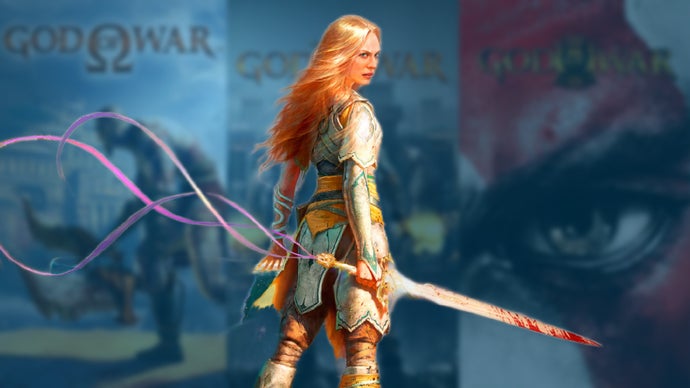
Image: courtesy of EuroGamer
The Blade and the Axe: Why God of War Laufey’s Return to Classic Combat is a Calculated Gamble for Santa Monica Studio
Santa Monica Studio is reportedly shifting gears for its next entry in the God of War franchise. According to industry leaks, the upcoming title focusing on Laufey—the giant warrior and mother of Atreus—will abandon the slow, methodical, over-the-shoulder combat of the Norse duology. Instead, the game is set to revive the blistering speed, aerial mobility, and wide-angle chaos that defined Kratos’ original Greek trilogy on the PlayStation 2 and PlayStation 3. This mechanical pivot represents a bold attempt to merge old-school character action with the cinematic storytelling of modern PlayStation blockbusters.
Outlook
Background
Laufey, also known as Faye, is one of the most critical yet mysterious figures in the Norse saga of God of War. While she died before the events of the 2018 game, her legacy shaped the entire journey of Kratos and Atreus. In Norse mythology and game lore, she was a fierce guardian of the Jötnar who openly rebelled against the tyranny of Odin and the Aesir gods. Her combat prowess was legendary; she famously fought Thor to a standstill in a duel so violent it left a permanent crater in the Realm of Vanaheim. By placing players in control of Faye during her prime, Santa Monica Studio has the narrative freedom to explore the height of the Aesir-Vanir war. This setting naturally demands a style of combat that reflects a warrior at the peak of her magical and physical capabilities, justifying the departure from Kratos’ older, more weary fighting style.
Precedents
The gaming industry frequently sees franchises cycle between mechanical complexity and cinematic accessibility. In 2018, God of War successfully transitioned from a frantic hack-and-slash game to an intimate, character-driven action RPG, a move that was widely praised but left some veteran fans yearning for the mechanical depth of the original games. A similar pattern occurred with Capcom’s Resident Evil series, which swung from survival horror to action, and eventually found a balance by offering different styles across mainline entries and spin-offs. By reverting to a faster combat model for a prequel, Santa Monica Studio is following a proven industry playbook: using a spin-off or side story to experiment with gameplay styles that might be deemed too risky for a direct, mainline sequel.
This mechanical shift is a major strategic decision for Sony Interactive Entertainment and Santa Monica Studio. The Norse duology sold tens of millions of copies, largely due to its accessible, cinematic combat and emotional narrative. Dismantling that highly successful gameplay loop to bring back a genre that has largely become niche—high-speed character action—is a significant risk. However, it also addresses a growing criticism among hardcore gamers that modern Sony titles have become too uniform in their pacing and design. If successful, this project could prove that blockbuster budget games can still feature highly technical, traditional gameplay systems without sacrificing the cinematic prestige that defines modern PlayStation first-party titles.
Scenarios
AnalysisOne likely outcome is that the game successfully revitalizes the character-action genre, blending the deep combo mechanics of games like Devil May Cry with the emotional weight of modern storytelling, creating a new standard for action-adventure games. Alternatively, the radical shift in gameplay could alienate the massive casual audience built during the Norse era, who may find the faster, more demanding combat and wider camera angles less immersive and more difficult to master. A third possibility is that the studio attempts a compromise, resulting in a hybrid system that satisfies neither the purists of the original trilogy nor the fans of the modern duology.
Timeline
Frequently Asked Questions
Discussion
Be the first to share your thoughts.