
The path to crewed Starship flights involves clearing unprecedented technical milestones, including orbital propellant transfers, successful upper-stage catches, and rigorous NASA human-rating certifications. While private missions like Chun Wang's interplanetary flyby and Dennis and Akiko Tito's circumlunar journey have been officially announced, the actual execution window depends heavily on SpaceX maintaining its aggressive flight cadence without major setbacks.
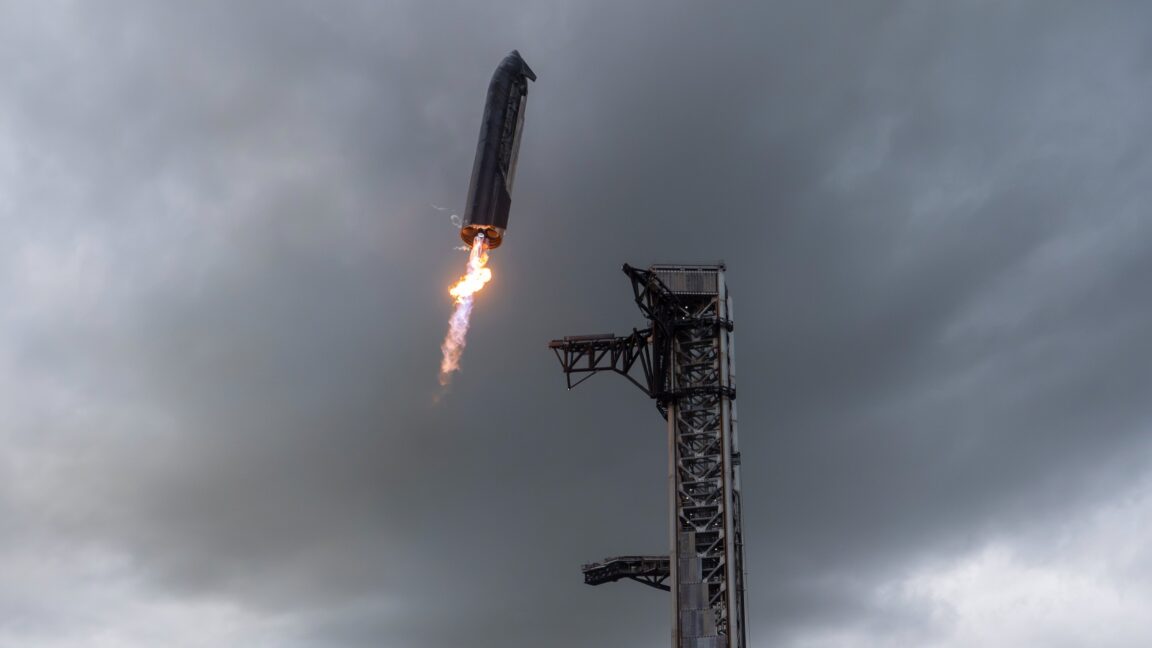
Image: courtesy of Ars Technica
When Will Humans Actually Fly on Starship? The Reality Behind the Mars and Moon Timelines
As SpaceX racks up successful test flights and secures high-profile private crew announcements, the question of when humans will board Starship remains tethered to monumental technical hurdles and shifting regulatory realities.
Outlook
Background
By late 2026, Starship has completed 14 test flights—including three utilizing the V3 design—and successfully executed mechanical tower catches. SpaceX is also utilizing the vehicle to deploy operational Starlink V3 satellites, shifting from purely experimental flights to practical payload delivery. Concurrently, NASA has contracted Starship to serve as the Human Landing System (HLS) for the Artemis program, with a targeted crewed lunar landing currently pointing toward Artemis IV in early 2028.
Precedents
Aerospace development timelines almost universally experience schedule slippage. NASA originally signed the HLS agreement with SpaceX in 2021 with an initial lunar landing target of 2024, a deadline that has since shifted by four years. Historical precedent across both Apollo-era programs and modern commercial spaceflight demonstrates that integrating life support systems, radiation shielding, and abort mechanisms routinely extends development phases well beyond initial engineering projections.
The commercial aerospace sector and national space policy hinge entirely on heavy-lift reusability. If Starship successfully carries humans to the Moon and Mars on schedule, it validates a high-cadence, low-cost economic model that could permanently alter deep-space exploration economics. Conversely, chronic delays ripple directly into NASA's lunar ambitions and commercial space station transitions, forcing space agencies to reevaluate their reliance on a single heavy-lift architecture.
Scenarios
AnalysisAnalysis suggests several plausible trajectories for crewed Starship operations:
1. Artemis IV Misses the Window: Technical complexities in orbital refueling and life support integration could push the first NASA crewed lunar landing past early 2028, leading to a restructured lunar roadmap.
2. Private Flights Precede NASA Landings: Private missions, such as circumlunar or interplanetary flybys backed by private commanders, could launch before or concurrently with official Artemis milestones, operating under different risk tolerances.
3. Cadence Stabilization Drives Rapid Expansion: If SpaceX successfully standardizes upper-stage catches and scales its Florida infrastructure at Launch Complex 39A, human flight testing could accelerate rapidly through 2029, opening the door for routine orbital transport.
Timeline
April 2021
NASA Awards HLS Contract
NASA selects SpaceX for a $2.9 billion contract to develop Starship as the Human Landing System for Artemis.
May 2026
Interplanetary Human Spaceflight Announced
Commander Chun Wang announces plans to fly aboard Starship's first interplanetary human spaceflight mission on a two-year journey looping past Mars.
Late 2026
V3 Flight Testing and Payload Deployment
Starship completes 14 total flights, incorporating V3 design iterations and deploying operational Starlink V3 satellites.
Early 2028 (Target)
Artemis IV Lunar Landing Window
NASA's targeted window for the first crewed lunar landing using the Starship HLS variant, though subject to ongoing technical reviews.
Frequently Asked Questions
No. As of late 2026, all Starship flights have been uncrewed test flights or operational payload deployments for Starlink.
Discussion
Be the first to share your thoughts.