
Amazon will likely accelerate its remaining contracted launches across multiple providers to make up for lost hardware. With the United Launch Alliance Vulcan grounded pending an investigation into its recent failure, logistics pressure shifts heavily toward Arianespace and SpaceX. Industry analysts expect payload schedule revisions throughout the remainder of 2026 and into 2027 as Amazon attempts to keep its massive low-earth orbit constellation deployment on track toward its 3,232-satellite goal.
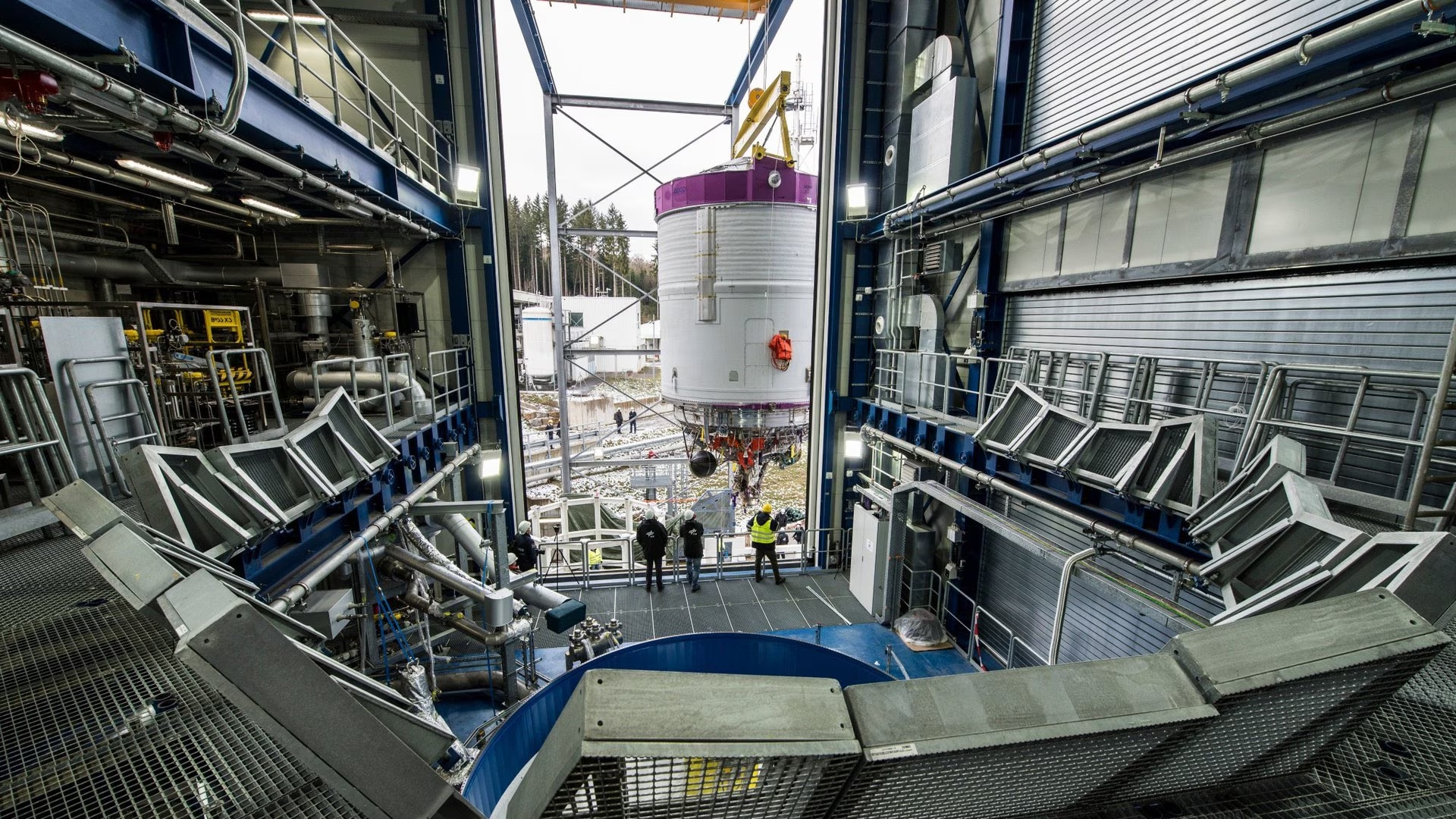
Image: courtesy of Thenextweb
How Ariane 6 Stepped In to Save Amazon Leo After a Critical Vulcan Rocket Failure
Arianespace successfully launched 36 Amazon Leo internet satellites aboard an Ariane 6 rocket on November 24, 2026, from French Guiana. This mission, the rocket's 10th consecutive success, arrived just nine days after a United Launch Alliance Vulcan rocket failed to reach orbit, destroying 40 Amazon satellites. The successful flight pushed Amazon's in-orbit constellation count to 432 units as the company works to diversify its heavy-lift launch providers amidst an industry-wide rocket crunch.
Outlook
Background
Building a global satellite internet constellation requires unprecedented launch frequency. Amazon has booked dozens of heavy-lift rockets across Arianespace, United Launch Alliance, and SpaceX to lift its Project Kuiper (Amazon Leo) hardware. When United Launch Alliance lost 40 satellites on November 15, 2026, due to an unconfirmed anomaly during a Vulcan flight, Amazon faced an immediate capacity bottleneck. Arianespace's flawless execution of the VA271/LE-04 mission on November 24 provided crucial relief, marking the fourth dedicated Amazon flight for the Ariane 6 rocket and maintaining its perfect 10-for-10 flight record.
See also
Precedents
Commercial spaceflight has long operated under the shadow of launch vehicle concentration risk. When a single rocket family suffers an anomaly, multi-billion-dollar infrastructure rollouts stall unless operators have alternative providers ready. Historically, companies that rely on a single launch supplier face severe operational paralysis during mishaps, whereas firms like Amazon that aggressively multi-source across European, American, and commercial providers absorb individual failures without catastrophic program termination.
The race to build low-earth orbit broadband networks is ultimately constrained by physics, manufacturing speed, and available payload fairing space. Every lost batch of 40 satellites represents tens of millions of dollars in hardware and months of assembly time, pushing back revenue generation for consumer and enterprise broadband services. For Arianespace, the successful 10th flight of the Ariane 6 proves that Europe's heavy-lift vehicle can maintain a steady cadence under commercial pressure, validating its role in the global aerospace supply chain.
Scenarios
Analysis1. United Launch Alliance identifies the Vulcan root cause quickly, returning the rocket to flight by early 2027 and restoring full multi-supplier capacity for Amazon.
2. The Vulcan grounding extends for several months, forcing Amazon to rely more heavily on SpaceX Falcon 9 and Arianespace Ariane 6 rides, which could drive up near-term launch scheduling friction.
3. Arianespace gradually scales up its Ariane 6 manufacturing cadence toward its stated goal of 12 flights per year, solidifying its position as a primary partner for large-scale commercial constellations.
Timeline
November 15, 2026
Vulcan Launch Failure
A United Launch Alliance Vulcan rocket fails to reach orbit, resulting in the destruction of 40 Amazon Leo internet satellites.
November 24, 2026
Ariane 6 LE-04 Mission Success
Arianespace successfully launches 36 Amazon Leo satellites from French Guiana on the Ariane 6's 10th flight, bringing the in-orbit total to 432.
December 2026 (Inferred)
Anticipated SpaceX Falcon 9 Flights
Amazon is expected to accelerate upcoming Falcon 9 missions to compensate for the grounded Vulcan inventory.
Frequently Asked Questions
Following the successful Ariane 6 flight on November 24, 2026, the Amazon Leo constellation reached 432 satellites in orbit.
Discussion
Be the first to share your thoughts.