
Engineers from United Launch Alliance and Blue Origin will spend weeks sifting through telemetry data to locate the exact point of failure during the upper-stage climb. The U.S. Space Force, which relies heavily on Vulcan for national security payloads, is expected to review its manifest and potentially shift upcoming missions toward SpaceX while investigations proceed. Amazon's deployment schedule for its Leo constellation will face significant delays, forcing logistics planners to reevaluate their reliance on a single unproven rocket architecture.
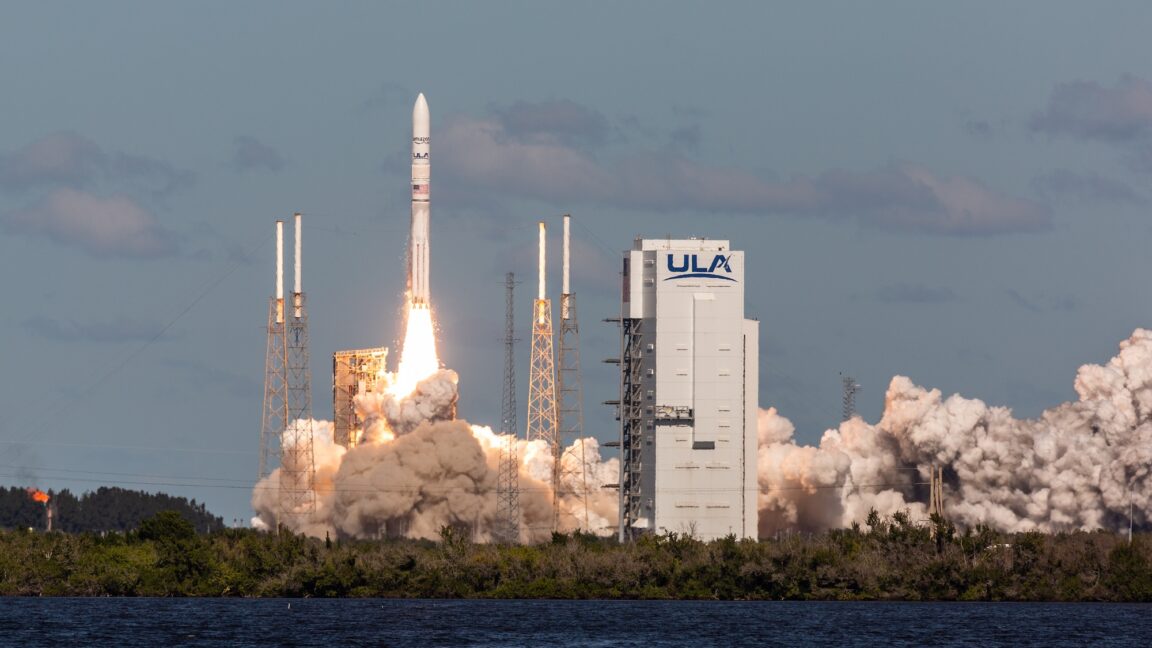
Image: courtesy of Ars Technica
Why Vulcan’s Failure Upends the Commercial Launch Market and Leaves Amazon Searching for Answers
United Launch Alliance suffered its first total mission failure on November 15, 2026, when its heavy-lift Vulcan rocket malfunctioned ten minutes into flight, destroying 40 Amazon Leo broadband satellites. The incident deals a severe blow to ULA's two-decade unblemished safety record and disrupts Amazon's push to scale its low Earth orbit constellation against SpaceX's established Starlink network.
Outlook
Background
United Launch Alliance was formed in 2006 as a joint venture between Lockheed Martin and Boeing, building an elite reputation for flawless mission delivery across its Atlas and Delta rocket families. The Vulcan rocket represents the company's long-awaited transition to a modern, cost-competitive heavy-lift vehicle, relying on Blue Origin-built BE-4 engines for its core stage. Amazon's Leo constellation depends entirely on heavy-lift providers like ULA, Blue Origin, and Arianespace to deploy thousands of internet-beaming satellites into orbit, making launch failures an existential bottleneck for the retail giant's telecommunications ambitions.
See also
Precedents
Launch vehicle history shows that new rocket architectures routinely encounter anomalies during their early flight cadences, even when backed by legacy aerospace engineering firms. When major launch providers experience catastrophic failures, regulatory oversight from the Federal Aviation Administration immediately grounds the vehicle class until Mishap Investigation Board findings are formally approved. Competitors who maintain active flight cadences, such as SpaceX with its Falcon 9 fleet, historically capture displaced payload contracts while grounded rivals work through corrective engineering cycles.
The commercial satellite internet market relies on sustained launch frequency to maintain revenue generation and regulatory compliance. When a heavy-lift rocket fails with forty customer satellites onboard, the financial loss extends far beyond the hardware value into multi-million dollar insurance markets and delayed subscriber acquisition timelines. For industrial buyers, the accident demonstrates that the heavy-lift market remains dangerously concentrated, leaving few viable alternatives when a primary supplier stumbles.
Scenarios
AnalysisA rapid engineering fix could allow ULA to resume flight operations within six months, minimizing long-term damage to its national security contracts. Alternatively, if the anomaly points to a systemic design flaw in the propulsion or guidance systems, the grounding could extend past a year, permanently altering the competitive balance of the commercial launch sector. Amazon may be forced to renegotiate launch agreements and accelerate integration work with alternative providers like Blue Origin's New Glenn rocket to keep its constellation timeline alive.
Timeline
November 15, 2026
Vulcan Rocket Suffers In-Flight Anomaly
United Launch Alliance's Vulcan rocket experiences a catastrophic failure ten minutes into flight, destroying 40 Amazon Leo satellites.
November 16, 2026
Investigation and Telemetry Review Begins
ULA engineering teams begin analyzing real-time telemetry data to isolate the root cause of the upper-stage malfunction.
Q1 2027
Mishap Board Findings and Regulatory Review
The Federal Aviation Administration and ULA are expected to conclude their mishap investigation and outline corrective actions required for return-to-flight.
Frequently Asked Questions
The Vulcan rocket experienced an anomaly approximately ten minutes into its flight on November 15, 2026, resulting in a total mission failure and the destruction of its payload.
Discussion
Be the first to share your thoughts.