
An unvarnished look at the engineering trade-offs behind multi-display laptop attachments, examining how physical weight, power consumption, and mechanical stress change the daily mobile workflow.
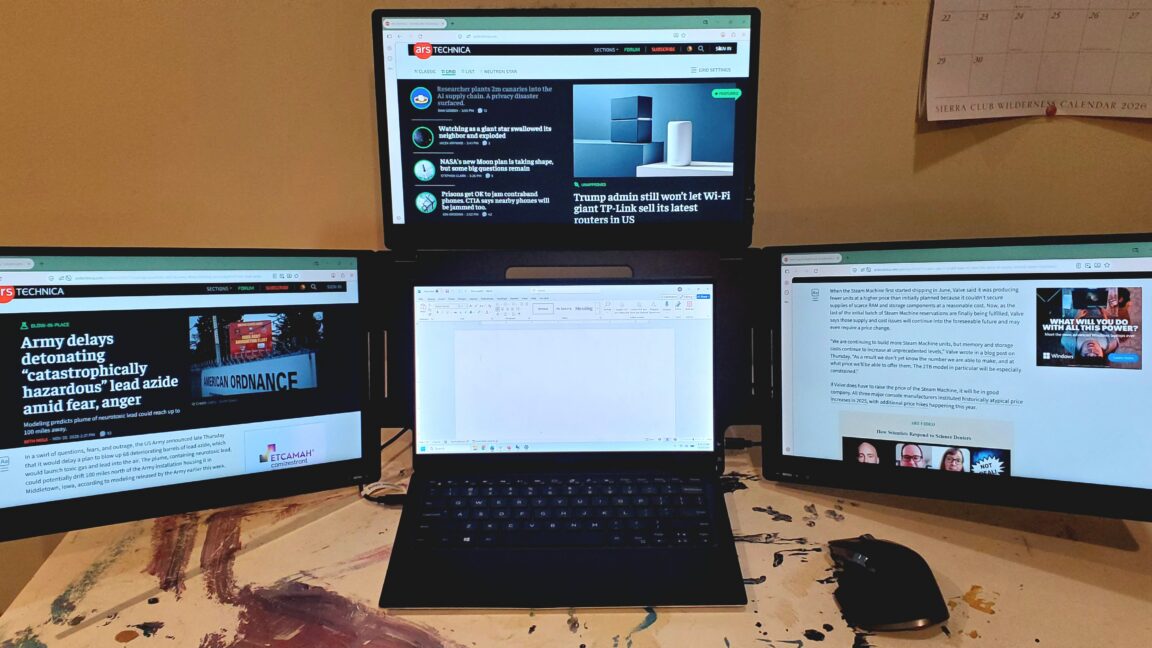
Image: courtesy of Ars Technica
The Physical Realities of Tri-Screen Portable Monitors: Why More Displays Mean Heavy Trade-Offs
Tri-screen portable monitors promise desktop-class productivity anywhere, but their weight, battery drain, and bulk demand serious compromises from mobile professionals.
Outlook
Background
On November 23, 2026, industry reviews and hardware rollouts highlighted a surge in multi-display mobile peripherals like the KYY X90G, Mobile Pixels Trio 3 Pro, and FlexScreen Trio. While studies suggest multi-screen setups can boost productivity by up to 52 percent for heavy multitaskers, these devices add between 3.5 and 6 pounds of hardware to a mobile bag and reduce laptop battery life by 25 to 40 percent under full load.
Precedents
The quest for mobile screen expansion has evolved from single folding USB panels and cumbersome projector setups to integrated multi-screen frames. However, hardware physics remains unchanged: increasing display surface area requires more power, adds structural torque to laptop hinges, and increases mechanical failure points.
For remote workers, financial analysts, and developers who rely on sprawling multi-application workflows, these monitors offer an alternative to single-screen constraints. Yet, the physical burden shifts the ergonomic balance, turning a mobile workstation into a heavy, fragile assembly that tests the limits of travel bags and laptop structural integrity.
Scenarios
AnalysisManufacturers could refine lightweight carbon-composite frames to reduce overall system weight below three pounds. Alternatively, software solutions leveraging virtual reality or tablet sidecar ecosystems might capture market share without the physical bulk of bolted-on screens.
Timeline
November 2026
Hardware Iterations Peak
Manufacturers release refined tri-screen models featuring 14-inch to 15.6-inch IPS and QHD panels with single-cable USB-C pass-through connections.
Mid-2027
Ergonomic Backlash
Mobile professionals begin evaluating the long-term strain of carrying heavier assemblies and dealing with accelerated laptop battery degradation.
Frequently Asked Questions
Most models utilize a single USB-C cable that transmits video signals and supplies power via pass-through charging, though some units also incorporate Mini-HDMI ports.
Discussion
Be the first to share your thoughts.