
Audiences should prepare for a future where Stan Lee’s gravelly, familiar cadence appears in projects he never signed off on during his lifetime. The technology utilizes deep learning to analyze years of archival interviews and voice-over work, mapping the phonetic patterns and micro-pauses that defined his speech. Rather than relying on human impersonators, studios will use this software to generate lines of dialogue on demand. This shift transforms Lee from a historical figure into a liquid asset, capable of being deployed in video games, commercials, or multimedia experiences. The primary friction will manifest in the 'uncanny valley'—where the voice sounds technically perfect but lacks the human soul of the original creator. Expect the legal sector to scramble as they attempt to define the boundaries between a respectful tribute and a synthetic puppet show.
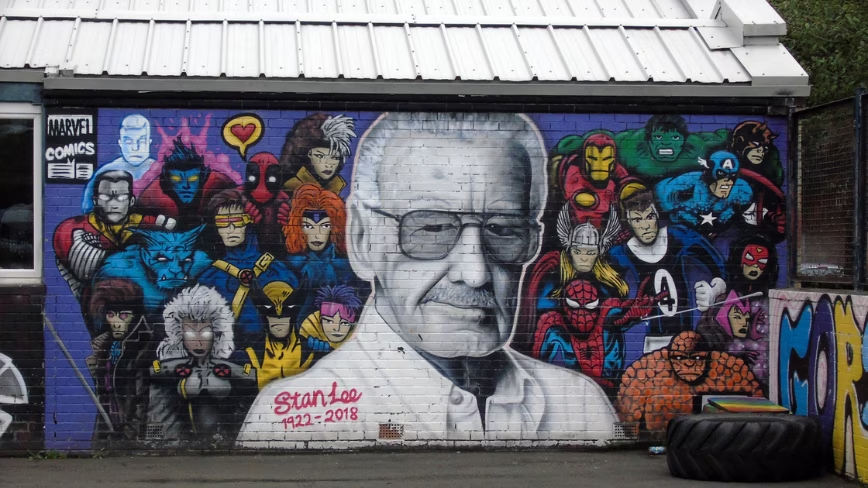
Image: courtesy of Thenextweb
The Silicon Afterlife: When Stan Lee Speaks Again
ElevenLabs is deploying high-fidelity voice cloning technology to resurrect the voice of Stan Lee, the legendary Marvel architect, for future digital cameos. This move marks a pivot in intellectual property management, transitioning from static likeness rights to the active, generative use of a deceased creator's persona. While Genius Brands International sees this as a way to extend a global cultural icon's legacy, it raises profound ethical questions about consent and the future of human performance in the creative industries.
Outlook
Background
The project hinges on a partnership between ElevenLabs and the Stan Lee Universe, a venture controlled by Genius Brands International. By holding the rights to his name, likeness, and signature, these entities have effectively become the gatekeepers of a digital afterlife. The technical process is no longer prohibitively expensive, meaning the barrier to entry for 'digital necromancy' has effectively collapsed. As these models ingest more data, the accuracy increases, making it nearly impossible for the average listener to distinguish between authentic archival audio and AI-generated synthesis. This creates an immediate crisis of authentication, as the voice of an icon can now be weaponized or commodified without the consent of the person who originally owned it.
Precedents
Hollywood has long been obsessed with digital resurrection, though the methods have evolved from expensive, labor-intensive VFX to accessible software. We saw the high-budget, controversial return of Peter Cushing in 'Rogue One,' which required an army of artists to achieve what ElevenLabs can now do through an automated interface. This trajectory mirrors the long-standing debate over the commercial use of Marilyn Monroe’s or Audrey Hepburn’s images. The fundamental difference here is the shift from static imagery to generative, interactive performance. History tells us that these attempts often trigger massive public relations backlash and protracted litigation, as the public struggles to reconcile their nostalgia with the commercial exploitation of a deceased legend.
The implications of this development reach far beyond the comic book industry, signaling a permanent shift in the power dynamics of creative labor. We are witnessing the emergence of the 'evergreen creator,' where the rights holder holds the keys to a career that never ends, regardless of the artist's biological life. This creates an existential threat for living voice actors and performers who now find themselves competing against the most iconic voices in history. If an estate can simply synthesize a legendary performance, the incentive to hire living talent diminishes significantly. Furthermore, this sets a dangerous precedent for the 'digital replica' clauses in future employment contracts, suggesting that an artist's voice may one day be considered company property in perpetuity.
Scenarios
Analysis1. The Licensing Gold Rush: The Stan Lee estate sets a blueprint for 'digital legacy licensing,' leading to a saturated market of synthetic celebrities across gaming and advertising. This creates a lucrative revenue stream for rights holders while severely devaluing the market for human voice actors who cannot compete with the brand recognition of a deceased icon. 2. A Legislative Firewall: A high-profile legal battle or intense public outcry forces governments to enact strict 'Right of Publicity' laws. These would mandate granular, ongoing consent for any AI-generated performance, creating a regulatory cooling-off period that forces tech companies to adopt rigorous transparency and verification standards. 3. The Synthetic Normalization: The public gradually accepts AI-resurrected figures as a standard form of digital performance art. The initial shock fades, and the industry adopts a hybrid model where AI fills production gaps, ultimately forcing a market-wide adoption of 'human-certified' labeling for creative content to distinguish between organic and algorithmic work.
Timeline
Frequently Asked Questions
Discussion
Be the first to share your thoughts.