
Veridact
TechSportsFinanceGaming🎯 Predictions⭐ OpportunitiesAbout
Sign InSign Up
Veridact

Analysis before the headline. Veridact examines technology, finance, sports, and gaming events before they unfold through forecasting, probability modeling, historical precedent, and public prediction tracking.

Stay ahead of what's next

Forecasts, analysis, and prediction updates delivered to your inbox.

Coverage

  • Tech
  • Sports
  • Finance
  • Gaming

Company

  • About Us
  • Privacy Policy

© 2026 Veridact. Forecasting & analysis platform.

Content may include AI-assisted research and analysis. Predictions and opinions should not be considered financial, legal, medical, or investment advice.

tech
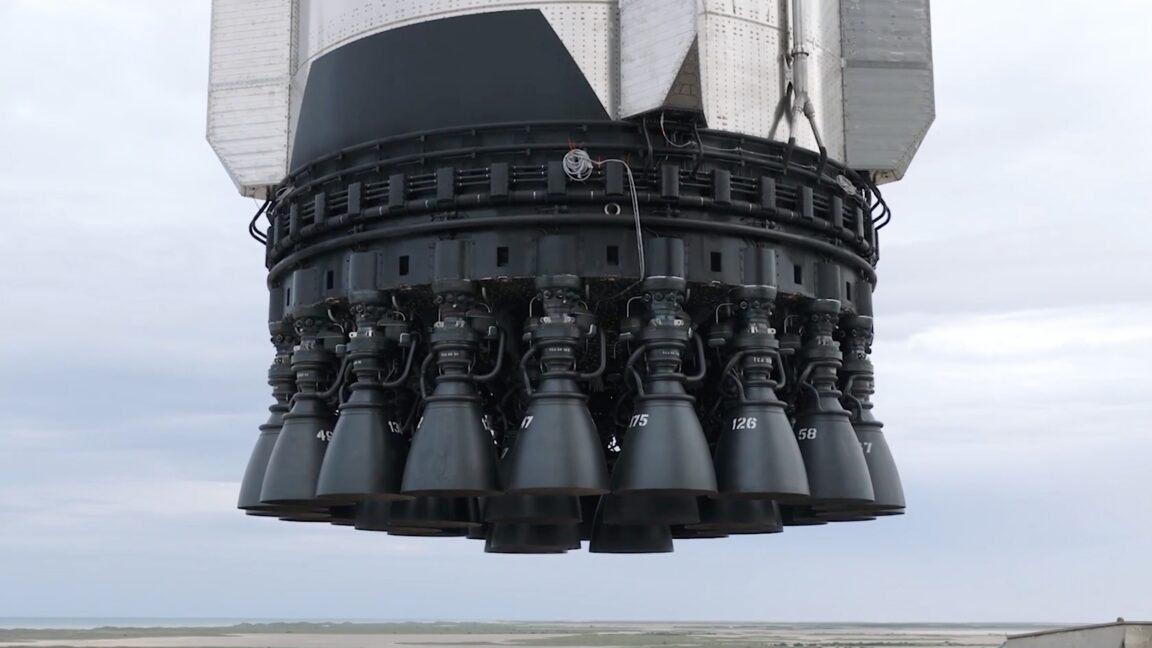
SpaceX is gearing up for Starship's 13th test flight later this week

Image: courtesy of Ars Technica

techJuly 14, 2026By Veridact EditorialUpdated Jul 14

Starship's Thirteenth Flight: What SpaceX Needs to Prove Next

SpaceX is preparing for Starship's 13th integrated flight test this week, targeting a launch from its Starbase facility in Texas on Thursday, July 16, 2026. The mission carries significant weight, aiming not only for a successful suborbital flight and controlled landings but also for the critical deployment of 20 operational Starlink V3 satellites. This flight follows recent FAA approval of SpaceX's corrective actions after a previous mishap, signaling a renewed push to demonstrate Starship's reliability and operational readiness.

Outlook

The launch window for Starship Flight 13 is set to open at 6:45 p.m. Eastern Time on Thursday, July 16, 2026, and will last for 90 minutes. The mission will follow a suborbital flight profile, similar to Flight 12, expected to last approximately 65 minutes from liftoff to Starship's splashdown.

The flight involves two main components: the Super Heavy Booster 20 and the Starship upper stage, Ship 40. The booster is designed to perform a controlled descent and soft landing in the Gulf of Mexico. Ship 40, after separating from the booster, will continue into suborbital space, where its primary objective will be to deploy 20 functioning Starlink V3 satellites. Following this deployment, the Starship itself will attempt a controlled water landing in the Indian Ocean.

A key difference for this flight is the deployment of actual, operational Starlink V3 satellites, moving beyond the mass simulators or camera-equipped prototypes used in earlier tests. This marks a critical step towards integrating Starship into SpaceX's broader Starlink deployment strategy. The mission will also incorporate fixes identified from previous flights, which the Federal Aviation Administration (FAA) has reviewed and approved, allowing the launch to proceed.

Background

Starship's development has been characterized by an iterative testing approach, where each flight aims to gather data and refine the design, often pushing the limits of the vehicle's capabilities. This philosophy, while accelerating development, has also led to a series of spectacular failures and partial successes, each providing crucial engineering insights.

The FAA's role in this process is paramount. After each test flight, particularly those involving anomalies or mishaps, the FAA conducts a rigorous review. For Flight 13, the agency confirmed it has approved SpaceX's proposed corrective actions stemming from the issues encountered during an earlier flight. This approval is a necessary regulatory hurdle for any subsequent launch and indicates that SpaceX has addressed specific technical or operational concerns raised by regulators. The approval suggests a level of confidence from the FAA that the identified risks have been mitigated, at least to a degree that allows for continued testing.

The decision to deploy 20 fully functional Starlink V3 satellites is a strategic move. The V3 satellites are larger and more powerful than previous generations, designed to significantly boost Starlink's capacity and throughput. Integrating them into Starship's test profile signals SpaceX's intention to use Starship as a primary deployment vehicle for its satellite internet constellation once the system achieves sufficient reliability. This also helps to offset the immense development costs of Starship by leveraging it for existing revenue-generating operations.

See also

Before SpaceX IPO, investors in China secretly acquired stakes→SpaceX is now a public company valued for its AI potential, so what comes next?→

Precedents

SpaceX's history with both Falcon 9 and Starship is one of rapid, iterative development, punctuated by both successes and highly public failures. From the early days of Falcon 9, the company embraced a 'fail fast, learn faster' mentality, rapidly iterating on rocket designs and operational procedures. This contrasts sharply with the traditionally cautious, multi-year development cycles common in legacy aerospace.

For Starship, this pattern has been even more pronounced. Early prototype 'hopper' tests saw vehicles crash or explode, yet each event yielded data that informed subsequent designs. The integrated test flights, which combine the Super Heavy booster and Starship upper stage, have progressively demonstrated more complex maneuvers: from initial liftoffs to stage separation, engine relights, and controlled re-entries. Each flight has pushed the envelope, and while not all objectives have been met perfectly, the company has consistently shown an ability to identify issues, implement fixes, and return to the launchpad relatively quickly.

The FAA's oversight has also evolved in parallel, adapting to SpaceX's unconventional testing cadence. While regulatory approval processes can be slow, the repeated approvals for Starship flights, even after mishaps, reflect a recognition of SpaceX's engineering rigor in addressing issues and its commitment to safety protocols. This iterative regulatory engagement has become a historical pattern for Starship's progress.

Starship is not just another rocket; it is central to SpaceX's long-term vision and several critical contracts. Its success or failure carries immediate implications for multiple high-stakes endeavors.

First, for the Starlink constellation, Starship's ability to reliably deploy large numbers of V3 satellites is crucial. The V3 satellites are heavier and require a larger payload capacity than Falcon 9 can efficiently provide. A successful deployment on Flight 13 would validate Starship as the workhorse for future Starlink expansions, potentially accelerating global coverage and improving service quality for millions of subscribers. This directly impacts Starlink's profitability and its ability to compete in the satellite internet market. Without Starship, Starlink's expansion plans face significant logistical and cost hurdles.

Second, Starship is the chosen Human Landing System (HLS) for NASA's Artemis program, tasked with returning astronauts to the Moon. Every successful test flight, particularly one demonstrating orbital capabilities and controlled landings, builds confidence in Starship's readiness for crewed missions. Conversely, any significant setback could lead to further delays for Artemis, which is already facing a tight schedule and intense scrutiny. NASA's lunar ambitions are, to a large extent, tied to Starship's developmental progress.

Finally, Starship represents a fundamental shift in space transportation economics. Its fully reusable design promises to drastically reduce the cost of launching payloads to orbit and beyond, opening up new possibilities for space exploration, manufacturing, and tourism. Each step towards demonstrating this reusability, especially the soft landing attempts on Flight 13, is a step towards realizing that economic transformation. The industry is watching to see if SpaceX can indeed make ultra-heavy lift, fully reusable rockets a routine reality.

Scenarios

Analysis

Starship Flight 13 presents a range of possible outcomes, each with distinct implications for SpaceX and the broader space industry.

1. Full Mission Success (Inferred): This would involve a clean liftoff, successful stage separation, deployment of all 20 Starlink V3 satellites, and controlled soft landings for both the Super Heavy booster in the Gulf of Mexico and the Starship upper stage in the Indian Ocean. This outcome would significantly boost confidence in Starship's design and operational procedures. It would likely accelerate the integration of Starship into the Starlink deployment schedule and reinforce NASA's trust in its Human Landing System for Artemis. The market could react positively, potentially increasing investor confidence in SpaceX's long-term goals and valuation. This would be a major validation of SpaceX's iterative development strategy.

2. Partial Success (Inferred): This scenario could see some, but not all, objectives met. For instance, the launch and Starlink deployment might succeed, but one or both landing attempts could fail, or vice-versa. Alternatively, the flight might gather invaluable data despite an anomaly that prevents full mission completion. A partial success would still provide critical engineering data, allowing SpaceX to further refine its designs and procedures. While not ideal, it would maintain the momentum of the testing program, signaling continued progress. The FAA would likely conduct another review, but continued testing would probably be approved after further corrective actions.

3. Mission Anomaly or Failure (Inferred): A significant anomaly, such as an in-flight explosion, a failure to reach target altitude, or a loss of vehicle control, would represent a setback. Such an event would trigger a thorough investigation by both SpaceX and the FAA, leading to a pause in the flight test program. This could delay Starlink V3 deployment plans, push back the Artemis program timeline, and potentially increase regulatory scrutiny. While SpaceX has historically bounced back from failures, a major mishap could impact public perception and investor sentiment, particularly given the increasing stakes involved with operational Starlink satellites on board and NASA's reliance on Starship.

Timeline

2025-11-21
Booster Damage During Testing
Newest Starship booster significantly damaged during testing, according to Eric Berger of Ars Technica.
2026-05-22
Starship Flight 12
SpaceX conducts the twelfth flight test of Starship, deploying two Starlink internet satellites equipped with cameras and several Starlink V3 mass simulators. This flight provided crucial data for the upcoming mission.
2026-07-10
Super Heavy Static Fire Test
SpaceX completes a static fire test of the Super Heavy booster (Booster 20) slated for Flight 13, a key readiness check before launch.
2026-07-11
Flight 13 Mission Announcement
SpaceX announces it is targeting a launch of the Flight 13 mission in a 90-minute window opening at 6:45 p.m. Eastern.
2026-07-14
FAA Approval Confirmed
SpaceX confirms the Federal Aviation Administration (FAA) has approved its corrective actions stemming from the previous flight mishap, clearing the path for Flight 13.
2026-07-16
Starship Flight 13
Scheduled launch of Starship's 13th test flight from Starbase, Texas, aiming to deploy 20 Starlink V3 satellites and achieve soft landings for both stages.

Frequently Asked Questions

Starship is SpaceX's fully reusable, super heavy-lift launch system, designed to carry both cargo and crew to Earth orbit, the Moon, Mars, and beyond. It consists of two main parts: the Super Heavy booster (first stage) and the Starship spacecraft (second stage/upper stage).

Discussion

0/100
0/1000

Be the first to share your thoughts.

Related Coverage

tech

The States' Gambit: Can a Dozen Attorneys General Block the Paramount-Warner Bros. Discovery 'Behemoth'?

Jul 14
tech

Beyond the 'Impossible' Port: How Hackers Unlocked Doom on Neo Geo and Redefined Retro Hardware Limits

Jul 14
tech

The AI Security Arms Race Just Escalated: How 'Context Bombing' Flips The Script On Prompt Injection

Jul 14
tech

Tesla's Accessible Robotaxi: The Engineering Hurdles and Broader Stakes of True Autonomous Mobility

Jul 14

Stay ahead of the story

AI analysis delivered before events unfold. No spam.

ⓘ

Methodology: Veridact combines public data, historical precedent, and analytical models to evaluate the likelihood of future outcomes.