
This feat is not just a technical curiosity; it reflects a continuing trend in retro computing where dedicated communities push the boundaries of vintage hardware far beyond its original design specifications. Expect further refinement of these Neo Geo Doom ports, potentially leading to smoother frame rates or more robust graphical solutions. This success may also inspire similar 'impossible' porting challenges on other legacy consoles, fueling new waves of homebrew development and re-evaluating long-standing assumptions about hardware limitations.
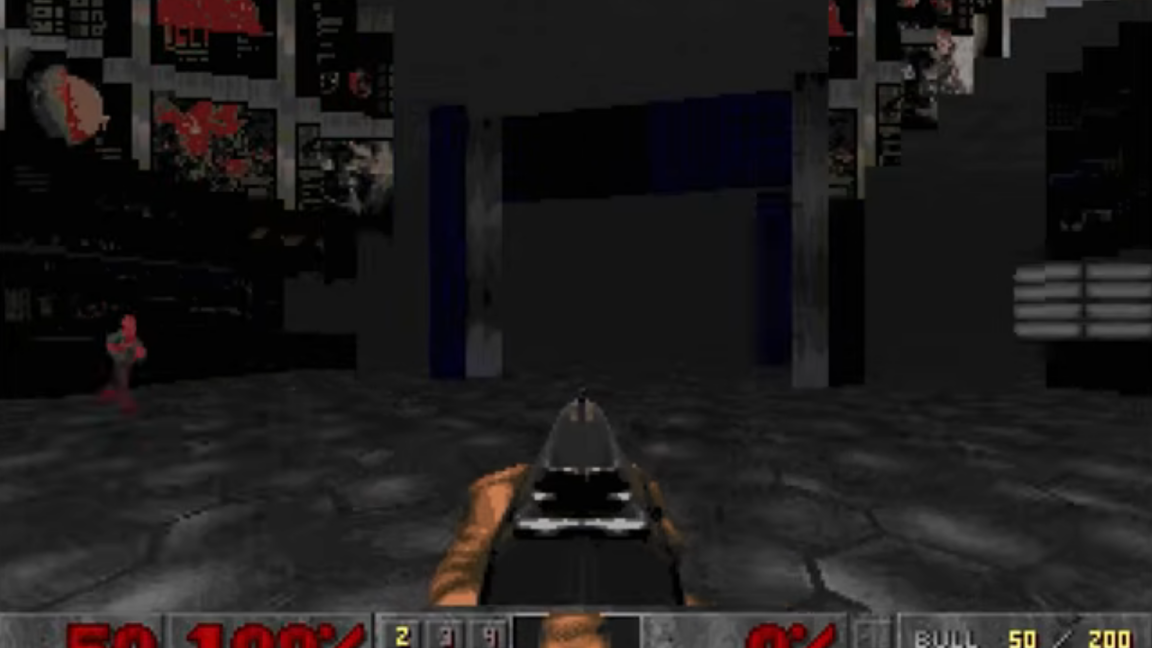
Image: courtesy of Ars Technica
Beyond the 'Impossible' Port: How Hackers Unlocked Doom on Neo Geo and Redefined Retro Hardware Limits
The long-held belief that id Software's seminal first-person shooter, Doom, could not run on SNK's Neo Geo console has been overturned by independent hackers. Despite the Neo Geo's unique sprite-based architecture and lack of a conventional frame buffer, two separate projects have demonstrated functional, albeit visually compromised, versions of the game. This technical achievement, which repurposes the console's sprite-scaling capabilities, challenges previous assertions from prominent retro gaming experts and highlights the ingenuity within the modding community.
Outlook
Background
For decades, the Neo Geo AES (Advanced Entertainment System) and its arcade counterpart, the MVS, have been revered for their powerful 2D sprite capabilities, capable of handling large, detailed characters and impressive scaling effects. However, this strength was also seen as its fundamental limitation when it came to rendering 3D environments. Unlike consoles with dedicated frame buffers that allow for pixel-by-pixel manipulation, the Neo Geo's display system relies almost entirely on sprites — pre-rendered 2D images. This architecture made it seem 'functionally impossible' to translate Doom's textured 3D environments, which rely on drawing and redrawing pixels to simulate depth and movement.
Modern Vintage Gamer (MVG), a respected figure in the retro gaming community, articulated this widely held view in a video released last month. He explained that the Neo Geo's hardware was simply not designed to handle the dynamic perspective and texture mapping required for Doom, even demonstrating a rudimentary proof-of-concept that rendered at a sluggish 8 frames per second by stretching vertical sprites for environmental elements. MVG's assertion, while grounded in a deep understanding of the hardware, inadvertently threw down a gauntlet. The modding community, known for its persistent drive to overcome technical puzzles, took up the challenge.
Now, just weeks later, two independent teams have successfully demonstrated functional ports. They achieved this by creatively re-interpreting the Neo Geo's sprite-scaling abilities. Instead of attempting to render a traditional 3D scene, these projects leverage the console's strengths by effectively 'painting' the environment using an array of scaled and manipulated sprites. This approach allows the game to run on unmodified Neo Geo hardware, respecting its inherent constraints while still delivering a recognizable Doom experience, albeit one with a distinct visual style shaped by the console's unique capabilities.
See also
Precedents
The history of video game development, particularly within the homebrew and modding scenes, is filled with examples of developers pushing hardware beyond its intended limits. From early demoscene productions on 8-bit computers to complex engine ports on seemingly incompatible consoles, the pattern is consistent: established limitations are often seen as challenges to be overcome.
Consider the original Doom itself, which famously ran on a vast array of platforms, from high-end PCs to calculators and even digital cameras. This adaptability cemented its reputation as a benchmark for porting ingenuity. Each successful, unconventional Doom port has historically been a testament to clever optimization and a deep understanding of target hardware. Similarly, the PlayStation 2, initially considered difficult to program for due to its complex architecture, eventually saw developers extract incredible performance through years of iterative learning and shared knowledge.
The Neo Geo itself has a history of attracting dedicated enthusiasts who have continued to develop new games and tools for the system decades after its commercial lifespan. This community-driven effort is often fueled by a desire to preserve classic hardware, explore its untapped potential, and demonstrate collective skill. The 'impossibility' claim for Doom on Neo Geo fits neatly into this historical context, serving as a new frontier for a community that thrives on technical problem-solving.
The successful porting of Doom to the Neo Geo matters for several reasons beyond mere nostalgia. Firstly, it offers a stark reminder that 'impossible' in technology often simply means 'not yet achieved.' This achievement pushes the boundaries of what was commonly believed possible for the Neo Geo, potentially inspiring a re-evaluation of other legacy hardware and opening doors for new homebrew projects that might have previously been dismissed as unfeasible.
Secondly, it highlights the enduring power of community and open collaboration in technical fields. The swift response to MVG's challenge, with two independent projects making rapid progress, demonstrates how a collective effort, driven by passion and shared knowledge, can quickly dismantle perceived barriers. This collaborative spirit is a vital engine for innovation, especially in niche technical communities.
Thirdly, for the retro gaming scene, this is more than just a novelty. It preserves a piece of gaming history, allowing a classic title to run on a console it was never designed for, offering a unique new way to experience Doom. This kind of work contributes to the broader effort of digital preservation and ensuring that classic games and hardware remain relevant and accessible for future generations of enthusiasts. It reinforces the idea that the true limits of technology are often defined more by imagination and persistence than by silicon and circuitry.
Scenarios
AnalysisOne immediate outcome is the continued optimization and refinement of these Neo Geo Doom ports. Given the early stage of development, there is significant room for improvement in frame rate stability, graphical fidelity, and overall playability. The developers may share their techniques, leading to a more unified approach or even competition to produce the most polished version.
Another outcome could be a ripple effect across the broader retro computing and modding community. The success with Neo Geo Doom might inspire other hackers to tackle previously dismissed 'impossible' ports on different consoles. This could lead to a renewed interest in reverse-engineering and creatively repurposing older hardware, fostering a new wave of homebrew games and applications for systems long considered 'closed.'
Finally, this achievement could shift the conversation around the Neo Geo itself. While always respected for its 2D prowess, this demonstration of 3D capability, however unconventional, might lead to new explorations of its hardware. Developers might look for other ways to leverage its sprite-scaling and manipulation features for effects or game types that were previously thought beyond its reach, expanding the console's perceived versatility.
Timeline
2026-06
MVG Declares Doom Port 'Impossible'
Modern Vintage Gamer (MVG) releases a video explaining why Doom is functionally impossible to run on the Neo Geo due to its sprite-based display and lack of a frame buffer, demonstrating a basic 8fps proof-of-concept.
2026-07-13
Hackers Prove MVG Wrong
Two independent projects successfully demonstrate functional Doom ports on unmodified Neo Geo hardware, leveraging the console's sprite-scaling abilities to render environments. MVG acknowledges the achievement.
2026-07-14
Community Re-evaluates Neo Geo Limits
News spreads across retro gaming and modding communities, sparking discussions about the Neo Geo's capabilities and the potential for other 'impossible' ports.
Frequently Asked Questions
The Neo Geo uses a sprite-based display system, meaning it primarily handles 2D images. Doom, however, renders 3D environments by drawing and updating individual pixels in a 'frame buffer.' The Neo Geo lacks this conventional frame buffer, making the direct translation of Doom's rendering method extremely challenging.
Discussion
Be the first to share your thoughts.