
When the Samuel Oschin Air and Space Center opens its doors on November 13, 2026, visitors will encounter the Space Shuttle Endeavour displayed in a way no other orbiter has been: fully stacked, vertically, as it would appear on a launch pad. This means the orbiter itself will be bolted to two solid rocket boosters, which in turn are attached to a massive external fuel tank. The entire assembly stands approximately 20 stories tall, creating an imposing and historically accurate representation of a space shuttle ready for flight. This 'full stack' configuration is a monumental engineering feat for a museum exhibit, requiring a custom-built, 200,000-square-foot facility to house it. The experience is designed to immerse the public in the scale and complexity of the shuttle program, allowing them to walk beneath and around the massive structure. Beyond Endeavour, the new center will also feature the Korean Air Aviation Gallery and the Kent Kresa Space Gallery, expanding the museum's existing offerings with additional aviation and space artifacts. The sneak peek offered yesterday, June 24, 2026, gave a limited audience a first glimpse of the completed installation, generating considerable public anticipation for the official opening later this year.
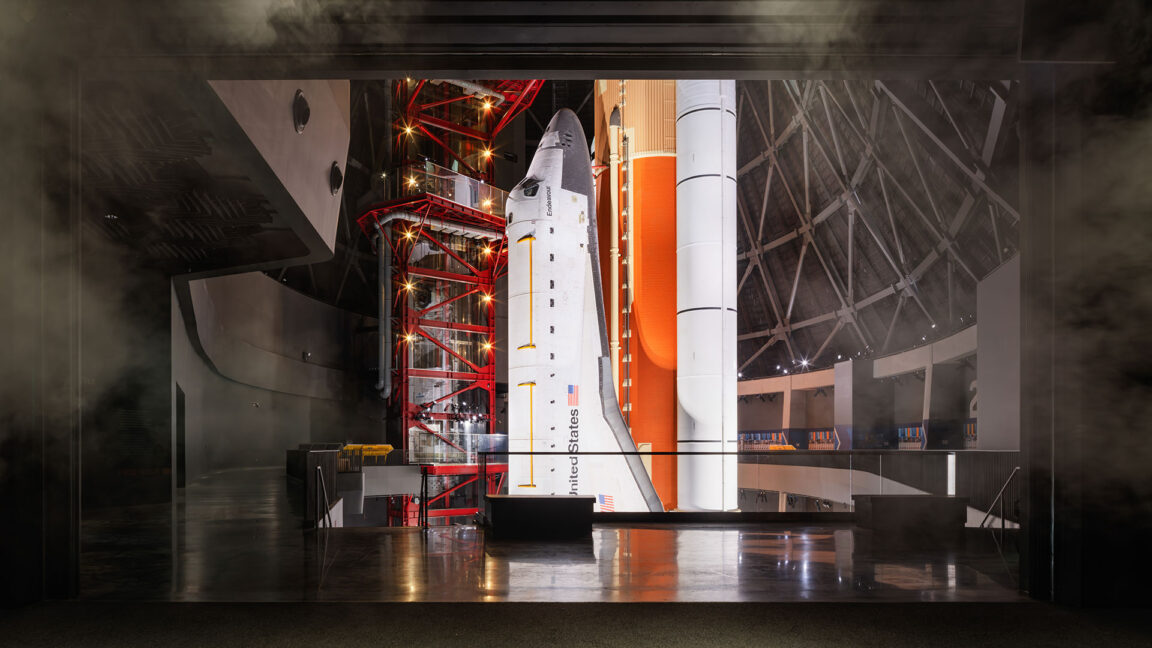
Image: courtesy of Ars Technica
Space Shuttle Endeavour's Towering Launch Display Nears Opening in Los Angeles
The California Science Center in Los Angeles provided a sneak peek yesterday of the Space Shuttle Endeavour in its full 'launch stack' configuration, marking a significant milestone ahead of its public debut. The $450 million Samuel Oschin Air and Space Center is set to open on November 13, 2026, offering visitors the unique opportunity to view a complete space shuttle system positioned as if ready for launch.
Outlook
Background
The Space Shuttle Endeavour, designated OV-105, was the fifth and final operational orbiter built for NASA's Space Shuttle Program. It was constructed as a replacement for the Space Shuttle Challenger, which was lost in 1986. Endeavour completed 25 missions during its operational life, including critical flights to service the Hubble Space Telescope and to help build the International Space Station. Its final mission, STS-134, concluded in June 2011, marking the second-to-last flight of the entire shuttle program. After its retirement, NASA announced in 2011 that Endeavour would be displayed at the California Science Center in Los Angeles. The journey to its current display configuration has been a multi-year effort, involving a complex overland transport through the streets of Los Angeles in 2012, and then an even more intricate process of assembling the 'full stack' within the new museum structure. This assembly required the careful lifting and integration of the 154-foot-long external tank and the 149-foot-tall solid rocket boosters, followed by the delicate attachment of the orbiter itself. The entire project represents a significant capital allocation, with the California Science Center committing $450 million to the Samuel Oschin Air and Space Center expansion. This investment reflects a long-term vision for public engagement with science and space exploration, ensuring that a critical piece of American space history is preserved and presented in a compelling manner for future generations.
See also
Precedents
Major museum exhibits featuring iconic historical artifacts, particularly those related to aerospace, consistently draw significant public interest. The display of retired space shuttles across the United States has followed a pattern of high initial attendance and sustained visitor numbers, driven by both nostalgia and educational curiosity. For instance, the Space Shuttle Discovery at the Smithsonian's Udvar-Hazy Center and Atlantis at the Kennedy Space Center Visitor Complex have become anchor attractions, demonstrating the enduring fascination with human spaceflight. What sets the Endeavour exhibit apart is its 'full stack' configuration. Historically, displaying an entire launch system, including the massive external tank and solid rocket boosters, has been an engineering and logistical challenge rarely undertaken for public viewing. Earlier displays typically featured only the orbiter. The scale of this particular undertaking at the California Science Center echoes the ambition seen in the construction of other large-scale museum projects, such as the USS Midway Museum in San Diego or the Intrepid Sea, Air & Space Museum in New York, which repurposed naval vessels as exhibition spaces. These types of attractions often become long-term economic drivers for their host cities, attracting tourists and fostering local engagement with science and technology education.
The unveiling of Space Shuttle Endeavour in its full launch configuration is more than just a museum opening; it represents a tangible link to a pivotal era of human ingenuity and exploration. For millions, the space shuttle program symbolized ambition, risk, and the relentless pursuit of scientific advancement. Displaying Endeavour in this manner preserves not just an artifact, but the scale and drama of its operational purpose. This exhibit holds significant weight for science education. By presenting the shuttle system in its launch configuration, the California Science Center provides an unparalleled visual aid to teach physics, engineering, and the sheer complexity of orbital mechanics. It offers a concrete, awe-inspiring experience that abstract textbooks cannot replicate, potentially inspiring a new generation of scientists and engineers. Furthermore, for Los Angeles, this becomes a major cultural and tourism anchor. The $450 million investment suggests a belief in its long-term draw, positioning the city as a key destination for space enthusiasts and families. The unique 'full stack' presentation ensures it stands out globally, drawing visitors who might otherwise see other orbiters elsewhere. It is a statement about the value placed on preserving technological history and making it accessible, transforming a retired vehicle into a permanent educational and inspirational landmark.
Scenarios
AnalysisThe opening of the Samuel Oschin Air and Space Center on November 13, 2026, with the Space Shuttle Endeavour as its centerpiece, carries several potential outcomes for the California Science Center and the broader community.
One likely outcome is a significant surge in visitor numbers for the California Science Center. The unique 'full stack' display is a powerful draw, offering an experience unavailable anywhere else in the world. This could lead to increased revenue for the museum, which can then be reinvested into educational programs, further exhibits, and the ongoing maintenance of such a large and complex artifact. High attendance also translates into broader economic benefits for Los Angeles, including increased tourism, hotel bookings, and spending at local businesses. This scenario would validate the substantial $450 million investment and reinforce the museum's role as a leading educational and cultural institution.
Another possible outcome, while less impactful on the core success of the exhibit, involves the operational challenges of managing such a popular attraction. High initial crowds could strain visitor services, traffic management, and the overall logistics of moving large numbers of people through a new, highly anticipated facility. While the California Science Center has experience with large crowds, the sheer scale and novelty of the Endeavour exhibit might require adjustments to ticketing, entry procedures, and internal flow in the initial months. There is also the long-term operational cost and technical challenge associated with maintaining a 20-story structure like the full stack, requiring specialized teams and ongoing preventative measures to ensure its preservation and safety for public viewing. However, these are typically manageable issues for well-funded institutions and are unlikely to detract from the overall success of the exhibit as a public attraction.
Timeline
Frequently Asked Questions
Discussion
Be the first to share your thoughts.