
Over the next decade, South Korea is expected to become a major hub for AI infrastructure and advanced chip production. The first tangible outcomes will likely involve the groundbreaking and construction phases for the announced chip fabrication sites, with significant capital expenditure from Samsung and SK Hynix. By 2028, Hyundai Motor aims to integrate Boston Dynamics' Atlas humanoid robots into its manufacturing lines, which could serve as a high-profile demonstration of the nation's robotics ambitions. The broader strategy will involve substantial government funding alongside private sector investment to build out AI data centers and supporting ecosystems. The success of this initiative will be measured by South Korea’s ability to capture a larger share of the global semiconductor market, attract top AI talent, and establish itself as a key supplier for humanoid robot components and systems outside of China.
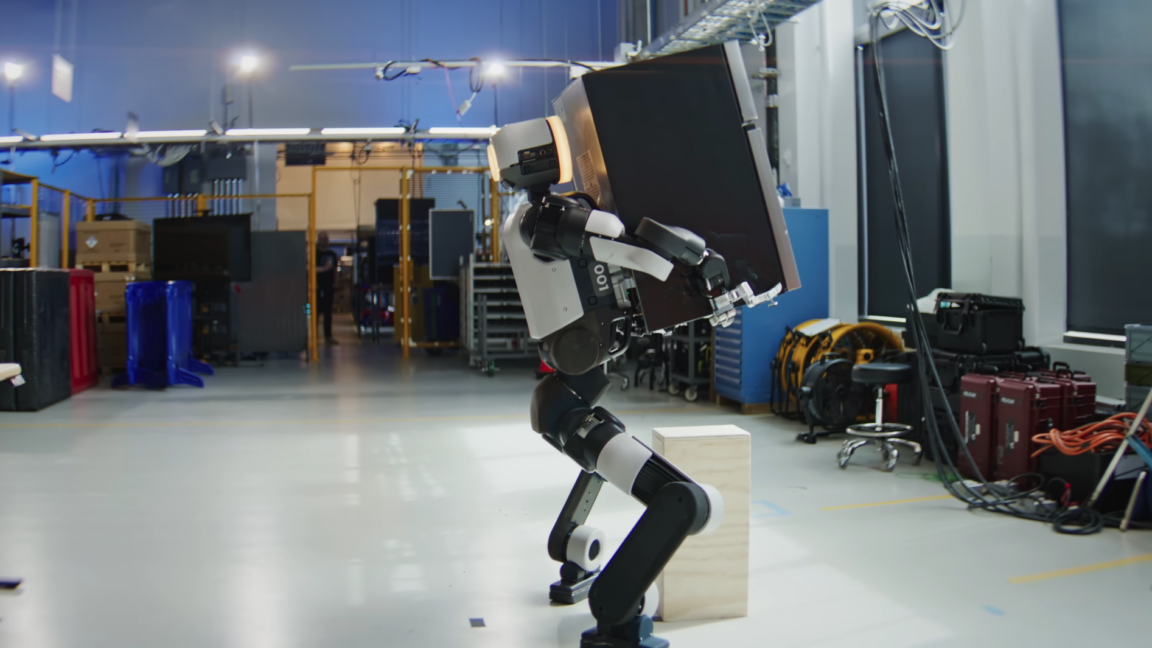
Image: courtesy of Ars Technica
South Korea's $1 Trillion Tech Push: Can It Outmaneuver Global Rivals in Chips and Humanoid Robots?
South Korea has committed over $1 trillion to a sweeping national initiative aimed at securing global leadership in advanced semiconductor manufacturing, AI data centers, and humanoid robotics by 2035. This massive investment, spearheaded by major conglomerates like Samsung Electronics, SK Hynix, and Hyundai Motor, is designed to bolster domestic production capabilities, reduce reliance on foreign supply chains, and position the nation at the forefront of future technological innovation. The plan includes building new chip fabrication sites and deploying advanced humanoid robots in manufacturing by 2028, signaling a profound strategic pivot to dominate critical emerging industries amid intense global competition.
Outlook
Background
Yesterday, South Korea unveiled a national strategy involving more than $1 trillion in investments across critical technology sectors, aiming to achieve global leadership in AI and semiconductors by 2035. The cornerstone of this plan is a colossal 800 trillion won (approximately $518 billion) commitment from the world’s two largest memory chipmakers, Samsung Electronics and SK Hynix. These companies, along with their suppliers, are slated to construct two new chip fabrication sites each in the southwestern region of South Korea. This move is a direct response to increasing global demand for advanced memory chips, which are essential components for everything from smartphones to artificial intelligence systems and data centers.
Beyond semiconductors, the initiative earmarks significant capital for the development and deployment of humanoid robots. Hyundai Motor, a major player in the country’s industrial landscape, has specifically announced plans to integrate Boston Dynamics' Atlas humanoid robots into its manufacturing operations starting in 2028. This signals a clear intent to move beyond traditional industrial automation and into more versatile, AI-driven robotics. The broader goal is to enable AI systems to control not just humanoid robots but also autonomous vehicles and automated production lines, creating a deeply integrated, high-tech industrial base.
The government's explicit target of securing core AI elements faster than any other country highlights the strategic urgency behind this investment. It is not merely an economic expansion but a national security imperative in an era where technological dominance translates directly into geopolitical influence. The investment also includes extensive plans for building AI data centers, which are fundamental to processing the vast amounts of information required to train and operate sophisticated AI models.
Precedents
South Korea has a long history of successful, state-backed industrial development, particularly in sectors deemed strategically vital. In the 1970s and 80s, government policies and corporate conglomerates (chaebols) like Samsung, Hyundai, and LG, collaboratively propelled the nation into global leadership in shipbuilding, steel, and later, consumer electronics and semiconductors. These efforts often involved massive capital injections, export-oriented policies, and strong coordination between government and industry.
The current initiative echoes these historical patterns but with a distinct focus on future-facing technologies. The emphasis on semiconductors, AI, and robotics reflects a recognition that these are the foundational technologies of the 21st century. Past successes in memory chips, where Samsung and SK Hynix dominate, provide a template for how concentrated investment and strategic alignment can yield global market share. However, the landscape today is far more competitive, with nations like the United States, China, Japan, and European Union members also pouring billions into their own chip and AI initiatives.
While South Korea has excelled in industrial robotics for decades, its push into humanoid robots represents a newer frontier. The acquisition of Boston Dynamics by Hyundai Motor in 2020 was a significant step, providing access to advanced research and development in mobile, agile robotics. This mirrors earlier strategic acquisitions or partnerships that allowed Korean companies to leapfrog in other industries. The 'early-adopter culture' and extensive use of industrial robotics within South Korea’s manufacturing economy also provide a fertile ground for testing and refining new humanoid robot applications, drawing parallels to how early adoption of digital technologies fueled the nation's rise as an IT powerhouse.
This $1 trillion investment is not just about economic growth; it is a declaration of national intent to reshape the global technology hierarchy. For South Korea, it represents a profound commitment to future-proof its economy, which remains heavily reliant on a few key export sectors, primarily semiconductors. By diversifying into advanced AI and robotics, while simultaneously deepening its chip dominance, the nation aims to secure its economic sovereignty and reduce its vulnerability to global supply chain disruptions and geopolitical pressures.
For the global technology industry, this move by South Korea could intensify the ongoing 'chip war' and the race for AI supremacy. Increased production capacity from Samsung and SK Hynix could potentially alleviate some long-term supply constraints for memory chips, but it also signals fierce competition for market share and technological breakthroughs. The push into humanoid robotics, especially with Hyundai's ambitious deployment plans, could accelerate the commercialization and widespread adoption of these advanced machines, impacting manufacturing processes, logistics, and potentially even daily life globally.
Moreover, the initiative carries significant geopolitical weight. By positioning itself as a key supplier for 'ex-China related humanoids,' as suggested by Goldman Sachs, South Korea is aligning itself with Western efforts to build resilient supply chains separate from China. This could lead to closer technological and economic ties with countries like the United States and European nations, further solidifying its role in the global tech alliance against potential adversaries. The success or failure of this monumental effort will have ripple effects across global markets, dictating not only who builds the next generation of technology but also who controls its underlying infrastructure.
Scenarios
Analysis1. Enhanced Global Leadership in Memory Chips and AI Infrastructure: The sheer scale of investment from Samsung and SK Hynix, coupled with government support for AI data centers, suggests South Korea could solidify its dominant position in memory semiconductors and become a critical hub for AI processing. This could lead to a more stable global supply of advanced chips, but also intensify competition for nations attempting to build their own domestic chip industries. The 2035 target for AI and semiconductor leadership appears ambitious but achievable, given the historical precedent of Korean industrial success.
2. Accelerated Humanoid Robot Development and Deployment: With Hyundai Motor's stated goal of deploying Boston Dynamics' Atlas robots in manufacturing by 2028, South Korea could become a global leader in the practical application and manufacturing of humanoid robots. This could drive down costs, improve capabilities, and accelerate the adoption of these robots across various industries, creating new economic opportunities for Korean suppliers and potentially setting global standards for robotics integration. However, the technical challenges of widespread humanoid robot deployment remain significant, and success hinges on overcoming these hurdles efficiently.
3. Increased Geopolitical Influence through Tech Dominance: By securing leadership in these critical technologies, South Korea may enhance its strategic importance on the global stage. As a reliable supplier of advanced chips and a key innovator in robotics, the nation could strengthen its alliances with technologically advanced economies, particularly those seeking alternatives to Chinese supply chains. This could translate into greater leverage in international trade negotiations and diplomatic relations, but it also exposes South Korea to the complexities and pressures of ongoing global tech rivalries.
4. Intensified Domestic Competition and Talent Scramble: While the investment aims to boost national competitiveness, it could also create intense demand for skilled labor in AI, semiconductor engineering, and robotics. This might lead to a domestic talent shortage, driving up wages and potentially necessitating significant investment in education and immigration policies to attract and retain top experts. The focus on 'core elements of AI' also implies a race for intellectual property and research breakthroughs, which could put pressure on academic institutions and start-ups to innovate at an unprecedented pace.
Timeline
Frequently Asked Questions
Discussion
Be the first to share your thoughts.