
The coming year will see New York lawmakers and energy regulators working to define new standards for data center operation and construction, potentially focusing on renewable energy integration, water usage efficiency, and grid impact assessments. The moratorium's immediate effect will be a halt to new large-scale data center projects within the state, which could redirect investment to other regions. Companies with existing facilities or those planning smaller operations (under 50 MW) will likely continue their activities, but the broader industry will be watching closely for the regulatory framework that emerges. The state's ability to balance its environmental goals with the need to attract and retain tech investment will be a key challenge.
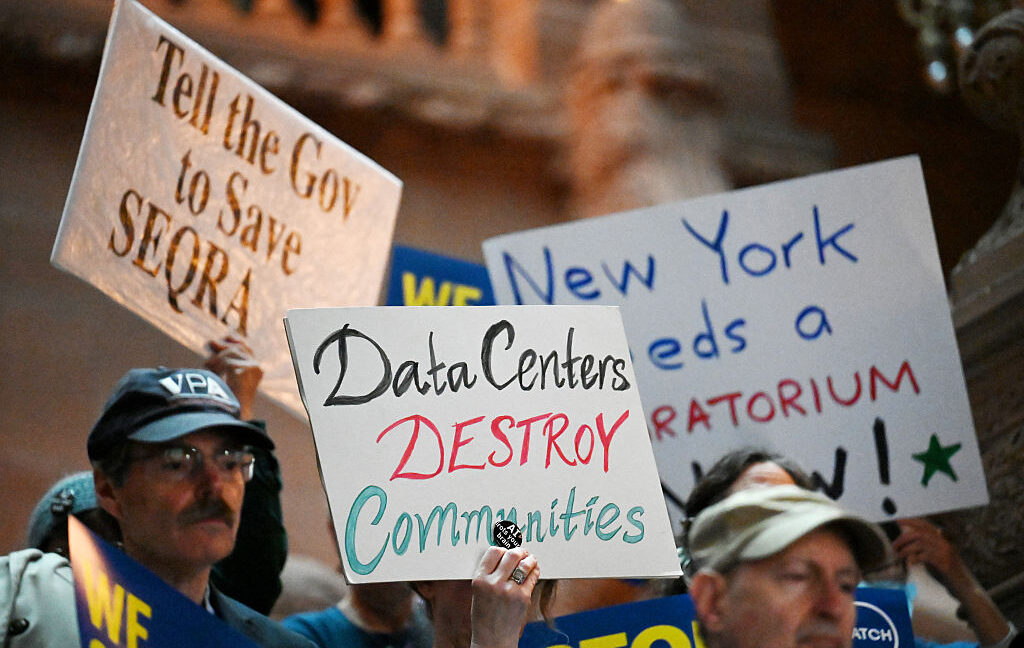
Image: courtesy of Ars Technica
New York's Data Center Freeze: A Blueprint for AI Regulation or an Economic Chill?
New York State yesterday, July 14, 2026, imposed a one-year moratorium on the construction of large data centers, specifically those consuming 50 megawatts or more. Governor Kathy Hochul signed an executive order pausing state permitting for new hyperscale facilities, aiming to develop environmental and energy standards. This decision, the first statewide ban of its kind in the U.S., is a direct response to the escalating power demands of artificial intelligence technology and seeks to prevent strain on the state's energy grid and natural resources.
Outlook
Background
The rapid growth of artificial intelligence has dramatically increased the energy consumption of data centers. These facilities, essential for processing and storing vast amounts of data and running complex AI models, require immense electricity to power servers and cool them. A single hyperscale data center can consume as much electricity as a small city, equivalent to tens of thousands of homes. This level of demand puts significant strain on local power grids and contributes to greenhouse gas emissions if powered by fossil fuels, which is still largely the case in many regions. Beyond electricity, these centers also consume vast amounts of water for cooling, particularly in states that rely on evaporative cooling systems.
New York's action reflects a growing tension between technological advancement and environmental sustainability, particularly as states grapple with infrastructure limitations and climate goals. The state has committed to ambitious climate targets, including a mandate for 70% renewable electricity by 2030 and a fully carbon-free grid by 2040. The unchecked growth of energy-intensive data centers could complicate these efforts, potentially forcing the state to rely more heavily on fossil fuel peaker plants during periods of high demand, or to invest heavily in new transmission infrastructure that might not keep pace with the industry's expansion. This moratorium, therefore, is an attempt to get ahead of a problem that many believe will only intensify as AI technology becomes more pervasive.
See also
Precedents
While a statewide moratorium on data centers is a novel approach in the United States, governments have historically intervened in industries with high resource consumption or significant environmental impact. For instance, temporary bans or strict regulations have been imposed on fracking in some states to assess its impact on water quality and seismic activity. Similarly, regions facing chronic water scarcity have implemented limits on water-intensive industries or agricultural practices to protect vital resources.
In the energy sector, states have often used regulatory pauses to re-evaluate power plant construction, transmission line projects, or energy pricing structures when new technologies emerge or environmental concerns escalate. The underlying pattern is often a reactive measure to unforeseen or rapidly escalating demands that outpace existing regulatory frameworks. When a new industry or technology scales quickly, the existing rules — designed for a different era — often prove insufficient to manage its externalities.
These pauses typically lead to one of two outcomes: either new, stricter regulations are introduced, forcing industries to adapt or relocate, or the industry finds ways to innovate and meet new environmental or resource constraints. Historically, such interventions have spurred technological advancements, as companies seek more efficient or sustainable methods to continue operating within new boundaries. For example, stringent emissions standards in the automotive industry led to significant developments in engine efficiency and catalytic converter technology. New York's moratorium signals a similar moment of reckoning for the data center industry, particularly as it intersects with AI's unprecedented energy appetite.
New York's data center moratorium is more than a local policy decision; it sets a significant precedent that could reshape the future of AI infrastructure development across the United States. As the first statewide ban of its kind, it signals a growing willingness by governments to directly intervene in the tech sector's physical footprint, particularly concerning energy and environmental impact. This move could force the AI industry to rethink its energy strategies, accelerate investment in more efficient technologies, or prompt a geographical redistribution of data center construction towards states with more accommodating regulatory environments or abundant renewable energy.
For New York, the stakes are high. The state aims to balance its aggressive climate goals with its ambition to be a hub for technology and innovation. A successful implementation of new, sustainable data center standards could position New York as a leader, attracting companies committed to green technology. However, an overly burdensome regulatory framework could deter investment, pushing major tech players to build their next generation of AI infrastructure elsewhere, potentially costing New York jobs and economic growth in a critical emerging sector.
The decision also highlights a broader societal debate about the true cost of artificial intelligence. While AI promises transformative benefits, its underlying infrastructure demands a colossal amount of energy and resources. New York's moratorium brings this hidden cost into the open, forcing a public conversation about how to power the future of technology without compromising environmental sustainability or straining critical public utilities. This conversation is likely to resonate in other states and even globally, as the world grapples with the energy implications of an AI-powered future.
Scenarios
AnalysisThe one-year moratorium in New York opens several paths for the state, the AI industry, and the broader energy sector. The ultimate direction will depend on the specific regulations enacted, the industry's response, and the willingness of other states to follow suit.
1. Stricter, Greener Standards for Data Centers: The most direct outcome could be New York implementing stringent new requirements for data centers. This might involve mandating specific renewable energy targets, requiring advanced water conservation measures, or enforcing the use of more energy-efficient cooling technologies. If successful, this would position New York as a leader in sustainable tech infrastructure, potentially influencing national standards. However, these new rules could also increase operational costs for companies, making New York a more expensive place to build and operate large data centers.
2. Redirection of Investment to Other States: Facing regulatory uncertainty and potentially higher costs, some AI and tech companies may choose to build new hyperscale data centers in states with less restrictive environmental regulations or more readily available, cheaper power. States with large land availability, robust renewable energy projects, or lower electricity costs could see an influx of data center investment. This could slow New York's growth as an AI infrastructure hub, at least in terms of physical facilities, and create a geographical shift in where AI's physical footprint is concentrated.
3. Industry Innovation in Energy Efficiency: The pressure from New York's ban, and the potential for similar actions elsewhere, could spur significant innovation within the data center industry. Companies might accelerate research and deployment of more energy-efficient hardware, such as specialized AI chips, and software optimization techniques that reduce computational load. There could also be increased investment in novel cooling solutions, like liquid immersion cooling, or waste heat recovery systems, to substantially reduce both electricity and water consumption.
4. A 'Blueprint' for Other States: If New York successfully navigates this moratorium and establishes a clear, effective regulatory framework that balances environmental protection with economic viability, other states facing similar energy grid strains or environmental concerns from AI growth may adopt similar temporary bans or regulatory approaches. This could create a fragmented regulatory environment across the U.S., forcing tech companies to tailor their data center strategies to individual state policies, rather than relying on a uniform national approach.
5. Long-term Grid Modernization: The moratorium could act as a catalyst for New York to accelerate its own grid modernization efforts. The state may invest more aggressively in smart grid technologies, energy storage solutions, and new renewable energy projects to ensure its infrastructure can support future growth while meeting climate targets. This could benefit all consumers and industries in the state, making the grid more resilient and sustainable in the long run.
Timeline
Frequently Asked Questions
Discussion
Be the first to share your thoughts.