
The immediate consequence of Vikram-1's successful launch is a likely surge in confidence and investment within India's nascent private space sector. Skyroot Aerospace, having proven its technology, can now move towards commercial operations, offering launch services for small satellites. This success is also expected to encourage other private Indian aerospace companies, potentially accelerating their development cycles and drawing further capital. Regulators, including the Indian National Space Promotion and Authorisation Centre (IN-SPACe), which has been instrumental in opening up the sector, may now face pressure to streamline processes further and adapt policies to support this burgeoning industry. The global market can anticipate a new, cost-competitive option for small satellite launches, particularly from a nation already known for its efficient space engineering.
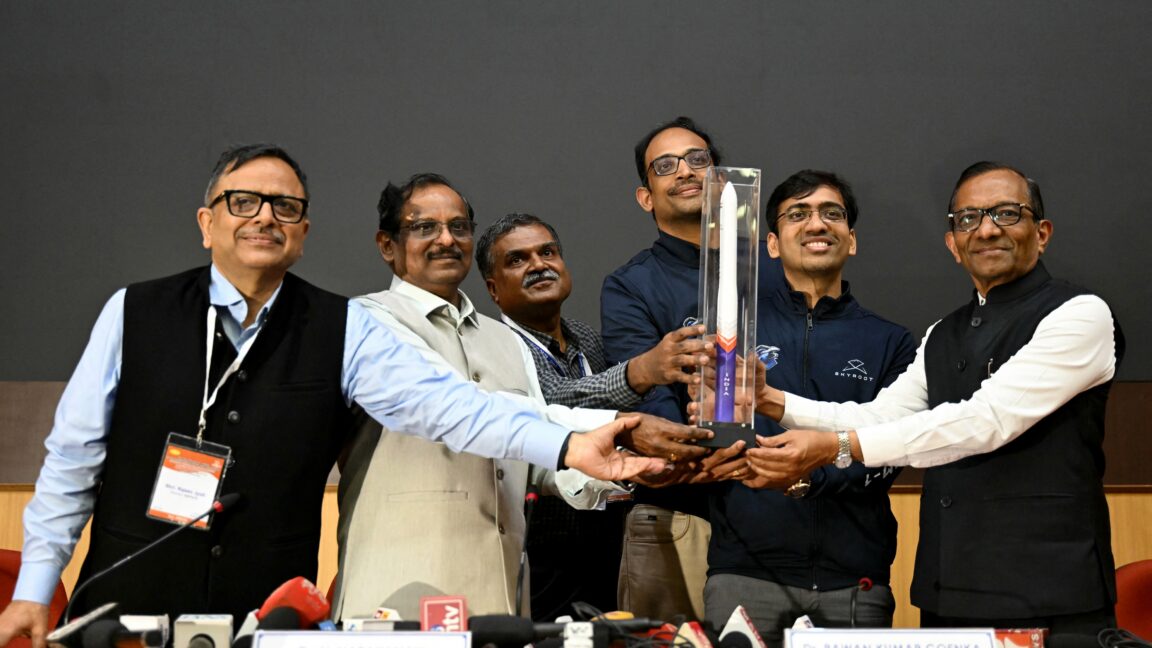
Image: courtesy of Ars Technica
Beyond ISRO: How India's First Private Orbital Rocket Reshapes the Commercial Space Race
India's private space sector marked a significant milestone on July 18, 2026, when Skyroot Aerospace successfully launched its Vikram-1 rocket into orbit. This mission, dubbed 'Mission Aagaman,' deployed multiple payloads into a 450-kilometer low Earth orbit from the Satish Dhawan Space Centre. The achievement makes India the third country globally to demonstrate private orbital launch capability, signaling a new era for its space ambitions and positioning it as a more diverse player in the competitive global market for satellite deployment.
Outlook
Background
For decades, India's space program was almost entirely the domain of the Indian Space Research Organisation (ISRO), a state-run entity that has achieved remarkable successes, including missions to the Moon and Mars, often at significantly lower costs than international counterparts. However, the global space industry has been undergoing a profound transformation, driven by private innovation from companies like SpaceX and Rocket Lab, which have disrupted traditional launch services and driven down costs.
Recognizing this shift, India began opening its space sector to private participation in 2020, aiming to leverage its engineering talent and foster a domestic space economy. This policy change paved the way for startups like Skyroot Aerospace, founded by former ISRO scientists, to develop their own launch vehicles. Vikram-1, named after the father of India's space program, Vikram Sarabhai, represents the culmination of this policy and years of private research and development. Its successful orbital deployment on July 18, 2026, is not just a technical triumph but a validation of India's strategic decision to privatize parts of its space economy, moving from a purely state-led model to one that embraces commercial competition and innovation.
Precedents
The emergence of a successful private orbital launch provider in India mirrors historical patterns seen in other leading space nations. In the United States, the dominance of government agencies like NASA and contractors like Boeing and Lockheed Martin was challenged and ultimately diversified by new private entrants such as SpaceX. These newcomers, often driven by venture capital and a 'fail fast' mentality, introduced new technologies, business models, and a significant reduction in launch costs.
Similarly, Europe has seen private companies like Arianespace operating alongside state-supported initiatives, while China's private space sector has also begun to gain traction. The initial success of a private entity often acts as a catalyst, attracting more private capital, fostering a competitive ecosystem, and ultimately expanding the overall market. The 'third country' status India now holds for private orbital launch capability places it in an elite group, suggesting it could follow a similar trajectory of rapid growth and market disruption, particularly in the small satellite segment where demand is high and launch options are still consolidating.
The successful launch of Vikram-1 changes several fundamental dynamics. Economically, it positions India as a more attractive hub for space manufacturing and services. A robust private launch capability can draw international clients seeking cost-effective and reliable access to orbit, potentially capturing a larger share of the global satellite launch market. This could lead to significant job creation in high-tech sectors and stimulate further innovation in related fields like satellite manufacturing, data analytics, and ground infrastructure.
From a geopolitical standpoint, an independent and thriving private space sector enhances India's strategic autonomy. It reduces reliance on foreign launch providers for commercial and even certain strategic payloads. It also strengthens India's standing as a technological power, demonstrating its capacity for advanced engineering and entrepreneurial drive beyond its established state-run programs.
For the global space industry, this adds another competitive player, which generally drives down costs and increases options for satellite operators. As more countries develop private launch capabilities, it decentralizes access to space, making it more resilient and potentially more affordable for a wider range of users, from research institutions to commercial entities deploying constellations of small satellites for Earth observation, communication, or scientific research. This is not just about one rocket; it's about the institutional shift that allows private capital and ingenuity to reshape a historically government-dominated domain.
Scenarios
AnalysisOne possible outcome is that the success of Vikram-1 will accelerate India's ambition to become a global hub for small satellite launches. With a proven private launch vehicle, Skyroot Aerospace could secure multiple commercial contracts within the next 12 to 18 months, leading to increased launch frequency and potentially lower per-kilogram costs for customers. This would intensify competition with established players like Rocket Lab and emerging providers in Europe and the US.
A second scenario suggests that this initial success might prompt greater collaboration between India's private space companies and ISRO. While the private sector aims for independence, sharing infrastructure, expertise, and even co-developing technologies could create a more integrated and efficient national space ecosystem. This could allow ISRO to focus on more complex, deep-space missions while private firms handle routine commercial launches.
A third, more speculative outcome, involves a significant influx of foreign direct investment into the Indian private space sector. International investors, seeing the validated capability and government support, may view India as a prime location for space-related manufacturing, research, and development, similar to how other tech sectors have attracted global capital. This could rapidly expand the scale and ambition of India's private space ventures beyond just launch services.
Conversely, there is always the possibility of regulatory or funding bottlenecks slowing down the momentum. While the initial policy framework has been supportive, ensuring consistent capital allocation, managing intellectual property, and navigating the complexities of international space law will be critical for sustained growth. Any missteps could temper the enthusiasm and slow the pace of commercialization.
Timeline
Frequently Asked Questions
Discussion
Be the first to share your thoughts.