
The coming years will see the Fermi Explorer team attempting to raise the stated $15 million, secure launch contracts, and finalize the design and construction of their 1-kilogram payload probe. The project will likely face intense scrutiny regarding its technical feasibility, funding model, and the long-term viability of a mission stretching across millennia.
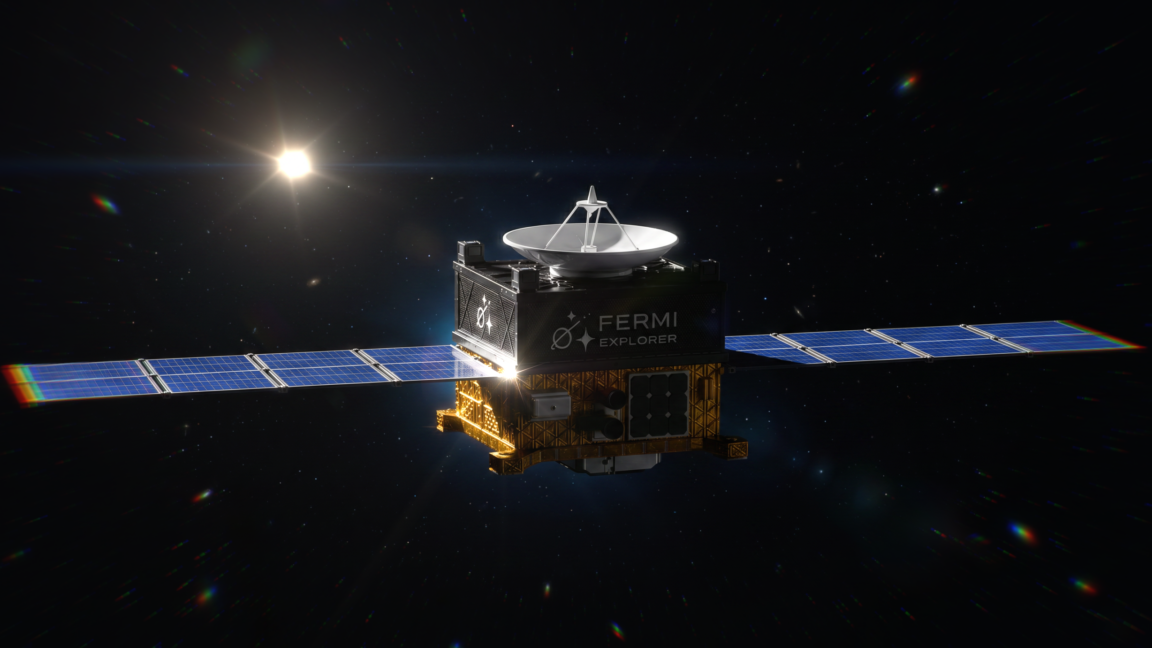
Image: courtesy of Ars Technica
The $15 Million Challenge: How a Private Group Plans to Reach Alpha Centauri in 80,000 Years
A newly announced non-profit, the Fermi Explorer Mission, has laid out plans to launch a compact, low-cost spacecraft toward Alpha Centauri by 2029. The project, aiming for a journey lasting less than 80,000 years with a budget under $15 million, seeks to address the Fermi paradox and inspire future generations through a minimal viable probe concept.
Outlook
Background
On Tuesday, September 1, 2026, entrepreneurs Philip Johnston, Ezra Feilden, and Adi Oltean publicly announced the Fermi Explorer Mission. Their ambition is stark: send a probe, roughly the size of a shoebox and carrying a 1-kilogram scientific payload, to Alpha Centauri, the closest star system to our Sun, approximately 4.4 light-years away. The journey, projected to take under 80,000 years, is intended to launch by 2029.
The mission is framed around the Fermi paradox, the perplexing question of why, given the vastness and age of the universe, humanity has not yet detected evidence of extraterrestrial life. By launching their own interstellar probe, even one with a multi-millennial transit time, the founders aim to demonstrate humanity's capacity for interstellar reach, potentially offering a partial answer to the paradox or at least shifting the terms of the conversation.
Crucially, the entire endeavor is budgeted at less than $15 million. This figure stands in stark contrast to traditional government-funded deep-space missions, which routinely cost hundreds of millions or even billions of dollars. The Fermi Explorer team plans to achieve this by leveraging existing technologies and adopting a 'cheapest possible' philosophy, focusing on a minimal viable probe rather than a complex, data-rich scientific observatory.
While NASA's Voyager 1 and Voyager 2 spacecraft have ventured into interstellar space, their trajectories are not aimed at specific star systems. The Fermi Explorer, if successful, would mark the first deliberate, directed mission toward another star, even if its arrival is far beyond human lifespans.
As of the announcement, the group is soliciting contributions and commercial bids. No flight contract or fully financed hardware program has been made public, and the detailed trajectory analysis released by the mission itself has not yet undergone independent external review. This suggests that while conceptual planning is advanced, the practical steps of securing funding and launch services are still in their early stages.
Precedents
The concept of private interstellar travel has a lineage, albeit a short one, often marked by ambitious proposals and significant financial hurdles. Projects like Breakthrough Starshot, backed by Yuri Milner and Stephen Hawking, have explored concepts for laser-propelled 'nanocraft' to Alpha Centauri, albeit with budgets in the hundreds of millions and leveraging cutting-edge, yet-to-be-developed technologies. The Fermi Explorer differs fundamentally by aiming for a significantly lower cost and relying on current, off-the-shelf components.
Historically, deep-space missions have been the exclusive domain of national space agencies like NASA or ESA. These missions, from the Voyager probes to Cassini-Huygens, represent decades of research, development, and multi-billion-dollar investments. Their complexity and longevity are a testament to engineering prowess, but also to sustained public funding and political will. The Fermi Explorer's attempt to circumvent this model with a private, minimal approach represents a new institutional challenge.
But how does a mission costing less than a single high-end yacht aim to cross the vast emptiness between stars? The answer often lies in the acceptance of trade-offs: less complex instrumentation, no immediate data return, and a journey time that dwarfs human lifespans. This approach draws parallels to early scientific endeavors, where fundamental questions were pursued with the simplest possible tools.
The challenge of maintaining public and investor interest over an 80,000-year mission is immense. Even projects with durations of a few decades, like the Voyager missions, require ongoing operational funding and scientific engagement. The Fermi Explorer's value proposition must extend beyond immediate data returns, focusing instead on symbolic achievement and foundational research.
Lessons from long-term scientific endeavors on Earth, such as the Long Now Foundation's 10,000 Year Clock, suggest that projects spanning generations require robust institutional frameworks, clear philosophical underpinnings, and a vision that can transcend individual lifetimes. The Fermi Explorer will need to articulate how it plans to sustain its institutional presence and mission integrity over such an extraordinary timeframe.
The Fermi Explorer Mission, despite its modest budget and distant arrival date, introduces several significant shifts in how humanity approaches interstellar exploration. First, it directly challenges the notion that deep-space missions are exclusively the purview of government agencies and their vast resources. By proposing a 'cheapest possible' model, it suggests a path where private capital, even limited amounts, could unlock capabilities previously considered unattainable without national backing.
Second, it reframes the very definition of a 'successful' space mission. Without the expectation of immediate data return or direct human interaction, the mission's value shifts from scientific discovery in real-time to a profound act of symbolic outreach and long-term inspiration. Its success would be measured not by the gigabytes of data transmitted, but by its existence as a testament to human ingenuity and persistent curiosity.
Third, the mission's explicit link to the Fermi paradox elevates it beyond a mere engineering challenge. It is an active, if slow, contribution to one of humanity's most profound cosmic questions. This philosophical anchoring could resonate with a broader audience, potentially drawing support from individuals and organizations interested in humanity's place in the universe, rather than just space enthusiasts or scientific institutions.
If the Fermi Explorer manages to secure its funding and achieve its 2029 launch, it would set a precedent for future, similarly lean interstellar probes. This could open doors for a decentralized, multi-pronged approach to exploring our galactic neighborhood, where numerous small, specialized probes could be launched at a fraction of the cost of traditional missions. A successful launch would also provide a tangible, if long-term, answer to the question of whether humans can send probes to other stars without multi-billion dollar expenditures.
However, a failure to launch or significant delays could also temper enthusiasm for private, low-cost interstellar efforts. The project's success or failure will inevitably become a touchstone for discussions about the viability of ambitious space exploration outside established government programs, shaping future private space ventures for decades to come.
Scenarios
Analysis1. Successful Launch and Journey (Conceptual Validation): The Fermi Explorer Mission secures its full $15 million in funding, successfully navigates the technical challenges of building a robust, long-duration probe, and launches by its target date of 2029. The spacecraft embarks on its multi-millennial journey towards Alpha Centauri, becoming a powerful symbol of human ambition and ingenuity. This outcome would validate the 'minimal viable probe' concept, potentially inspiring a new wave of private interstellar initiatives and altering perceptions of what is achievable in deep space with limited resources.
2. Funding or Technical Delays (Stalled Ambition): The project struggles to raise the necessary $15 million, encounters unforeseen technical hurdles during development, or fails to secure a launch window by 2029. Such setbacks could lead to significant delays, a scaling back of the mission's ambitions, or, in a more severe scenario, the project being shelved indefinitely. This outcome would highlight the immense practical difficulties inherent in any interstellar mission, even one designed for the lowest possible cost, and might temper future private sector enthusiasm for such endeavors.
3. Hybrid Outcomes (Partial Success or Re-evaluation): The mission might launch, but with a reduced scientific payload, a higher final cost, or a later launch date than initially planned. Alternatively, the Fermi Explorer project itself might not achieve all its stated goals, but its pioneering efforts in trajectory analysis, low-cost design, or philosophical framing could inspire other, better-funded initiatives that build upon its core philosophy. For instance, the independent verification of its trajectory might pave the way for a more robustly funded follow-up mission, even if the original probe never reaches its full potential.
Timeline
2026-09-01
Fermi Explorer Mission Announced
Entrepreneurs Philip Johnston, Ezra Feilden, and Adi Oltean publicly announced the Fermi Explorer Mission, detailing plans for a $15 million, 80,000-year mission to Alpha Centauri by 2029.
2029
Proposed Launch Date
The Fermi Explorer Mission aims to launch its 1-kilogram probe towards Alpha Centauri by this year, leveraging existing technology and a minimal viable probe concept.
~80,000 years after launch
Anticipated Arrival at Alpha Centauri
The Fermi Explorer probe is designed to reach the Alpha Centauri star system in less than 80,000 years, making it the first deliberately directed mission to another star, long after its creators are gone.
Frequently Asked Questions
The Fermi Explorer Mission is a project by a private non-profit group aiming to launch a small, low-cost spacecraft to Alpha Centauri, the nearest star system to our Sun, by 2029. It's designed for an 80,000-year journey and budgeted at under $15 million.
Discussion
Be the first to share your thoughts.