
Veridact
TechSportsFinanceGaming🎯 Predictions⭐ OpportunitiesAbout
Sign InSign Up
Veridact

Analysis before the headline. Veridact examines technology, finance, sports, and gaming events before they unfold through forecasting, probability modeling, historical precedent, and public prediction tracking.

Stay ahead of what's next

Forecasts, analysis, and prediction updates delivered to your inbox.

Coverage

  • Tech
  • Sports
  • Finance
  • Gaming

Company

  • About Us
  • Privacy Policy

© 2026 Veridact. Forecasting & analysis platform.

Content may include AI-assisted research and analysis. Predictions and opinions should not be considered financial, legal, medical, or investment advice.

tech
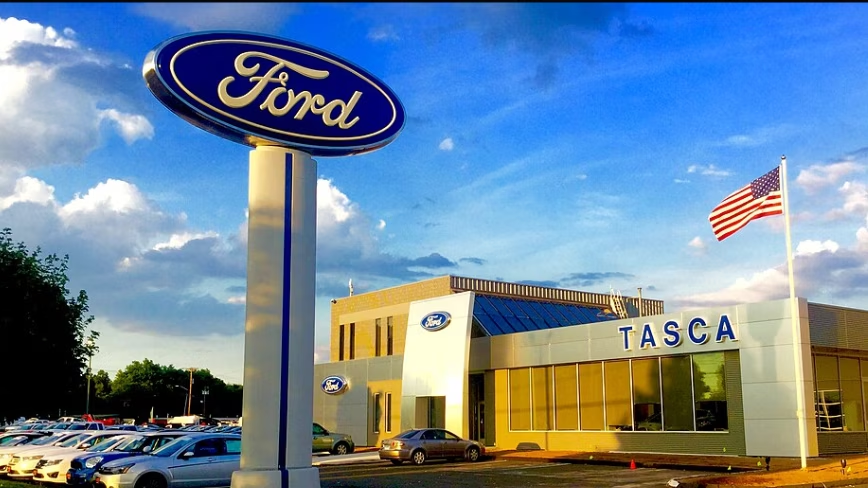
Ford is switching from Google to Apple Maps for its next-generation EVs

Image: courtesy of Thenextweb

techJuly 24, 2026By Veridact EditorialUpdated Jul 24

Ford's Apple Maps Pivot: The New Battle for In-Car Software Control in EVs

Ford Motor Co. is making a significant strategic shift, announcing on Thursday that its next-generation electric vehicles (EVs) will integrate Apple Maps for core navigation and EV-specific features, moving away from Google Maps on this new platform. The partnership, set to debut with a midsize electric vehicle in 2027, signals a deeper embrace of Apple's automotive technology, including route planning and battery preconditioning. This move suggests a broader industry trend where automakers are carefully weighing control over the digital experience against the convenience of established tech ecosystems.

Outlook

Ford's Universal Electric Vehicle (UEV) platform, which will underpin its upcoming midsize EV in 2027, will feature Apple Maps as its embedded navigation system. This integration goes beyond simply supporting Apple CarPlay; it means Apple Maps will be built directly into the vehicle's infotainment system. Drivers can expect advanced route planning tailored for electric vehicles, including optimized charging stops and real-time traffic data. The system will also incorporate battery preconditioning, a critical feature for EV efficiency, by preparing the battery for optimal charging temperatures as the vehicle approaches a charging station.

Crucially, Ford has confirmed that buyers will not need a separate Apple subscription to use this integrated software. The partnership extends to leveraging Apple Maps information to help develop Ford's next version of its hands-free driving technology, BlueCruise. This suggests a deeper collaboration than a simple app swap, aiming to create a cohesive digital driving experience from navigation to assisted driving functionalities. While this move focuses on the next-gen UEV platform, Ford has also been rolling out updates to existing vehicles, like the 2021 Ford Mustang Mach-E, expanding Apple Maps EV Routing capabilities via CarPlay, indicating a dual-track approach to its software strategy.

Background

The automotive industry has been grappling with how to integrate advanced software and connectivity into vehicles, particularly as electric powertrains become standard. For years, tech giants like Google and Apple have vied for dominance in the car, primarily through smartphone mirroring systems like Android Auto and Apple CarPlay. These systems project a phone's interface onto the car's screen, offering navigation, music, and messaging.

However, a deeper battle has emerged for the underlying operating system and embedded services. Google, with its Android Automotive OS, has pushed for a full integration where its software powers the entire infotainment stack, giving it more control over the driver's data and digital experience. Ford itself has had significant partnerships with Google, including a six-year deal announced in 2021 to use Android for in-car features and services, and has offered Google Maps for EV route planning in some models.

Ford's decision to embed Apple Maps directly into its next-generation EV platform, rather than relying solely on Android Automotive or a generic third-party solution, represents a strategic choice. It indicates a desire to tailor the core navigation experience with a specific partner for its future EV architecture. This is not just about maps; it is about who controls the digital front door of the car and the data generated within it.

See also

We tried Google’s AI glasses and they’re almost there→Why Apple Might Put Cameras Into Its Next AirPods→Apple destroyed the mid-tier watch market. Now it’s coming for the $200 billion eyewear industry.→For the second time, Apple Intelligence is delayed in Europe, and this time there is no timeline→

Precedents

The history of in-car navigation and infotainment systems is marked by a tension between proprietary automaker solutions and third-party tech integrations. Early in-car GPS systems were often clunky, expensive, and quickly outdated, leading consumers to rely on their smartphones for better navigation. This opened the door for Apple CarPlay and Android Auto to become ubiquitous, offering a familiar, up-to-date interface.

Automakers initially embraced these mirroring solutions as a way to provide modern functionality without the massive R&D investment required to build and maintain their own competitive software. However, as cars become more software-defined, the strategic importance of owning the in-car digital experience has grown. Companies like Tesla have shown the power of a fully integrated, proprietary software stack, offering seamless updates and unique features.

Traditional automakers are now seeking ways to regain control, either by developing their own operating systems, as General Motors is doing with its Ultifi platform, or by forging deeper, more customized partnerships with tech companies that allow for greater brand differentiation and data ownership. Ford's move with Apple Maps for its UEV platform can be seen as a middle ground: leveraging a leading tech provider's expertise while potentially maintaining more control than a full Android Automotive adoption might allow.

This shift is more than a simple vendor change; it impacts several critical areas for Ford, Apple, and the broader automotive industry.

For Ford, it represents a deliberate strategic choice for its future EV lineup. By embedding Apple Maps, Ford aims to offer a premium, seamless navigation experience that could differentiate its UEV models in a crowded EV market. It also suggests Ford is carefully managing its relationships with tech partners, seeking specific integrations that align with its product vision rather than a one-size-fits-all approach. Control over navigation data and its integration with features like BlueCruise could be invaluable for future vehicle development and monetization opportunities.

For Apple, this is a significant win in its quiet but persistent push into the automotive sector. While 'Apple Car' rumors persist, the company has steadily expanded its influence through CarPlay and now, through deeper embedded integrations like this one with Ford. Securing a direct, embedded role in a major automaker's next-generation platform provides Apple with more user data, expands its ecosystem reach, and validates its MapKit for Automotive SDK as a viable alternative to Google's offerings. It positions Apple not just as a content provider, but as a core technology partner.

The automotive industry will be watching closely. This move could signal a fragmentation in how automakers approach in-car software. Instead of a clear dominance by one tech giant, we might see more bespoke partnerships, with different automakers aligning with different tech firms based on their specific needs and brand identities. This increases competition between Apple and Google for embedded automotive integrations, potentially leading to more innovation and better options for consumers, but also potentially more complexity for developers and a less standardized experience across different car brands.

Scenarios

Analysis

1. Increased Competition and Specialization in Automotive Software: Ford's decision could inspire other automakers to explore similar deep integrations with Apple or other tech providers, rather than fully committing to a single operating system like Android Automotive. This might lead to a more diverse and specialized in-car software market, where different car brands offer distinct digital experiences.

2. Enhanced User Experience and Brand Loyalty for Ford EVs: By integrating Apple Maps directly, Ford could create a highly polished and intuitive navigation experience for its next-gen EV drivers. This could attract consumers who are already deeply embedded in the Apple ecosystem, potentially boosting sales and fostering brand loyalty for Ford's new electric offerings. The seamless integration with BlueCruise could further strengthen this appeal.

3. Apple's Growing Influence in Automotive Technology: This partnership expands Apple's footprint beyond CarPlay mirroring to embedded systems. If successful, it could pave the way for Apple to secure similar deals with other major automakers, solidifying its position as a key technology provider in the automotive sector and potentially challenging Google's ambitions for complete infotainment dominance.

4. Google's Strategic Response: Google may intensify its efforts to secure more full Android Automotive OS integrations with other manufacturers or enhance its own Map APIs and EV routing capabilities to remain competitive. It could also lead to Google offering more flexible or modular integration options to automakers who prefer not to cede full control to a single tech giant.

5. Data and Revenue Opportunities for Ford: By having a direct integration using Apple's SDK, Ford could gain more control over the data generated by its navigation systems compared to a full third-party OS. This data could be crucial for developing future services, enhancing autonomous driving features, and potentially unlocking new revenue streams through personalized in-car offerings.

Timeline

2021
Ford-Google Partnership Announced
Ford announced a six-year partnership with Google to use Android for in-car features and services, including Google Maps for route planning.
2026-07-23
Ford Announces Apple Maps Integration for Next-Gen EVs
Ford and Apple officially announced their partnership, confirming that Apple Maps will be embedded in Ford's Universal Electric Vehicle (UEV) platform, including features like EV route planning and battery preconditioning.
2027
Debut of Ford's Midsize EV with Apple Maps
Ford's first next-generation electric vehicle, a midsize model built on the UEV platform, is expected to debut with the integrated Apple Maps navigation system.

Frequently Asked Questions

CONFIRMED: For its next-generation Universal Electric Vehicle (UEV) platform, Ford is integrating Apple Maps as the embedded navigation system, replacing Google Maps in that specific context. INFERRED: Ford will likely continue to support Android Auto and Apple CarPlay, meaning drivers can still use Google Maps or other navigation apps via their smartphones in many Ford vehicles, including existing models. This move is specific to the embedded system on the new UEV platform.

Discussion

0/100
0/1000

Be the first to share your thoughts.

Related Coverage

tech

JPMorgan's $5 Billion Bet on Volta: The Shifting Economics of AI Infrastructure

Aug 28
tech

The Unsleeping AI: What OpenAI's Persistent Agent Means for Control and Capability

Aug 28
tech

The UK's Power Grid Is Overwhelmed by 'Phantom' Data Centers. What This Means for AI Ambitions

Aug 28
tech

Google Engineer's 'Gambling' Defense Tests Legal Limits of Prediction Markets

Aug 28

Stay ahead of the story

AI analysis delivered before events unfold. No spam.

ⓘ

Methodology: Veridact combines public data, historical precedent, and analytical models to evaluate the likelihood of future outcomes.