
Transportation Secretary Sean Duffy is expected to release the full technical post-mortem detailing how routine router maintenance cascaded into a nationwide aviation paralysis. The forthcoming official report will likely place intense scrutiny on procurement oversight, private contractor accountability, and the operational fragility of the systems managing America's air traffic control centers.
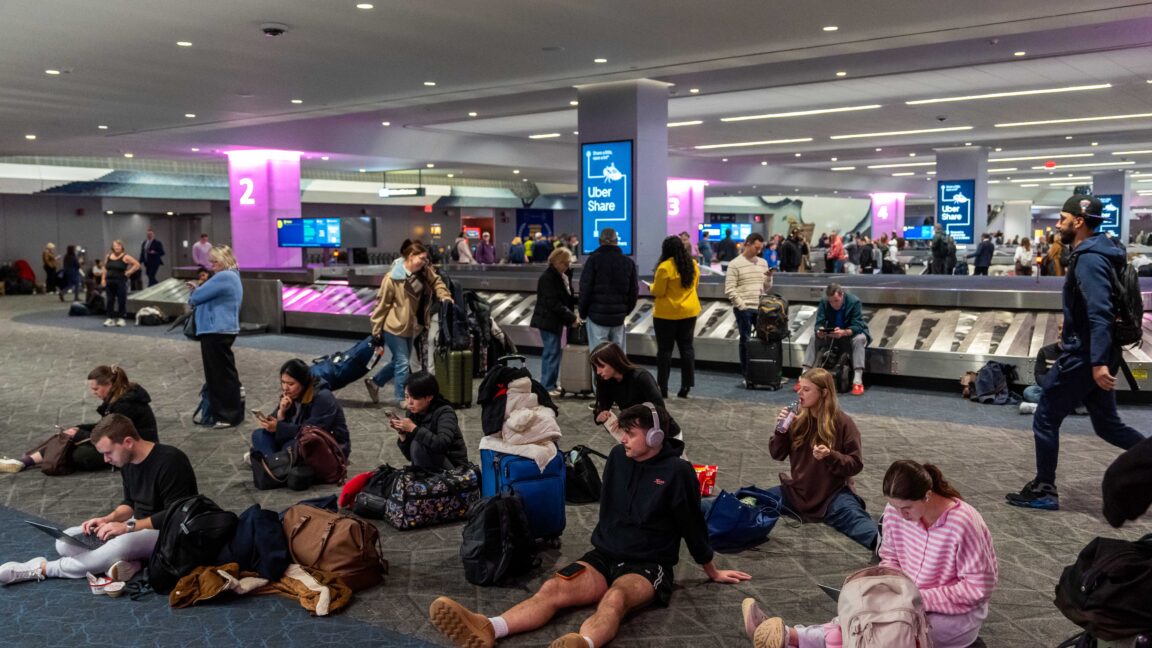
Image: courtesy of Ars Technica
Why A Single Router Update Froze American Airspace For 12,000 Flights
Following the Federal Aviation Administration's third-ever nationwide ground stop on November 13, 2026, federal officials are preparing to reveal how an automated equipment update by contractor L3Harris overwhelmed aging analog infrastructure with thousands of connection attempts every few seconds.
Outlook
Background
The nationwide ground stop grounded more than 12,000 flights on November 13, 2026, ballooning past 20,000 cancellations over the subsequent weekend. Preliminary investigations revealed the disruption stemmed from a newly installed router managed by private network service provider L3Harris. The device flooded the network architecture with a thousand connection attempts every four to five seconds, overloading switches and routers within analog communication and radar feeds across all Air Route Traffic Control Centers. FAA Administrator Bryan Bedford has explicitly denied speculation that the incident was linked to testing of artificial intelligence air traffic management systems.
Precedents
Modern aviation infrastructure has long struggled to bridge the gap between legacy hardware and modern digital networking demands. Past failures, including the January 2023 Notice to Air Missions (NOTAM) system outage, exposed how localized software or data corruptions can rapidly cascade across nationwide networks. Private contracting models have frequently faced friction when balancing rapid technological updates against rigorous government oversight and risk assessment protocols.
The reliance of critical national infrastructure on private vendors introduces complex execution risks that go far beyond standard corporate supply chains. When a single router replacement can immobilize commercial aviation for millions of passengers, the debate shifts from software bugs to systemic structural vulnerabilities. Lawmakers and regulators now face urgent questions regarding capital allocation priorities, infrastructure modernization spending, and the exact boundaries of contractor accountability in public-private aviation management.
Scenarios
AnalysisCongress could introduce stricter regulatory oversight and mandatory safety buffers for private contractors performing live network updates on critical FAA infrastructure. Alternatively, the agency may accelerate multi-billion-dollar capital allocation plans to replace legacy analog systems with modern architectures less susceptible to runaway connection traffic. Another possible outcome is that institutional friction between private vendors and federal regulators slows down modernization schedules as compliance costs rise.
Timeline
November 13, 2026
Nationwide Ground Stop
The FAA issues its third-ever nationwide ground stop, halting more than 12,000 flights due to telecommunications and radar feed instability.
November 13, 2026 (Evening)
Airspace Reopened
Transportation Secretary Sean Duffy and DHS Secretary Markwayne Mullin announce the lifting of the ground stop after emergency network stabilization.
Late November 2026
Root Cause Reveal
Federal officials prepare to release the definitive technical report detailing the L3Harris router malfunction and excessive connection traffic.
Frequently Asked Questions
The incident was triggered by a telecommunication problem involving a newly installed router from private contractor L3Harris. The device generated excessive network traffic by sending a thousand connection attempts every four to five seconds, crashing analog communication systems and radar feeds across air traffic control centers.
Discussion
Be the first to share your thoughts.