
The public backing from Donald Trump for Gianni Infantino is likely to intensify the already complex political dynamics within FIFA. Federations that have called for Infantino's resignation may find their positions complicated by a high-profile political endorsement, potentially forcing them to re-evaluate the optics of their opposition. Conversely, those who support Infantino could leverage Trump's comments to bolster their arguments for his continued leadership, especially regarding the World Cup's commercial success. The debate around Infantino's future will now likely unfold under a more visible international spotlight, with a renewed focus on the financial performance of major tournaments versus concerns about governance and transparency. The failed investment plan, which was a core reason for the criticism, will remain a central point of contention.
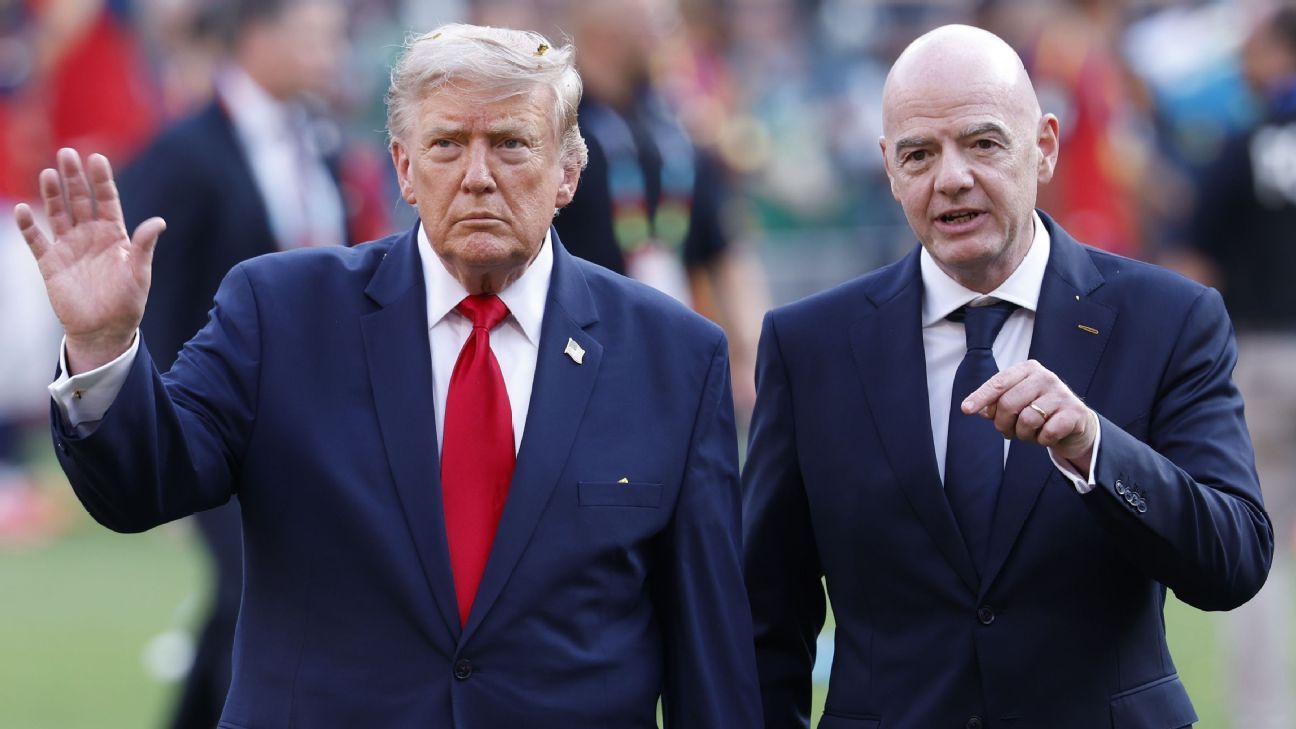
Image: courtesy of ESPN
Beyond the Endorsement: What Trump's Support Means for FIFA Chief Gianni Infantino's Future
Former US President Donald Trump publicly defended FIFA President Gianni Infantino on August 11, 2026, warning that replacing him would be a "terrible mistake." Trump praised Infantino's leadership of the recent World Cup, calling it the "most successful" ever and suggesting FIFA's profitability would suffer without him. This strong endorsement comes as Infantino faces significant criticism from various soccer federations over a controversial, ultimately unsuccessful, plan to sell stakes in the World Cup. Trump's intervention adds a new layer to the internal political pressures building within FIFA regarding Infantino's leadership.
Outlook
Background
FIFA President Gianni Infantino has found himself at the center of a governance storm, primarily stemming from a contentious proposal to sell significant stakes in major FIFA competitions, including the World Cup. This plan, which ultimately did not move forward, drew sharp criticism from several powerful soccer federations globally. These federations expressed concerns about the dilution of FIFA's control over its flagship tournaments and the financial structure of the proposed deal, questioning its long-term benefits and the process by which it was developed. Some critics viewed the plan as a desperate measure, reflective of broader financial management issues or a lack of transparent decision-making within the organization.
Into this already charged atmosphere stepped Donald Trump, who on Monday, August 11, 2026, issued a stark warning against any move to replace Infantino. Trump's statement lauded Infantino for presiding over what he described as the "most successful World Cup, by four times, ever presented." The former president went further, asserting that without Infantino, FIFA's future success and profitability would be jeopardized. This public declaration is notable not just for its content, but for its timing and the source. Trump and Infantino were photographed together holding the World Cup trophy on July 19, 2026, and also at the World Cup final last month, suggesting a degree of personal rapport or shared interest.
Such a high-profile political endorsement is unusual in the internal machinations of a global sports body like FIFA. While national leaders often engage with FIFA during World Cup bids or hosting, a direct intervention into the leadership succession or stability of the organization's president is less common. This suggests a potential alignment of interests, particularly concerning the commercial scale and visibility of the World Cup, a tournament that generates billions in revenue and global attention. For Infantino, facing calls for his ouster, this endorsement provides a significant, if politically charged, shield against his critics. For FIFA, it injects an unpredictable political element into an already fraught internal debate about its leadership and strategic direction.
See also
Precedents
The history of FIFA leadership is replete with interventions, both overt and subtle, from powerful political figures and national federations. The organization, as the global governing body for football, wields immense influence and controls significant financial flows, making its presidency a position of considerable geopolitical interest. Past FIFA elections and leadership challenges have often seen candidates align themselves with powerful national interests or regional blocs to secure votes.
Perhaps the most prominent historical parallel involves the tumultuous end of Sepp Blatter's reign. Blatter, who led FIFA for 17 years, faced intense pressure and ultimately resigned in 2015 amid widespread corruption scandals. During his tenure, and even in his final days, Blatter navigated a complex web of international political relationships, often leveraging support from developing nations to counter opposition from powerful European federations. The United States, through its legal actions, played a significant role in accelerating Blatter's downfall.
While Trump's endorsement of Infantino does not stem from a corruption probe, it mirrors the way external political weight can be brought to bear on FIFA's internal processes. In the past, World Cup hosting bids have been heavily influenced by diplomatic maneuvering and political lobbying at the highest levels. The economic impact and prestige of hosting a World Cup often lead governments to involve themselves directly in FIFA's affairs, whether through official channels or less formal endorsements.
However, direct public warnings from a former head of state about replacing the FIFA president are less common. Typically, such influence is exerted through diplomatic channels, or by aligning national federations. Trump's direct, public statement on August 11, 2026, represents a more overt form of political intervention, potentially signaling a new era where the perceived success of major events, particularly those with significant US involvement, could draw direct political patronage. This move could set a precedent, encouraging other political leaders to weigh in on future FIFA leadership contests or policy debates, blurring the lines between sports governance and international politics.
Donald Trump's public defense of Gianni Infantino is more than just a passing comment; it is a significant political intervention that could reshape the power dynamics within global football. FIFA, already grappling with internal divisions over its financial strategies and governance, now faces an external political endorsement that complicates the path forward for its president.
For Infantino, this support offers a powerful, albeit controversial, shield against his critics. It frames his leadership not just in terms of internal FIFA politics or the failed investment plan, but through the lens of delivering a "successful" World Cup, a metric that resonates strongly with the public and commercial partners. This could give him leverage in upcoming internal debates or potential re-election campaigns, particularly if he can consolidate support from federations that prioritize commercial success and perceive a benefit from high-level political backing.
For the federations pushing for Infantino's resignation, Trump's statement creates an awkward dilemma. Directly opposing Infantino now means implicitly rejecting an endorsement from a figure who has demonstrated considerable global influence. This could force some to temper their criticism or seek alternative strategies for change within FIFA, potentially shifting the focus from Infantino's immediate removal to broader reforms or a more gradual transition of leadership. It also raises questions about the extent to which political figures from host nations might increasingly try to influence FIFA's internal affairs, especially given the US's prominent role in recent and upcoming World Cups.
The broader consequence is a potential further politicization of global football governance. When the leader of a major global sports organization receives such an explicit endorsement from a former head of state, it indicates that the stakes extend beyond the traditional boundaries of sports administration. It suggests that geopolitical considerations, national interests, and even personal relationships could play an increasingly prominent role in determining who leads FIFA and what policies it pursues. This might impact future World Cup bids, commercial partnerships, and the overall independence of the organization, potentially making it more susceptible to external political pressures.
Scenarios
AnalysisThe immediate aftermath of Donald Trump's intervention could lead to several distinct outcomes for Gianni Infantino's leadership at FIFA and the broader governance of global football.
Outcome 1: Infantino Consolidates Power and Resists Ouster Attempts.
Trump's endorsement, particularly his emphasis on the World Cup's commercial success under Infantino, provides a significant narrative advantage. This might allow Infantino to rally support from federations that prioritize financial returns and global visibility over governance concerns related to the failed investment plan. The political weight of Trump's statement could make it harder for critics to push for an immediate resignation or a successful no-confidence vote, as it would imply opposition to a widely recognized figure. Infantino could leverage this backing to strengthen his position, potentially securing another term or fending off immediate challenges by presenting himself as the leader capable of delivering highly profitable and successful global tournaments. The criticism over the investment plan could be reframed as a necessary, albeit ultimately unexecuted, attempt to secure FIFA's financial future, with Trump's praise for the World Cup's success serving as counter-evidence to claims of poor financial stewardship.
Outcome 2: Trump's Endorsement Backfires, Intensifying Opposition.
While Trump's support offers a shield, it could also galvanize Infantino's opponents, especially those from federations that might be politically at odds with Trump or wary of external political interference in FIFA's affairs. Some federations, particularly those with strong traditions of sporting autonomy, might view such an endorsement as an unwelcome intrusion, prompting them to redouble their efforts to remove Infantino. The controversy surrounding Trump himself, and the political divisions he often evokes, could attach a new layer of political baggage to Infantino's presidency, making it harder for him to build consensus across the diverse global football community. This outcome could lead to a more entrenched and polarized internal struggle within FIFA, potentially forcing a leadership contest sooner rather than later, with the endorsement becoming a liability rather than an asset.
Outcome 3: A Politically Charged Status Quo with Lingering Uncertainty.
Neither a clear consolidation of power nor an immediate ouster may occur. Instead, Trump's intervention could simply add another complex layer to an already unstable situation, resulting in a prolonged period of uncertainty for Infantino. The endorsement might protect him from immediate removal but may not be enough to fully restore confidence or silence critics regarding governance issues. FIFA could find itself in a politically charged status quo, where Infantino remains in power, but faces continued scrutiny, internal dissent, and external pressures. This scenario would keep the organization in a state of flux, potentially impacting its ability to make long-term strategic decisions, plan for future tournaments, or implement necessary reforms, as the focus remains on leadership stability rather than strategic direction. The failed investment plan would continue to be a source of internal tension, periodically resurfacing as a point of contention.
Timeline
Frequently Asked Questions
Discussion
Be the first to share your thoughts.