
The immediate expectation is that the Steelers will re-evaluate their roster needs and draft strategy, especially after shedding two recent high picks. The trades free up roster spots and potentially some salary cap flexibility, but they also signal a significant loss of invested capital. Fans and analysts will closely watch the team's performance in the upcoming season and its approach to the next NFL Draft to see if these moves represent a fundamental shift in how Pittsburgh identifies and develops talent.
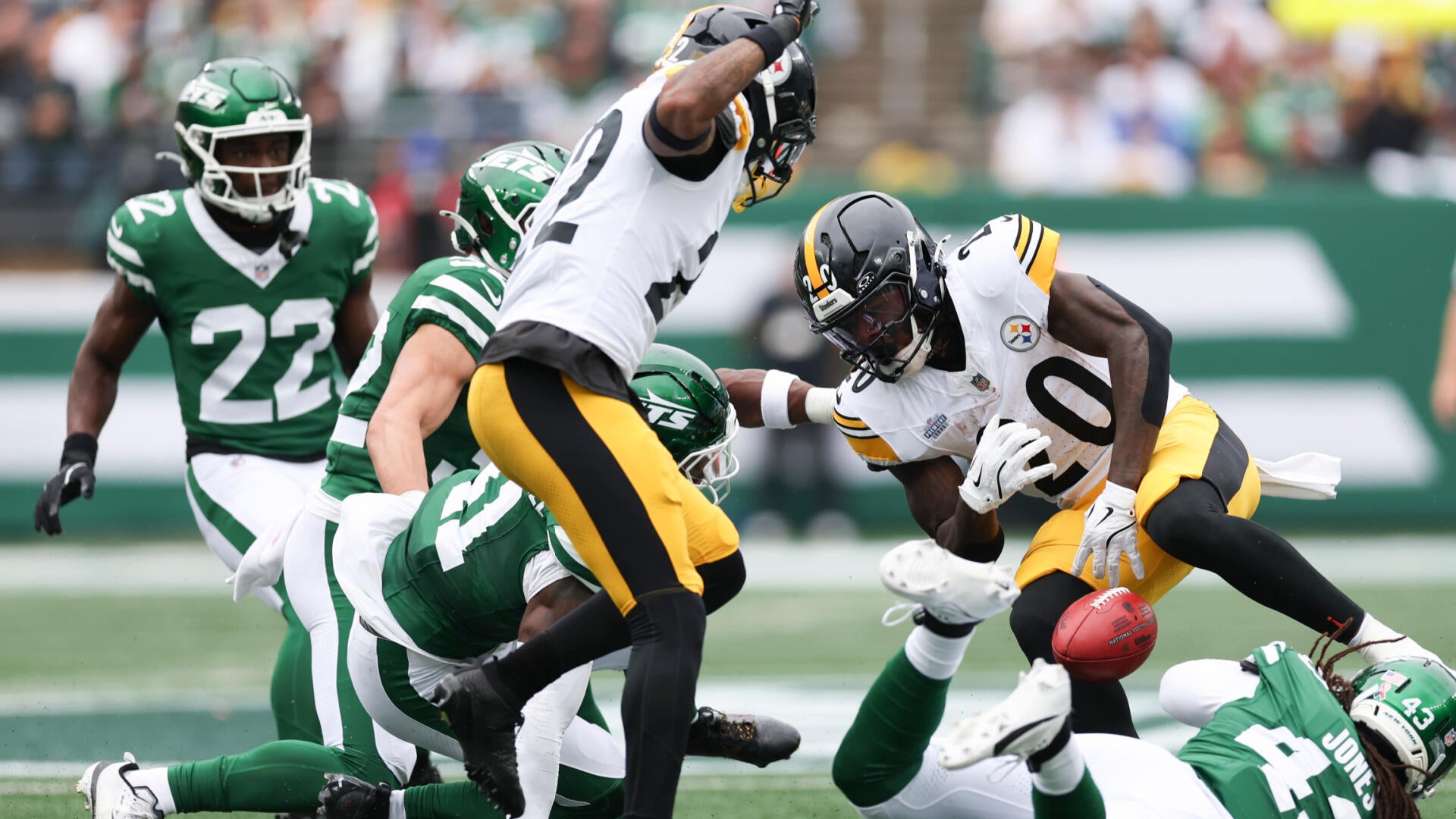
Image: courtesy of Cbs Sports
Beyond the Trades: How Pittsburgh's Draft Misses Are Redefining the Steelers' Future
The Pittsburgh Steelers traded high draft picks Kaleb Johnson and Broderick Jones on August 30, underscoring a growing pattern of draft struggles that have plagued the franchise. These moves, following the earlier departure of first-round quarterback Kenny Pickett, highlight a period where the team has consistently failed to extract value from its top selections, raising questions about its competitive trajectory.
Outlook
Background
On August 30, the Pittsburgh Steelers moved two of their recent high draft selections, trading running back Kaleb Johnson to the Green Bay Packers and defensive tackle Broderick Jones to the Dallas Cowboys. These transactions occurred just hours before the NFL's roster deadline, confirming the team's decision to cut ties with players who had not met expectations.
Kaleb Johnson, a running back, was a high pick whose rookie season in the previous year was marked by limited production. He carried the ball 28 times for a mere 69 yards, averaging 2.5 yards per attempt. His receiving impact was negligible, with only one catch for nine yards across ten games. Johnson also handled kick return duties, returning eight kicks for 190 yards, but a costly special teams error early in his rookie campaign further complicated his standing with the team.
Broderick Jones, a defensive tackle, was another early selection who did not secure a consistent role or demonstrate the impact expected of a player drafted so highly. While the specific details of his performance were not immediately available, his trade alongside Johnson suggests a shared narrative of underperformance relative to draft position.
These moves come after the Steelers also parted ways with quarterback Kenny Pickett, a first-round pick in a previous draft. Pickett's tenure with the team was widely seen as a significant miss, with the franchise failing to develop him into a long-term starter. The cumulative effect of these high-profile departures has brought the Steelers' drafting record under intense scrutiny.
Precedents
The recent trades of Johnson and Jones, along with the earlier situation involving Kenny Pickett, are not isolated incidents but rather symptoms of a deeper, more troubling trend for the Pittsburgh Steelers. For decades, the Steelers were renowned for their ability to find and develop talent through the NFL Draft, a cornerstone of their consistent success. However, the last several years have seen a notable decline in the hit rate for their top selections.
This pattern is perhaps best illustrated by the case of Devin Bush, a former first-round linebacker acquired by the Steelers in a trade-up during the 2019 NFL Draft. While Bush showed flashes of potential, particularly early in his career, his overall contribution never matched the investment. His Weighted Approximate Value (wAV), a metric that measures a player's overall impact based on game statistics and playing time, finished at 37 for his entire career. This figure falls just below the 39.0 wAV average for players selected in the top half of the first round (picks 1-16). More critically, his Draft Approximate Value (AV) with Pittsburgh, which measures his value specifically during his time with the team, stood at a low 21. For context, first-round picks (1-16) generally average a 39.0 wAV, while those in the latter half (17-32) average 26.9 wAV. When considering where Pittsburgh typically drafts, usually outside the top 10, the raw comparison of their picks' average wAV (27.0) against the league average for their draft slots (32.9) indicates a consistent underperformance.
This historical context suggests that the issue extends beyond individual player evaluations. It points to systemic challenges in either scouting, player development, or perhaps even a philosophical approach to team building. The rapid depreciation of high draft picks, as exemplified by Johnson and Jones being traded so soon after their selection, highlights the financial and strategic cost of these misses. Each high pick represents not just a roster spot, but also significant resources—salary cap space, coaching attention, and the opportunity cost of not drafting another player. When these investments fail to yield results, the team is forced to make difficult decisions, often cutting bait early and accepting a diminished return on their initial outlay. This cycle makes it harder to build a deep, talented roster necessary for sustained contention, especially in a league designed for parity.
The Steelers' ongoing struggles with high draft picks carry significant implications for the franchise's immediate future and its long-term competitive standing. A team's ability to consistently draft and develop talent is the bedrock of sustained success in the NFL, especially for a franchise that has historically avoided free agency splurges in favor of internal growth. When top picks fail to pan out, it creates a cascading effect:
First, it leaves critical roster holes unfilled. Instead of having young, cost-controlled talent contributing on the field, the team finds itself needing to acquire players through more expensive avenues like free agency or by dedicating additional, later-round draft capital to address the same positions. This strains the salary cap and limits flexibility.
Second, it impacts coaching stability and player development. If the talent brought in isn't meeting expectations, it can put pressure on coaching staff to perform with an incomplete roster, and it can signal issues within the development pipeline itself.
Third, and perhaps most importantly for a storied franchise like the Steelers, it erodes fan confidence. A loyal fanbase that has grown accustomed to consistent winning and Super Bowl contention becomes increasingly frustrated when the team struggles to find foundational pieces through the draft. The trades of Johnson and Jones, following Pickett's departure, are stark reminders that the team is not just missing on individual players, but potentially on a larger strategy.
This trend directly impacts the Steelers' ability to return to Super Bowl contention. Without a reliable stream of high-impact players from the draft, the path to building a championship-caliber roster becomes significantly steeper. The front office faces immense pressure to reverse this pattern, as the alternative is a continued period of mediocrity in a league where consistent excellence is increasingly difficult to achieve.
Scenarios
AnalysisThe Steelers' continued struggle with high draft picks could lead to several distinct outcomes, each with its own set of consequences:
1. A Fundamental Shift in Drafting Philosophy: The most direct response could be a comprehensive overhaul of the team's scouting and player evaluation processes. This might involve changes in personnel within the front office, a re-emphasis on specific player attributes, or a more conservative approach to trading up in the draft. The team might prioritize 'safer' picks with higher floors over 'high-upside' players who carry greater risk. Such a shift would aim to reduce the number of outright busts and ensure that future first-rounders consistently contribute.
2. Increased Reliance on Free Agency and Trades: If the draft continues to be an unreliable source of talent, the Steelers may be forced to become more aggressive in the free agency market and through trades to acquire established players. This approach, while potentially yielding immediate results, comes with higher financial costs and often involves giving up future draft capital, which further limits their ability to rebuild through traditional means. It could lead to a 'win-now' mentality that sacrifices long-term roster stability for short-term gains.
3. Extended Period of Competitive Mediocrity: If the issues with drafting persist and the team fails to adequately compensate through other avenues, the Steelers could face an extended period of competitive mediocrity. This would mean consistently fielding competitive but ultimately not championship-caliber teams, struggling to advance deep into the playoffs, and failing to meet the high expectations of their fanbase. This outcome would likely lead to significant pressure on coaching staff and front office leadership to deliver tangible results.
4. A Focus on Positional Value: The team might re-evaluate its approach to positional value, potentially moving away from drafting positions like running back high in the draft, given the short shelf-life and availability of talent later on. Instead, they might focus on premium positions such as offensive line, defensive line, and quarterback, where high-end talent is scarcer and more impactful over a longer term.
Timeline
2019 NFL Draft
Devin Bush Drafted
The Steelers traded up in the first round to select linebacker Devin Bush, who later underperformed relative to his draft position, setting an early precedent for high-pick struggles.
2022 NFL Draft
Kenny Pickett Drafted
The Steelers selected quarterback Kenny Pickett in the first round. He later departed the team, marking a significant miss at a crucial position.
August 30, 2026
Kaleb Johnson and Broderick Jones Traded
The Pittsburgh Steelers traded running back Kaleb Johnson to the Green Bay Packers and defensive tackle Broderick Jones to the Dallas Cowboys, signaling a continued struggle with developing high draft picks.
Frequently Asked Questions
Kaleb Johnson was a running back drafted by the Steelers. Broderick Jones was a defensive tackle. Both were relatively high draft picks who were traded by the Steelers on August 30, 2026, after failing to meet expectations.
Discussion
Be the first to share your thoughts.