
Veridact
TechSportsFinanceGaming🎯 PredictionsAbout
Sign InSign Up
Veridact

AI-powered anticipation analysis. We cover tech, sports, finance, and gaming events before they happen — with historical context, scenario modeling, and evolving coverage.

Stay ahead of the story

Analysis delivered before events unfold.

Coverage

  • Tech
  • Sports
  • Finance
  • Gaming

Company

  • About Us
  • Privacy Policy

© 2026 Veridact. AI-assisted analysis platform.

Analysis is AI-generated and not professional financial, legal, or medical advice.

Sports
NHL Insider Reveals Darnell Nurse’s Preferred Trade Destinations

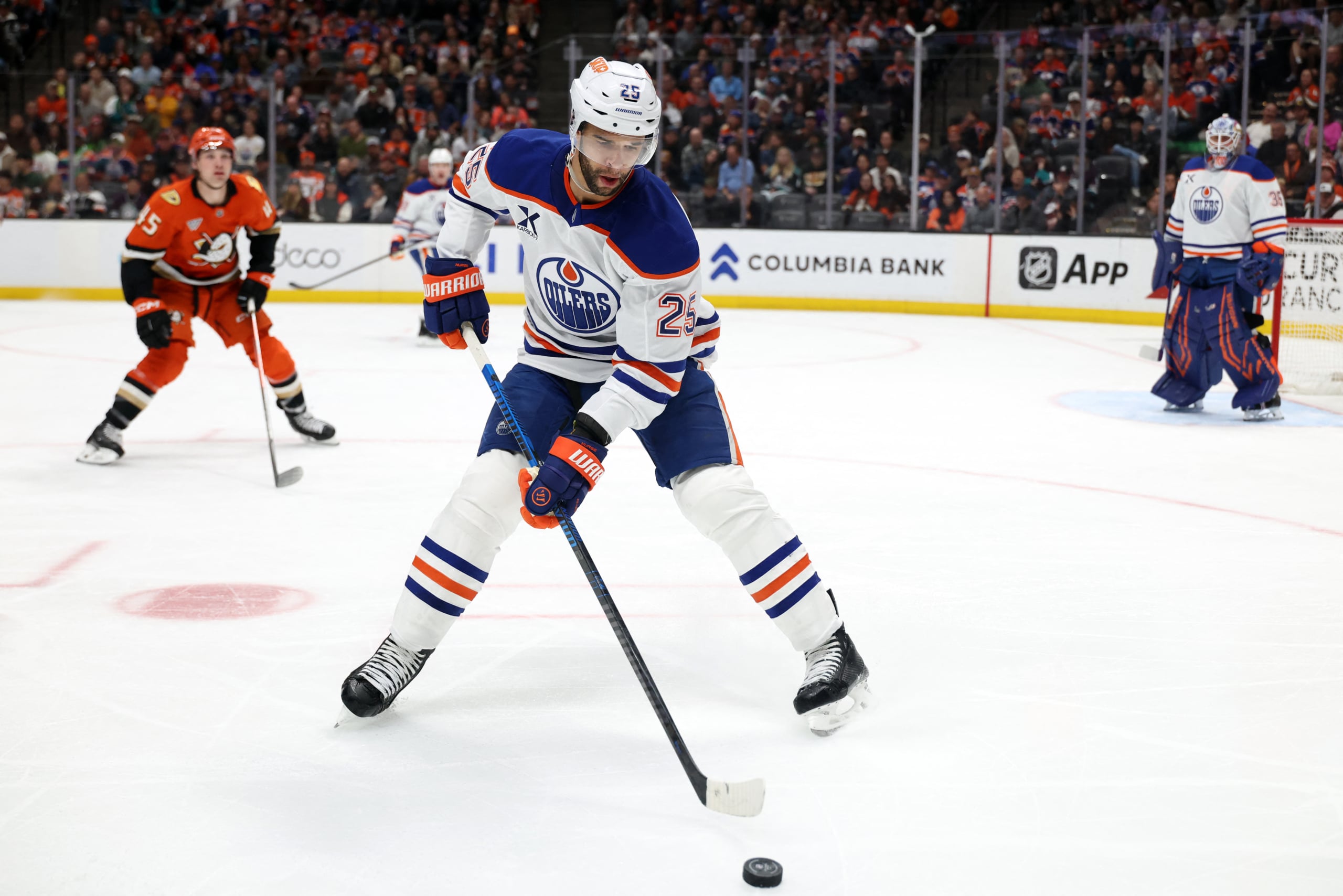
Image: courtesy of Sportsnaut

sportsJune 14, 2026By Veridact EditorialUpdated Jun 14

The $9.25 Million Dilemma: Why Darnell Nurse’s Reported Trade List Is Just the First Step in a Complex Cap Puzzle

Reports emerging on June 13, 2026, indicate that Edmonton Oilers defenseman Darnell Nurse has identified a select list of preferred trade destinations. With a heavy $9.25 million annual cap hit running through 2030 and a full No-Movement Clause, moving the veteran blueliner represents one of the most complex financial maneuvers in modern NHL history. As the Oilers face an impending salary cap crunch driven by looming extensions for their core superstars, this leak suggests that both the player and the front office may be quietly preparing for a parting of ways. However, executing a trade of this magnitude requires navigating intense structural, financial, and competitive hurdles that go far beyond simply finding an eager partner.

What to Expect

In the immediate aftermath of these reports, expect a period of calculated silence and standard denials from both the Edmonton Oilers front office and Nurse’s representation. Publicly acknowledging a trade request or active negotiations often strips a franchise of what little leverage it possesses. Behind the scenes, however, the flow of information indicates that preliminary conversations are likely occurring.

Because Nurse holds a full No-Movement Clause (NMC), he has complete control over his destiny. He cannot be traded, waived, or sent to the minors without his explicit, written consent. The disclosure of a "preferred list" suggests his camp has realized that his future in Edmonton may be limited, and they are choosing to manage the exit rather than fight an uphill battle against local critics and cap-strapped executives.

Over the coming weeks leading up to the NHL Entry Draft on June 26-27, 2026, Oilers general manager Jeff Jackson and his staff will likely test the trade market to see if any team on Nurse’s list has the cap appetite to absorb his contract. This will not be a rapid process. Any potential trade partner will know that Edmonton is desperate for cap relief, meaning rival GMs will demand significant sweeteners—such as first-round draft picks or top-tier prospects—to take on the contract.

If a trade does materialize, it is highly likely to involve salary retention. Under NHL collective bargaining rules, Edmonton can retain up to 50% of Nurse’s salary. Retaining even 30% ($2.77 million per year) would leave a dead-cap charge on Edmonton's books until 2030, meaning a trade would not offer a clean slate. Fans and analysts should expect a slow, agonizing negotiation process that could easily stretch past the draft and deep into the summer free-agency period.

Key Context

To understand why this situation has reached a boiling point, one must look at the cold math of Edmonton’s salary cap. Nurse signed his eight-year, $74 million contract extension in August 2021, a deal that kicked in for the 2022-23 season. At the time, the contract was widely viewed as an overpay, driven by a weak free-agent market and the ballooning contract that Seth Jones had recently signed with the Chicago Blackhawks.

Nurse is a highly capable, physical, top-four defenseman who regularly plays tough minutes. However, his performance has struggled to match the elite, franchise-altering expectations that come with a $9.25 million price tag. In a hard-cap system, every dollar of inefficiency is magnified.

This financial pressure is about to become an existential crisis for the Oilers. Leon Draisaitl is already playing under his massive $14 million annual extension. Connor McDavid, the undisputed face of the franchise, is eligible to sign his own contract extension on July 1, 2026, which will undoubtedly make him the highest-paid player in hockey history when it begins in 2027. Furthermore, young defenseman Evan Bouchard is due for a massive, long-term raise that could easily approach or exceed $10 million annually.

Edmonton simply cannot afford to pay McDavid, Draisaitl, Bouchard, and Nurse a combined $43 million or more while attempting to build a deep, championship-caliber roster. The front office must find a way to reallocate capital. Because Nurse’s contract is the most glaring inefficiency on the roster, he has become the primary target for sacrifice. The leak of his preferred destinations indicates that both sides recognize the current path is unsustainable.

Historical Patterns

Historical precedent in the NHL shows that moving an "untradeable" contract with a full No-Movement Clause is exceptionally difficult, but not impossible.

Consider the trade of Erik Karlsson from the San Jose Sharks to the Pittsburgh Penguins in August 2023. Karlsson was coming off a historic 101-point season, yet his $11.5 million cap hit made him nearly impossible to move directly. It ultimately required a highly complex, three-team trade involving the Montreal Canadiens, with San Jose retaining $1.5 million annually and taking back multiple contracts to make the math work.

Another comparable case is Oliver Ekman-Larsson. When his relationship with the Arizona Coyotes soured, he held a full NMC and a heavy $8.25 million cap hit. He eventually agreed to waive his clause for a trade to the Vancouver Canucks in 2021. However, that trade proved disastrous for Vancouver, who ultimately bought out the remainder of his contract just two years later, highlighting the immense risks that acquiring teams take when trading for aging, highly paid defensemen.

These historical patterns suggest that any resolution to the Nurse situation will require one of three paths: massive salary retention by Edmonton, the inclusion of premium assets to bribe a rebuilding team to take the contract, or a multi-team trade structure where a third franchise eats a portion of the cap hit for a draft-pick fee. The days of trading a player of Nurse's salary for a simple hockey-for-hockey swap are long gone.

This development is a stark reminder of the unforgiving nature of the NHL’s hard salary cap. In a league where the cap rises by only a few million dollars each year, a single management miscalculation can shut a championship window before it fully opens.

For the Edmonton Oilers, the stakes could not be higher. They are in the absolute prime of the McDavid and Draisaitl era. Every season they fail to win a Stanley Cup is a wasted year of generational talent. If the front office cannot successfully navigate the Nurse contract, they risk being forced to trade cheaper, highly productive depth players, or worse, finding themselves unable to afford the supporting cast necessary to keep their superstars happy.

For the broader NHL, this situation will serve as a case study in contract negotiation and asset management. It highlights the immense leverage that players hold when they secure full No-Movement Clauses. Nurse has the power to reject any trade to a city he does not wish to live in, regardless of how much it would help the Oilers. This reality may make future GMs far more hesitant to award full NMCs to non-superstar players, changing how long-term contracts are structured across the league.

Potential Outcomes

Analysis

Analysis of the current market and contract structures suggests three realistic paths forward for Edmonton and Darnell Nurse over the coming months.

One possible outcome is a retained-salary trade to a rebuilding team with abundant cap space. Teams like the Utah Hockey Club, Chicago Blackhawks, or San Jose Sharks have the financial room to absorb a large contract if they are properly compensated. In this scenario, Edmonton might agree to retain 30% ($2.77 million) of Nurse's cap hit for the remaining four years of his deal, while also sending their 2027 first-round pick and a high-end prospect to the acquiring team. Nurse would join a franchise where he can play top-pairing minutes without the intense playoff pressure of Edmonton, while the Oilers free up roughly $6.5 million in crucial cap space.

A second, more static outcome is an offseason standoff. If the teams on Nurse's preferred list refuse to trade for him, or if the asset cost demanded by those teams is too high for Edmonton to accept, Nurse will likely remain an Oiler for the start of the 2026-27 season. The front office might decide that retaining millions of dollars in dead cap space while losing draft picks is worse than simply keeping Nurse on the second defensive pairing and trying to find cap savings elsewhere, such as trading depth forwards or buying out smaller contracts.

A third, more complex scenario is a multi-team blockbuster during the 2026 offseason. Edmonton could partner with a third team—such as the Anaheim Ducks—to broker the deal. Edmonton would trade Nurse to his preferred destination, with the third team stepping in to retain 25% of his salary in exchange for a second-round pick from Edmonton, while the acquiring team retains another portion. This would minimize Edmonton's direct cap retention to perhaps 15-20%, keeping their dead-cap hit under $2 million per year while successfully moving the player.

Timeline

2021-08-06
The Extension is Signed
Darnell Nurse signs an eight-year, $74 million contract extension with the Edmonton Oilers, carrying an average annual value of $9.25 million and a full No-Movement Clause.
2022-10-12
Contract Takes Effect
The massive eight-year extension officially begins, immediately placing immense pressure on Nurse to perform as a true number-one defenseman.
2024-09-03
Draisaitl Signs Extension
Leon Draisaitl signs an eight-year, $112 million contract extension ($14 million AAV) starting in 2025-26, initiating the Oilers' long-term salary cap squeeze.
2026-06-13
Trade Destinations Revealed
NHL insiders report that Nurse's camp has identified a select list of preferred trade destinations, signaling a willingness to waive his No-Movement Clause.
2026-06-26
The NHL Entry Draft
The 2026 NHL Entry Draft begins, representing the most active window of the offseason for blockbuster trades and roster restructuring.
2026-07-01
Free Agency & McDavid Eligibility
The NHL free agency period opens, and superstar Connor McDavid becomes officially eligible to sign a contract extension with the Oilers.

Frequently Asked Questions

A No-Movement Clause is the ultimate form of player protection in the NHL. It dictates that a player cannot be traded, placed on waivers, or sent down to the minor leagues without their explicit permission. For Darnell Nurse, this means he has complete control over where he goes; he can reject any trade proposal to a team that is not on his approved list.

Discussion

0/100
0/1000

Be the first to share your thoughts.

Related Coverage

sports

Under the Microscope: Why Cam Ward's Early Minicamp Struggles Reveal the Steep Climb Ahead for the Titans' Rookie Quarterback

Jun 15
sports

The Cautionary Tale of June Reps: Inside Gabe Jacas’s Patriots Minicamp Absence

Jun 15
sports

The $7 Billion Liquidation: Inside the Emerging Timeline for the Seattle Seahawks Sale

Jun 14
sports

Cole Caufield Wins Big Vote to Join the Very Best Players in Hockey

Jun 13

Stay ahead of the story

AI analysis delivered before events unfold. No spam.

ⓘ

Disclosure: This article contains AI-assisted analysis based on publicly available information.