
Formula 1 teams, drivers, and fans now await a crucial announcement by mid-September 2026 regarding the fate of the Qatar and Abu Dhabi Grands Prix. Should the conflict persist, the season will conclude in Europe, with Imola in Italy identified as a potential replacement venue. This decision will trigger a cascade of logistical adjustments for teams and a shift in travel plans for thousands of fans. Broadcasters and commercial partners will also need to adapt to a revised schedule and potentially different time zones for the season's climax. The F1 organization is working against a tight deadline to ensure continuity and safety, while also aiming to meet its contractual obligations for the number of races in the 2026 season.
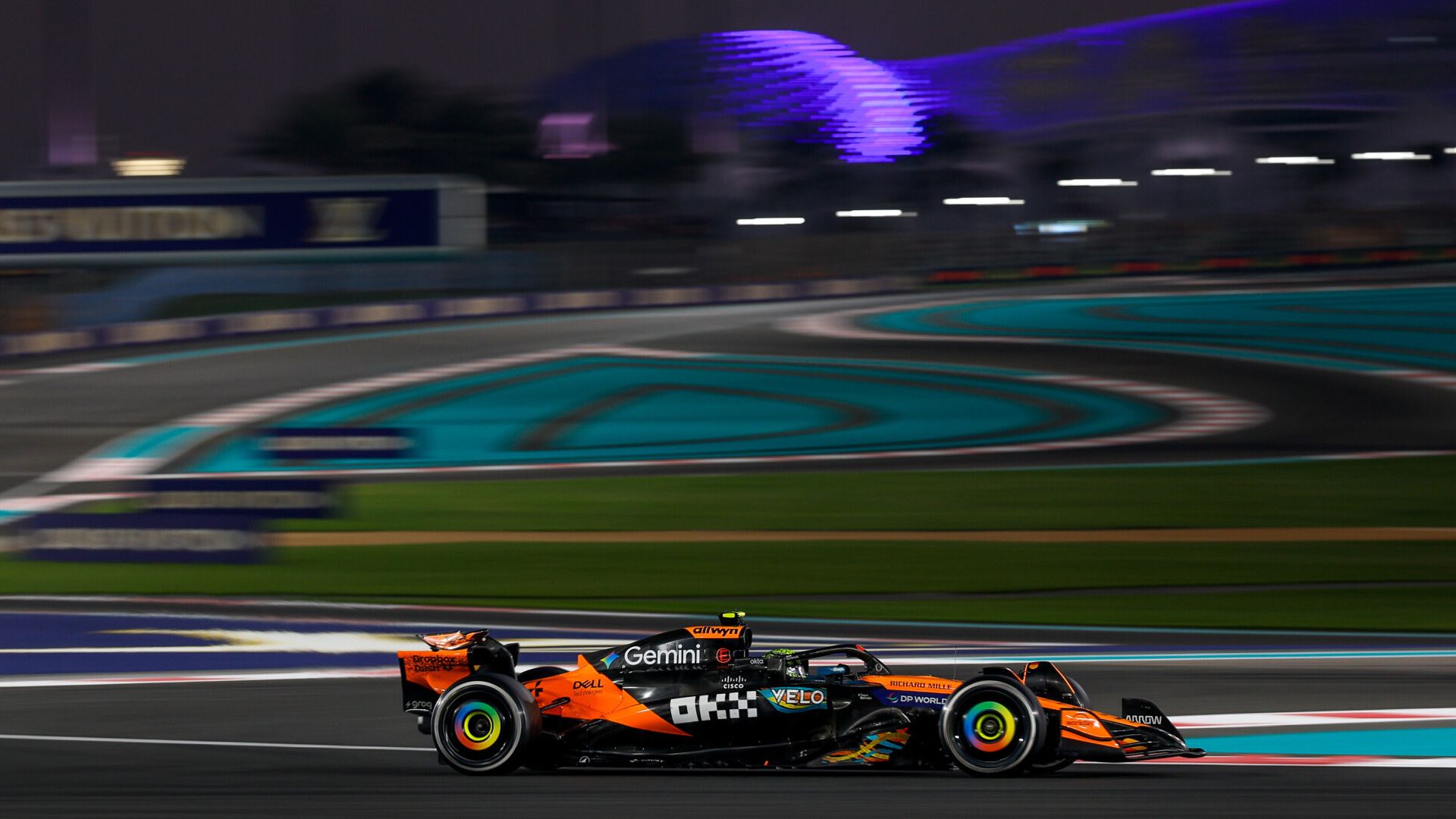
Image: courtesy of Sky sports
F1's Middle East Gamble: What a European Finale Means for the Sport's Global Ambitions
Formula 1 is facing a critical decision point for its 2026 season finale. Amid ongoing conflict in the Middle East, F1 President Stefano Domenicali confirmed on July 30, 2026, that the final two races, scheduled for Qatar and Abu Dhabi in November, will be relocated to Europe if the security situation does not improve. A definitive decision is expected by mid-September. This contingency plan follows the earlier cancellation of races in Bahrain and Saudi Arabia, highlighting the profound impact of geopolitical instability on F1's expanding global calendar.
Outlook
Background
The 2026 Formula 1 season has already felt the direct impact of the escalating conflict in the Middle East, specifically the hostilities that broke out between Iran and forces from the United States and Israel in February 2026. Earlier in the season, this led to the postponement of the Bahrain and Saudi Arabian Grands Prix. The Bahrain race was subsequently moved to Malaysia in October, demonstrating F1's proactive, albeit reactive, approach to the crisis.
Formula 1 has, over the past two decades, significantly expanded its presence in the Middle East. The region offers substantial financial incentives, state-of-the-art facilities, and a strategic market for growth, particularly as traditional European venues face increasing financial pressures. Qatar, with its Lusail International Circuit, and Abu Dhabi, hosting its race at the Yas Marina Circuit, represent significant investments by both the host nations and F1. These races are often the penultimate and final events of the season, making them commercially vital and high-profile.
F1 President Stefano Domenicali's statement on July 30, 2026, that the season 'will end in Europe' if the Middle East rounds are unfeasible, confirms the severity of the situation. It also indicates that F1 has a clear, albeit undesirable, backup plan. The minimum requirement for its commercial contracts is reportedly 21 races, a number that would still be met even if the final two races were cancelled without replacement. However, Domenicali's desire to 'add or replace at least one more race' suggests F1 is keen to maintain its planned calendar length and associated revenues, rather than simply reducing the number of events.
Precedents
Formula 1 has a long history of adapting its calendar in response to global events, though rarely at such a critical point in the season for the finale. In the past, economic downturns, political unrest, or health crises have forced race cancellations or relocations. For instance, the sport significantly adjusted its schedule during the global pandemic, running multiple races at the same European circuits in quick succession or introducing new venues on short notice to complete seasons.
Geopolitical tensions have also influenced F1's choices. Races have been postponed or cancelled in regions experiencing civil unrest or security concerns, sometimes with significant lead time, sometimes at the last minute. This current situation, however, is notable for its scale and the specific timing. The threat to the season's concluding rounds, following earlier disruptions, puts unprecedented pressure on F1's logistical and commercial teams.
The willingness to pivot back to Europe, specifically mentioning Imola, reflects a reliance on established infrastructure and a less complex regulatory environment. European circuits often have existing contracts or can be quickly activated, making them reliable emergency options compared to developing new markets or navigating complex international travel restrictions. This pattern suggests F1 prioritizes operational stability and safety above all else when faced with external crises, even if it means temporarily pulling back from strategic growth regions.
The potential relocation of F1's season finale carries substantial implications, extending far beyond a simple change of venue. For Formula 1 as a global brand, it tests the resilience of its expansion strategy into geopolitically sensitive regions. The sport has heavily invested in establishing a strong footprint in the Middle East, viewing it as a key pillar for future growth and revenue. A forced retreat, even temporary, could signal to other potential host nations the inherent risks of hosting major sporting events in volatile areas.
Financially, while F1 might meet its minimum contract requirements with 21 races, the specific commercial agreements with Qatar and Abu Dhabi are likely lucrative. Any cancellation or breach of contract could lead to complex negotiations over penalties or future hosting fees. Replacing these races with a European venue, even a capable one like Imola, may not fully offset the lost revenue from the original, high-paying hosts.
For teams and drivers, a late-season shift creates logistical nightmares. Freight, personnel, and equipment must be rerouted, potentially incurring significant additional costs and stress. The competitive integrity of the championship could also be affected, as different circuits favor different car setups and driving styles.
Finally, for fans, particularly those who have booked travel and accommodation months in advance for the Middle East races, the disruption is considerable. It highlights the vulnerability of global sports to wider political events and the challenges of planning for major international spectacles in an uncertain world. The situation forces F1 to confront the tension between its commercial ambitions and the stark realities of global instability.
Scenarios
Analysis1. European Finale Confirmed: F1 announces by mid-September that the Qatar and Abu Dhabi Grands Prix cannot proceed. The season concludes in Europe, potentially at Imola, Italy, or another suitable European circuit. This outcome would prioritize safety and operational continuity, but could lead to financial adjustments and potential long-term strategic re-evaluation of F1's Middle East calendar.
2. Middle East Races Proceed as Planned: Against current indications, the security situation in the Middle East significantly improves by the mid-September deadline, allowing F1 to confirm that the Qatar and Abu Dhabi races will go ahead as scheduled. This would signal a temporary de-escalation of regional tensions and allow F1 to maintain its planned commercial and sporting calendar for 2026.
3. Hybrid Solution with Reduced Calendar: F1 might cancel one of the two Middle East races while relocating the other to Europe, or simply cancel both without a direct replacement, concluding the season with 21 races. This outcome would reflect a compromise, acknowledging the conflict's impact while attempting to minimize logistical disruption and fulfill minimum contractual obligations. It could also open discussions about the future structure of the F1 calendar, potentially leading to more flexibility in venue selection.
Timeline
2026-02
Middle East Hostilities Break Out
Conflict between Iran and forces from the United States and Israel begins, leading to regional instability.
2026-03
Bahrain & Saudi Arabia GPs Postponed
Due to ongoing conflict, the Bahrain and Saudi Arabian Grands Prix are postponed from their original dates. The Bahrain GP is later rescheduled to Malaysia in October.
2026-07-30
F1 Confirms European Contingency
F1 President Stefano Domenicali states that the 2026 season will end in Europe if Qatar and Abu Dhabi cannot host the final rounds due to Middle East conflict.
2026-09-15
Decision Deadline
F1 sets a mid-September deadline to make a definitive decision on whether the Qatar and Abu Dhabi Grands Prix can be held.
2026-11-29
Qatar Grand Prix (Scheduled)
The penultimate race of the 2026 season is currently slated to be held at the Lusail International Circuit in Qatar.
2026-12-07
Abu Dhabi Grand Prix (Scheduled)
The final race of the 2026 season is currently scheduled for the Yas Marina Circuit in Abu Dhabi.
Frequently Asked Questions
The final two races of the 2026 Formula 1 season, the Qatar Grand Prix (scheduled for November 29) and the Abu Dhabi Grand Prix (scheduled for early December), are currently under review due to ongoing Middle East conflict.
Discussion
Be the first to share your thoughts.