
When the pads go on in late July, the entire environment shifts from a passing exhibition to a physical grind. Right now, rookie playmakers benefit from simplified defensive looks and a lack of physical press coverage at the line of scrimmage. Expect defensive coordinators to test this rookie's diagnostic skills the moment training camp begins, throwing disguised coverages and physical safety help their way. The coaching staff will likely try to manage expectations publicly while privately accelerating the rookie's installation into the primary game plan. Veteran teammates will play a crucial role in keeping the young player grounded as the New York media microscope intensifies. Fans should look for how quickly the rookie adapts to the speed of professional defensive backs during joint practice sessions in August, which are far more telling than June passing drills. Ultimately, the transition from a college star to an NFL focal point requires mastering the quiet details: route adjustments, blocking assignments, and playbook terminology.
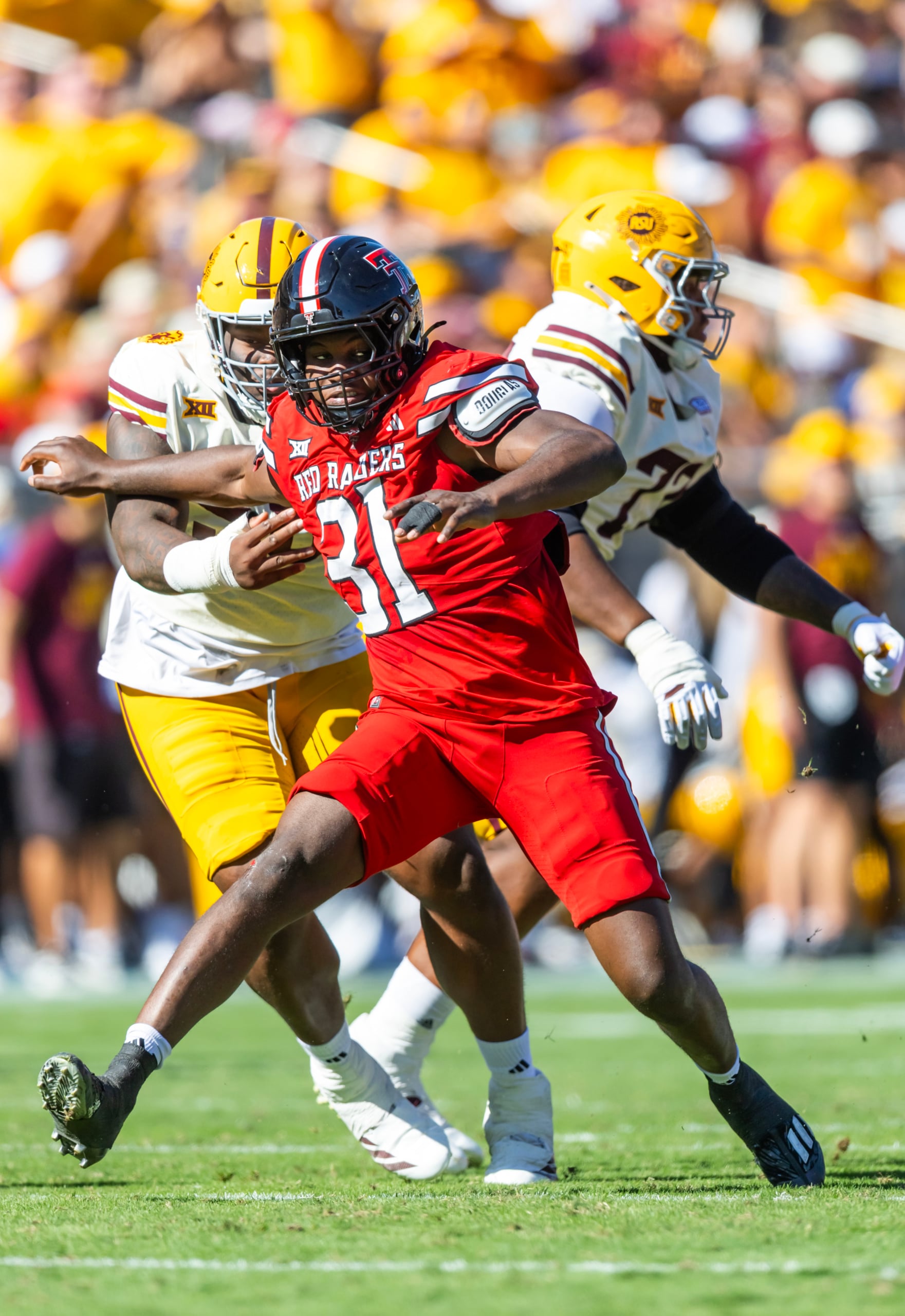
Image: courtesy of Sportsnaut
The June Hype Cycle: Why ESPN’s High-Stakes Projection for the Jets’ Newest Weapon is a Double-Edged Sword
June in the NFL is the season of unbridled optimism, a time when every first-round draft pick looks like a future Hall of Famer during non-contact practices. This week, the spotlight turned directly to Florham Park after a prominent ESPN analyst predicted a massive breakout campaign for the New York Jets' top rookie selection. While these early projections fuel talk-show debates and fan excitement, they also elevate the pressure on a young player still trying to locate the team facility. For a franchise that has spent years searching for sustained offensive identity, the margin for error remains razor-thin. Success in shorts and helmets during summer workouts is a poor predictor of September football, yet this prediction reveals how much the national media expects this rookie to salvage a demanding offensive scheme. The franchise cannot afford a slow developmental curve if they hope to compete in a brutal division.
Outlook
Background
The Jets operate under a unique level of scrutiny that few NFL franchises can match. Decades of postseason droughts and high-profile quarterback transitions have created an impatient fan base and an aggressive local press corps. Every draft pick is viewed not just as a player, but as a potential savior or a symbol of organizational failure. This rookie enters a locker room where the coaching staff and front office are under immense pressure to deliver immediate wins to justify their roster-building strategy. The financial structure of the team also dictates a heavy reliance on young, cheap talent to balance the books after aggressive veteran acquisitions in recent years. Consequently, the team cannot afford a slow developmental curve for their top draft choices. This projection from ESPN isn't just an isolated opinion; it reflects the league-wide belief that the Jets' postseason hopes hinge on immediate contributions from their newest draft class.
See also
Precedents
History shows that early hype in East Rutherford can go in wildly different directions. Just a few seasons ago, rookies like Sauce Gardner and Garrett Wilson stepped onto the field and instantly validated the summer chatter, proving that elite talent can transcend organizational instability. On the other hand, the franchise's history is littered with highly touted prospects who wilted under the combined weight of New York media expectations and developmental bottlenecks. The jump from college programs to the structured, business-like environment of the NFL often exposes physical and mental flaws that were hidden by superior athleticism in college. Analysts frequently forget that physical traits are only half the battle; the mental stamina required to survive a 17-game season destroys many promising rookie campaigns by November. Looking at past draft classes, the rookies who succeeded were those paired with stable veteran mentors and schemes that didn't ask them to carry the entire franchise on day one.
The economics of the modern NFL make rookie production the most valuable currency in professional sports. When a team can extract elite performance from a player on a fixed, four-year rookie contract, it frees up tens of millions of dollars to patch other roster holes through free agency. For a team like the Jets, who have committed significant salary cap space to veteran stars, getting high-end play from their draft picks is the only way to sustain a competitive roster. If this rookie fails to meet these lofty projections, the team will be forced to overwork their aging veterans, risking late-season injuries and systemic collapse. Furthermore, a standout rookie season solidifies the front office's draft strategy, giving the general manager and head coach the job security needed to maintain organizational continuity. In a league defined by parity, the difference between a playoff run and a top-ten draft pick often comes down to whether a single first-year player can deliver on their summer promise.
Scenarios
AnalysisAnalysis: The Star-Turn Scenario - The rookie masters the playbook by mid-August, establishing immediate chemistry with the starting quarterback. By October, they become a focal point of the offense, drawing double-teams from opposing defenses and opening up opportunities for teammates, culminating in an Offensive Rookie of the Year campaign and a postseason berth for the Jets.
Analysis: The Developmental Bottleneck - The physical toll of the NFL season and the complexity of professional defensive schemes slow the rookie's development. Early-season mistakes lead to a reduction in snaps, forcing the coaching staff to rely on less dynamic veterans while the rookie spends their first year adjusting to the speed of the pro game.
Analysis: The Scheme-Fit Compromise - The rookie shows flashes of brilliance but struggles with consistency, particularly in run blocking or situational awareness. The coaching staff limits their role to specific packages, resulting in a modest statistical season that helps the team but falls short of the massive national media projections.
Timeline
Frequently Asked Questions
Discussion
Be the first to share your thoughts.