
While the 1896 trip to Mexico is a closed chapter of history, its story offers a valuable lens through which to understand the evolving nature of college sports. It highlights the pioneering spirit that often outpaced institutional regulations and reveals the enduring appeal of international competition, even in its earliest, most rudimentary forms. Future discussions around globalizing college athletics, whether through exhibition games, international recruitment, or overseas tournaments, will continue to echo the ambitions and challenges first encountered by teams like Missouri over a century ago.
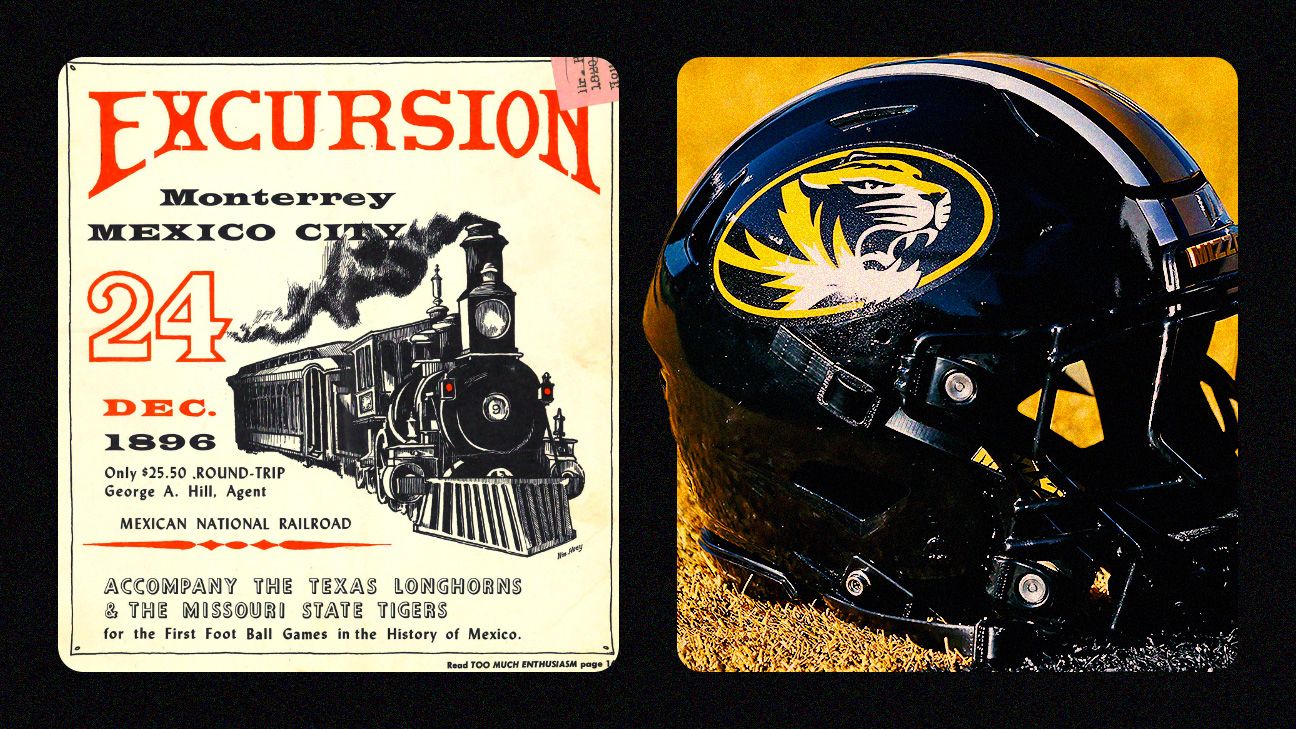
Image: courtesy of ESPN
The Unsanctioned Ambition: Missouri Football's Wild 1896 Mexico Trip and the Roots of International College Sport
In the winter of 1896, the University of Missouri's football squad embarked on an extraordinary, unsanctioned journey to Mexico, playing a series of exhibition games against the University of Texas. This ambitious trip, culminating in games in Monterrey and Mexico City, marked one of the earliest instances of American college football venturing beyond U.S. borders. While not officially sanctioned by the university, the expedition offered a glimpse into the sport's nascent desire for international expansion and the logistical challenges of such endeavors in the late 19th century.
Outlook
Background
The year 1896 found American college football still in its relative infancy, a rough-and-tumble sport rapidly gaining popularity but lacking the rigid structures and oversight common today. Universities were still grappling with how to manage their athletic programs, often leaving much of the organization to passionate individuals and student committees. This looser framework created opportunities for ambitious ventures, even those that skirted official approval.
The idea for the Mexico trip largely originated with William W. Hill, a figure keen on expanding the reach of gridiron football. His initial vision involved the University of Texas and possibly an all-star team. However, as the travel plans coalesced, Missouri's squad, fresh off a dominant series of victories in Texas, became the primary challenger.
Before heading south of the border, Missouri had already proven its prowess in the Lone Star State, reportedly beating the Texas Longhorns 10-0 and winning four other games against local YMCAs and other Texan opponents by a combined score of 129-0. This strong performance likely fueled the confidence for an even more adventurous international excursion.
Precedents
The Missouri Tigers' 1896 expedition fits into a broader historical pattern of early American sports seeking international exposure, often driven by individual initiative rather than institutional mandates. In an era before widespread international travel was commonplace, such trips were logistical marvels. Teams often relied on railway systems for long-distance journeys, and the concept of 'exhibition games' was a common way to test skills against new opponents or introduce the sport to new audiences without the pressures of league play.
This period also saw numerous unsanctioned events across various sports. Universities, still defining their roles in athletic governance, frequently had little control over student or alumni-organized tours. The focus was often on the experience, the adventure, and the informal promotion of the sport, rather than strict adherence to modern athletic association rules. The high altitude of Mexico City, which impacted gameplay, also mirrors challenges faced by athletes even today when competing in unfamiliar or demanding environments, from Olympic venues to international soccer matches. The pursuit of new frontiers, even when fraught with operational difficulties, has been a recurring theme in the history of sports expansion.
The 1896 Missouri football trip to Mexico matters because it represents a bold, if somewhat forgotten, chapter in the early history of American college athletics. It was a pioneering effort to take the sport onto an international stage, long before such endeavors became formalized and commonplace. The fact that it was 'unsanctioned' highlights the early, wild-west nature of college football, where ambition could sometimes outrun official oversight.
This journey also serves as a historical precedent for later efforts to internationalize college sports. It illustrates the inherent desire within athletic programs, even in their infancy, to test themselves against diverse competition and to promote their sport globally. The challenges faced by the Missouri team – from the arduous travel to the effects of high altitude – offer a concrete example of the hurdles involved in such cross-border ventures. Understanding this early attempt helps contextualize modern discussions about globalizing college football, from the current enthusiasm for games played in Ireland or Japan to the ongoing debate about how American universities engage with international talent and markets. It shows that the impulse to expand beyond domestic borders is as old as the sport itself.
Scenarios
AnalysisThe 1896 Missouri football trip to Mexico, being a historical event, has a confirmed outcome. However, the legacy and interpretation of this event continue to evolve.
One clear outcome is its establishment as a historical benchmark: the trip solidified its place as one of the earliest documented instances of American college football being played internationally. This fact is routinely cited when discussing the sport's global reach.
Another outcome is the enduring narrative of pioneering spirit. The story contributes to the lore of early college football, showcasing the grit and determination of players and organizers in an era far less connected than today. This narrative helps shape how we view the foundational years of the sport, emphasizing its adventurous and less commercialized beginnings.
Furthermore, the trip likely contributed, even in a small way, to the gradual diffusion of American football internationally, particularly in Mexico. While not an immediate catalyst for widespread adoption, such exhibition games planted seeds and exposed new audiences to the sport, potentially influencing its later growth in the region. This suggests that even 'unsanctioned' efforts could have long-term, subtle cultural impacts.
Timeline
1896
William W. Hill's Vision
William W. Hill, an influential figure in early American football, begins planning an ambitious trip to Mexico to showcase the sport, initially intending to involve the University of Texas and possibly an all-star team.
December 1896
Missouri's Texas Tour
The University of Missouri football squad travels to Texas, where they perform exceptionally well, including a 10-0 victory over the Texas Longhorns and several other dominant wins against local opponents. This success positions them as the ideal team for Hill's Mexico excursion.
December 25, 1896
First Game in Monterrey
The Missouri Tigers play their first exhibition game in Mexico against the Texas Longhorns in Monterrey. Missouri wins the game 12-0 in front of an estimated 3,000 spectators.
December 27, 1896
First Game in Mexico City
Missouri and Texas compete in the first of two exhibition games held in Mexico City. Missouri secures a 12-6 victory.
December 29, 1896
Second Game in Mexico City
The two teams face off again in Mexico City. The game concludes in a 0-0 tie, with reports indicating that the high altitude significantly affected the players' performance.
January 2, 1897
Final Exhibition in Laredo
After their Mexican tour, the Missouri Tigers and Texas Longhorns play a final exhibition game in Laredo, Texas. Missouri wins 18-6, with around 300 people in attendance.
Frequently Asked Questions
The trip was likely considered unsanctioned because it did not have the official approval or financial backing of the University of Missouri's administration. In the early days of college football, many athletic events were organized by coaches, boosters, or even student groups with varying degrees of institutional oversight. The term 'unsanctioned' indicates a lack of formal university endorsement, which would be highly unusual for a major athletic program today.
Discussion
Be the first to share your thoughts.