
Veridact
TechSportsFinanceGaming🎯 Predictions⭐ OpportunitiesAbout
Sign InSign Up
Veridact

Analysis before the headline. Veridact examines technology, finance, sports, and gaming events before they unfold through forecasting, probability modeling, historical precedent, and public prediction tracking.

Stay ahead of what's next

Forecasts, analysis, and prediction updates delivered to your inbox.

Coverage

  • Tech
  • Sports
  • Finance
  • Gaming

Company

  • About Us
  • Privacy Policy

© 2026 Veridact. Forecasting & analysis platform.

Content may include AI-assisted research and analysis. Predictions and opinions should not be considered financial, legal, medical, or investment advice.

sports
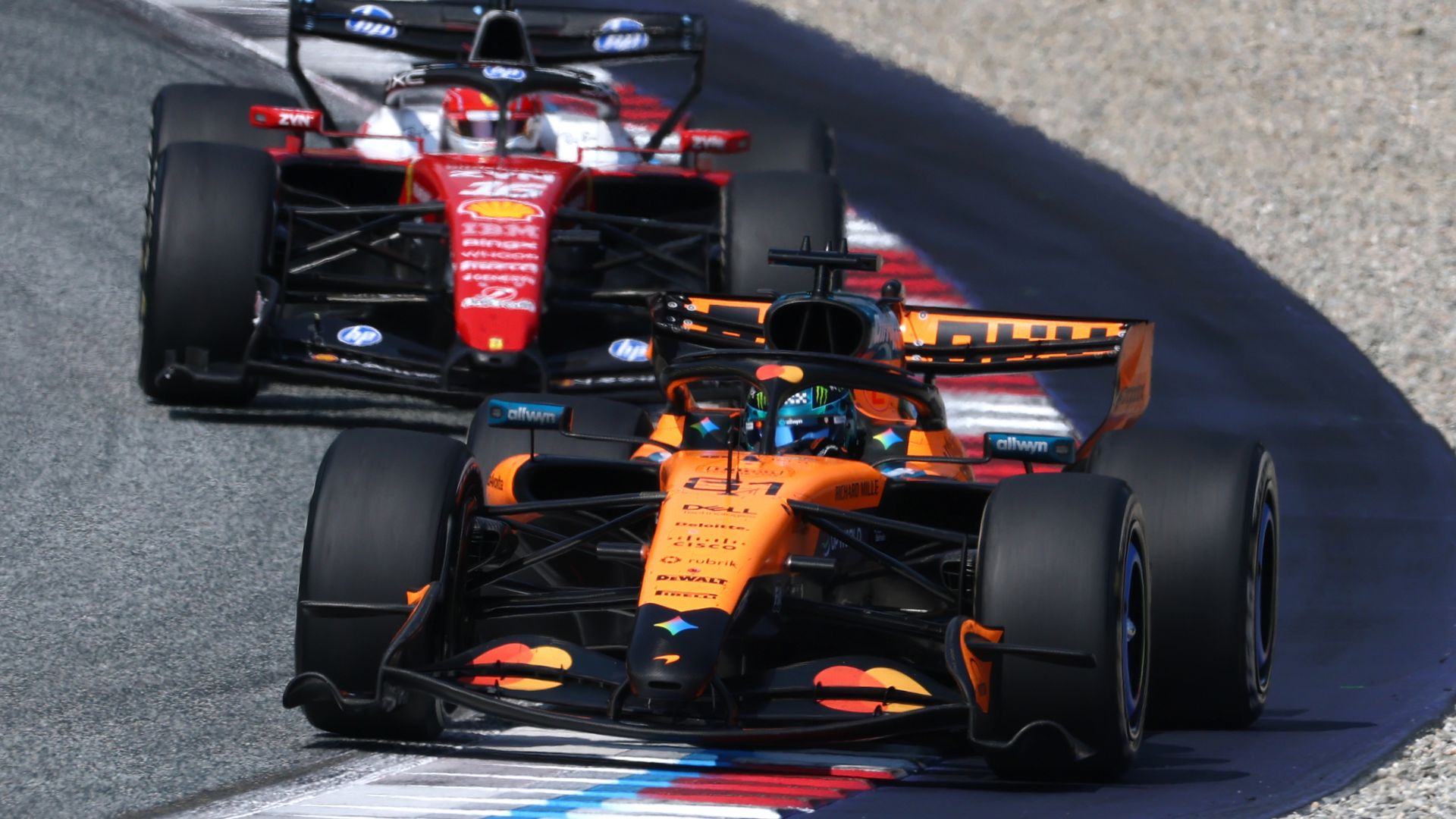
McLaren confirm introduction of 'significant' upgrades

Image: courtesy of Sky sports

sportsJuly 16, 2026By Veridact EditorialUpdated Jul 16

McLaren's 'Significant' Upgrades: Can a Redirected Approach Finally Close the Gap?

McLaren has confirmed a substantial upgrade package set for introduction across the upcoming Belgian and Hungarian Grand Prix in 2026. This move comes as the team grapples with a disappointing season, aiming to improve its competitive standing against front-runners like Mercedes and Ferrari. Team Principal Andrea Stella indicated a "change of direction" in their upgrade philosophy, with the more impactful developments expected to debut in Hungary. The success of these updates will be crucial for McLaren's momentum heading into the Formula 1 summer break.

Outlook

McLaren has publicly stated these upgrades are "significant," a term that carries weight in Formula 1 given the constant, incremental nature of development. The package will be rolled out over two critical races: the Belgian Grand Prix and the Hungarian Grand Prix, which form a back-to-back before the sport's mandatory summer shutdown. While some elements may appear at Spa, the team's technical director, Neil Houldey, has already suggested the "bigger step" is reserved for Hungary. This implies that the full impact of McLaren's new development direction might only be visible after the Budapest race.

Reports suggest that the upgrades could include a new rear wing design and potentially updates to the Mercedes-supplied ICE (Internal Combustion Engine) unit. The mention of an "unmissable upside-down rear wing" being trialled by other teams, which McLaren may also adopt, points to aerodynamic revisions aimed at improving downforce and efficiency. The "redirected upgrade approach" confirmed by Andrea Stella indicates a strategic shift in how McLaren identifies and implements performance gains, moving beyond previous development paths that may not have yielded the desired results. This new direction could focus on specific areas of the car's performance envelope, perhaps addressing fundamental balance issues or aerodynamic inefficiencies that have hampered the MCL38 throughout the season. The expectation is that these changes, particularly those in Hungary, should provide a clearer picture of McLaren's true potential for the second half of the 2026 season.

Background

McLaren's 2026 season has been marked by a struggle to consistently challenge the top teams. While they have shown flashes of pace, particularly in qualifying, converting that into consistent race performance and podium finishes has proven difficult. The team's current position on the constructors' championship standings reflects this challenge, placing them behind key rivals like Mercedes and Ferrari. This context is critical because "significant upgrades" are not just about marginal gains; they are about correcting fundamental issues that have prevented McLaren from competing at the sharp end of the grid.

Lando Norris, in particular, has voiced frustrations at times over the car's characteristics and its ability to maintain pace over a full race distance. A strong upgrade package could provide him with the tools to extract more performance and potentially challenge for higher positions. The timing of these upgrades is also important, arriving just before the mandatory summer factory shutdown. Any data gathered from Belgium and Hungary will be vital for further development once operations resume, influencing the trajectory of the remainder of the season and even feeding into the design philosophy for the 2027 car. The pressure on Team Principal Andrea Stella and his technical team is considerable, as these upgrades represent a significant investment of resources and a pivotal moment in their campaign to regain competitive ground. The focus is not just on improving the car, but on proving that the new "redirected upgrade approach" is indeed the right path forward.

Precedents

Formula 1 history is replete with examples of teams introducing major upgrade packages mid-season, with varying degrees of success. Often, these upgrades are critical junctures that either propel a team forward or confirm that their development path is flawed. For instance, teams like Mercedes and Red Bull have historically used mid-season updates to solidify their dominance or pull ahead of rivals. Conversely, many teams have brought what they termed "significant" upgrades that failed to deliver the expected performance, sometimes even disrupting the car's balance and requiring further revisions.

One common pattern is the 'double-edged sword' of complex aerodynamic changes. While designed to increase downforce, they can sometimes make the car more sensitive to track conditions, harder for drivers to handle, or introduce unforeseen issues in specific corners or over different tire compounds. The success often hinges on how well the new components integrate with the existing car concept and whether the team's simulation tools accurately predicted their real-world performance. Teams often bring a split package, with some parts at one race and the rest at another, to isolate the impact of different components and ensure data correlation. This measured approach, which McLaren appears to be adopting by splitting the introduction between Spa and Hungary, aims to mitigate the risk of introducing too many variables at once. Historically, the Hungarian Grand Prix, with its tight and twisty layout, and the Belgian Grand Prix, with its high-speed straights and sweeping corners, demand different car characteristics. A successful upgrade package would need to show versatility across both extremes, indicating a fundamental improvement rather than a track-specific optimization.

These upgrades represent more than just new parts on a car; they are a critical test of McLaren's strategic direction and engineering capability. For the team, a successful outcome could reignite their season, boost morale, and validate Andrea Stella's "redirected upgrade approach." It would signal to rivals, investors, and fans that McLaren is serious about climbing back to the top tier of Formula 1. Conversely, if these "significant" upgrades fail to deliver a noticeable performance leap, it could deepen existing frustrations, raise questions about their development strategy, and force a potentially painful reassessment mid-season.

For Lando Norris, the upgrades are an opportunity to demonstrate his full potential with a more competitive machine, potentially challenging for podiums more regularly. For the broader F1 grid, McLaren's performance shift could tighten the midfield battle or even put pressure on Mercedes and Ferrari, who are themselves locked in a fierce fight for second in the constructors' championship. A stronger McLaren could disrupt strategic calls, force other teams to accelerate their own development, and make for more unpredictable racing. The outcome will also influence the driver market, as top talents look for teams with clear upward trajectories. Ultimately, these upgrades are a significant marker for McLaren's ambition to return to championship contention, making the next two races a crucial litmus test for their future.

Scenarios

Analysis

1. Significant Performance Leap: McLaren's "redirected upgrade approach" could prove highly effective, allowing them to consistently challenge Mercedes and Ferrari for podium finishes and potentially even race wins in the latter half of the season. This would validate their new development philosophy and demonstrate their capability to design a truly competitive car. This outcome would likely put pressure on rivals to accelerate their own development cycles and could significantly alter the constructors' championship standings.

2. Incremental Gains: The upgrades may deliver a noticeable but not revolutionary improvement. McLaren could become more consistently the "best of the rest" behind Red Bull, but still find themselves a clear step behind Mercedes and Ferrari. This would be an improvement over their earlier season form but would still leave questions about their long-term ability to compete for championships.

3. Limited Impact or New Issues: Despite being "significant," the upgrades could fail to deliver the expected performance gains, or worse, introduce unforeseen balance issues or reliability concerns. This would force McLaren to re-evaluate their development path yet again, potentially delaying their return to consistent competitiveness and increasing pressure on the technical leadership. Such an outcome could lead to a difficult second half of the season and a prolonged period of rebuilding.

Timeline

2026-07-16
McLaren Confirms Upgrades
McLaren officially confirms the introduction of a 'significant upgrade package' for the upcoming Belgian and Hungarian Grand Prix, with Team Principal Andrea Stella indicating a 'change of direction' in their development approach.
2026-07-27
Belgian Grand Prix
The first phase of McLaren's upgrade package is expected to be introduced at Spa-Francorchamps. Technical director Neil Houldey has downplayed the immediate impact, suggesting the bigger step is reserved for Hungary.
2026-08-03
Hungarian Grand Prix
The more substantial elements of McLaren's 'significant upgrade package' are anticipated to debut at the Hungaroring. The team expects to see bigger results after this race, which will be the final event before the F1 summer break.

Frequently Asked Questions

McLaren has confirmed a 'significant upgrade package.' While specific details are often kept under wraps, reports suggest it could include a new rear wing design and potentially updates to the Mercedes-supplied ICE unit. The team's 'redirected upgrade approach' indicates a broader strategic shift in their development philosophy.

Discussion

0/100
0/1000

Be the first to share your thoughts.

Related Coverage

sports

Mbappé's Public Critique: What It Means for Deschamps and French Football's Future After World Cup Exit

Jul 15
sports

Atletico's Standoff: How Barcelona and Arsenal Are Battling for Julian Alvarez Against the Odds

Jul 15
sports

The £50 Million Question: What Andrey Santos' Move Means for Man Utd's Midfield and Chelsea's Strategy

Jul 14
sports

Alvarez Chooses Barcelona, Leaving Arsenal's Striker Search Open After Barcola Miss

Jul 13

Stay ahead of the story

AI analysis delivered before events unfold. No spam.

ⓘ

Methodology: Veridact combines public data, historical precedent, and analytical models to evaluate the likelihood of future outcomes.