
Following the medical examination, which is typically a formality for deals of this magnitude once personal terms are agreed, Andrey Santos will officially become a Manchester United player. The expectation is that he will integrate into the first-team squad immediately, likely participating in pre-season preparations if they are still ongoing or joining up with the team for the start of the 2026-27 Premier League campaign. His arrival is anticipated to provide fresh impetus to United's midfield options.
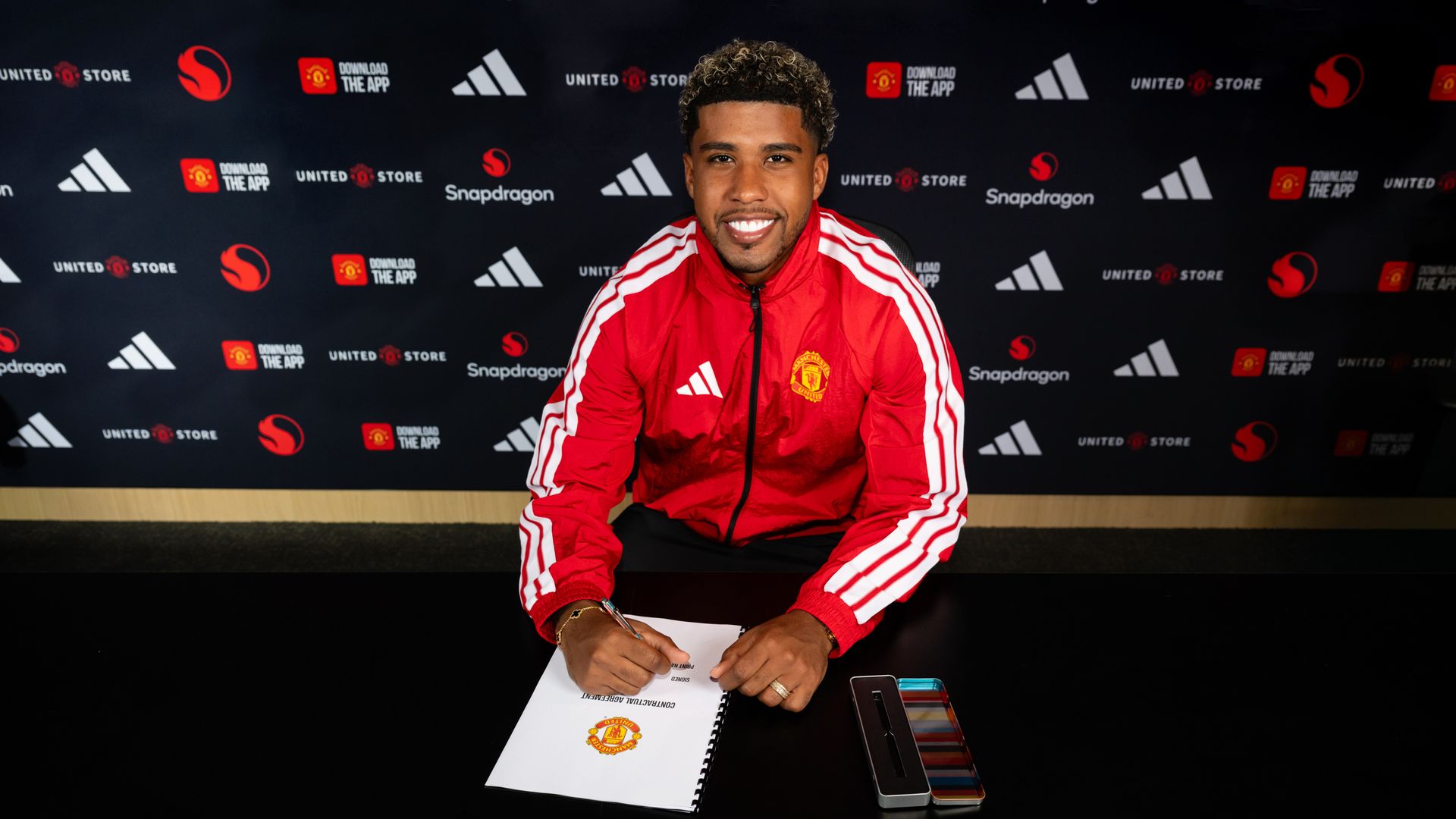
Image: courtesy of Sky sports
The £50 Million Question: What Andrey Santos' Move Means for Man Utd's Midfield and Chelsea's Strategy
Manchester United has officially completed the signing of Brazilian midfielder Andrey Santos from Chelsea in a deal valued at £50 million. The agreement includes an initial £48 million payment, with an additional £2 million in performance-related add-ons. Chelsea also secured a 10% sell-on clause, meaning they will receive a portion of any future transfer fee if Santos moves again. The 22-year-old is expected to undergo a medical before formally joining his new club, with personal terms already finalized.
Outlook
Background
The acquisition of Andrey Santos marks a significant push in Manchester United's ongoing efforts to reshape its midfield. Santos, a 22-year-old Brazilian international, arrives at Old Trafford after struggling for consistent first-team minutes at Chelsea, despite his evident talent and high potential. Sources indicate that a key factor in his decision to move, and United's pursuit, was the influence of former Manchester United midfielder Michael Carrick. Carrick, now a respected figure in football management, is understood to have played a role in convincing Santos about the project at United, highlighting the opportunity for regular playing time and development that had eluded him at Stamford Bridge.
For Chelsea, the decision to sell a player they only recently acquired and invested in suggests a re-evaluation of their squad depth and financial strategy. While Santos is a promising talent, the sheer number of midfielders at Chelsea's disposal, combined with the substantial £50 million fee, likely made the offer compelling. This move indicates that Chelsea may be prioritizing immediate financial gain and squad streamlining, potentially to comply with Financial Fair Play (FFP) regulations or to free up funds for other targets.
Precedents
High-value transfers for young, unproven — at the top-flight level — midfielders are not uncommon in the modern Premier League, though a £50 million fee for a player who hasn't secured a regular starting spot at his previous club is notable. Historically, clubs like Chelsea have built a reputation for acquiring a large volume of promising young talent, often loaning them out to gain experience before either integrating them into the first team or selling them for a significant profit. The 10% sell-on clause in Santos' deal aligns with this model, ensuring Chelsea benefits from his future success.
Manchester United, on the other hand, has frequently invested heavily in midfield talent in recent years, often seeking to find the right balance and creativity in the engine room. Previous big-money midfield signings have had mixed success, highlighting the inherent risks in such high-stakes transfers. The club's continued willingness to spend big on a player like Santos, despite his limited Premier League exposure, suggests a belief in his underlying quality and a strategic fit within their long-term plans. This pattern of high-investment in specific positions often reflects a club's perceived weakness or a desire to evolve its tactical identity.
This £50 million transfer carries significant implications for both Manchester United and Chelsea, as well as for the player himself. For United, it represents a substantial investment in a core position, signaling a clear intent to strengthen their midfield and potentially alter their tactical approach. The arrival of a dynamic, young Brazilian international could inject much-needed energy and technical quality, particularly if Santos lives up to his considerable potential. It also puts pressure on existing midfielders at Old Trafford, intensifying competition for starting roles.
For Chelsea, the sale of Andrey Santos, a player they signed relatively recently, raises questions about their player development pathway and squad management. While the £50 million fee is a considerable sum, letting go of a 22-year-old with international experience could be seen as short-sighted if he flourishes at a rival club. The move could also be interpreted as a pragmatic financial decision, allowing Chelsea to balance their books or fund other strategic acquisitions. The retained sell-on clause does offer a degree of future protection, but it still means a promising talent is now playing for a direct competitor.
For Santos, this move is a critical juncture in his career. The promise of more regular playing time at a club of Manchester United's stature offers a crucial opportunity for him to establish himself in one of the world's most demanding leagues. His performance will be closely watched, not just by United fans, but by those at Chelsea and across the Premier League, eager to see if this significant investment pays off.
Scenarios
AnalysisOne possible outcome is that Andrey Santos rapidly integrates into Manchester United's squad and becomes a pivotal figure in their midfield. Given his age and reported talent, regular game time and a clear role could unlock his full potential. If he adapts quickly to the pace and physicality of the Premier League, his dynamic style and technical ability could significantly enhance United's performance, justifying the substantial transfer fee. This would be a win for United's recruitment strategy and a validation of Michael Carrick's reported influence.
Conversely, the transition to a new club and a new league is never guaranteed. Santos faced challenges for game time at Chelsea, and while the move to United is intended to address this, the competition for places at a top Premier League club remains fierce. He may require a period of adjustment to fully adapt to United's system, the Premier League's demands, and the pressure of a £50 million price tag. In this scenario, his development might be slower than anticipated, leading to continued questions about his role and the value of the transfer.
From Chelsea's perspective, a potential outcome is that the £50 million generated from Santos' sale allows them greater flexibility in the transfer market. This capital could be reinvested into other areas of the squad that the club's management deems more pressing, such as a new striker, a defender, or another midfielder who better fits their current tactical vision. This would be seen as a strategic financial move, enabling them to rebalance their squad while adhering to FFP guidelines.
Timeline
2026-07-14
Manchester United completes Andrey Santos signing
Manchester United officially announced the completion of the £50 million transfer of midfielder Andrey Santos from Chelsea, with £48 million guaranteed and £2 million in add-ons.
2026-07-14
Medical Examination Expected
Andrey Santos is scheduled to undergo a medical examination today as the final step before formally joining Manchester United.
2026-07-14
Personal Terms Agreed
Personal terms between Andrey Santos and Manchester United have been finalized, paving the way for his move to Old Trafford.
Frequently Asked Questions
Andrey Santos is generally described as a dynamic and technically gifted central midfielder. He is known for his ability to break up opposition play, win back possession, and drive forward with the ball, contributing to both defensive solidity and attacking transitions.
Discussion
Be the first to share your thoughts.