
The immediate aftermath of a World Cup semifinal exit is always fraught with emotion and calls for accountability. When the team's most prominent player, Kylian Mbappé, steps forward to openly question tactical decisions and the team's technical failings, it elevates the discussion from mere disappointment to a potential crisis of leadership and direction. The coming weeks will likely see intense scrutiny on Didier Deschamps' tenure as manager, the internal dynamics of the French squad, and the strategic planning of the French Football Federation (FFF). This is not just about a single loss; it is about the future trajectory of one of international football's most potent forces.
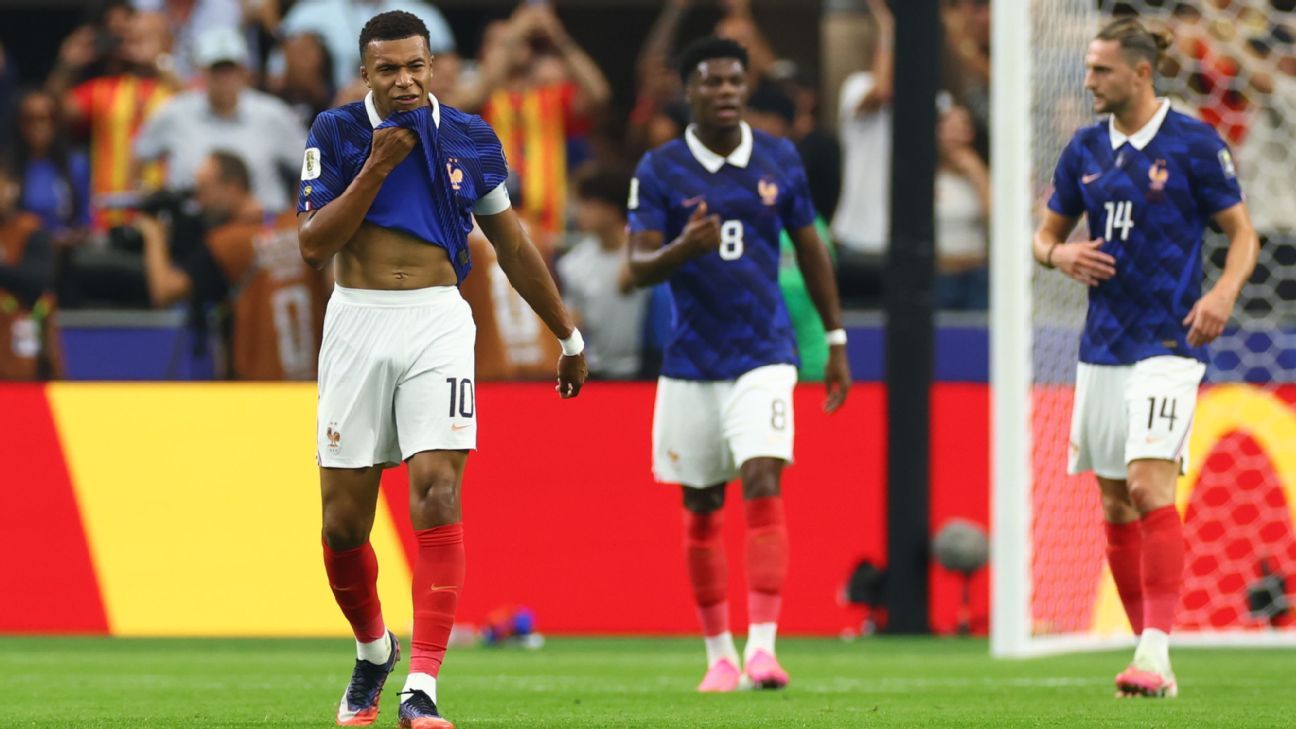
Image: courtesy of ESPN
Mbappé's Public Critique: What It Means for Deschamps and French Football's Future After World Cup Exit
Kylian Mbappé publicly criticized France's tactics and technical execution following their 2-0 defeat to Spain in the 2026 FIFA World Cup semifinal on Tuesday. Mbappé described the team's performance as 'sloppy,' highlighting a tactical disadvantage in midfield, poor communication during the press, and a general failure to execute their game plan. This direct challenge from a star player to manager Didier Deschamps' approach has opened a new front in the scrutiny facing the French national team after failing to reach a third consecutive World Cup final.
Outlook
Background
France's campaign to secure a third successive World Cup final appearance concluded abruptly on Tuesday, July 14, 2026, with a decisive 2-0 loss to Spain in Arlington, Texas. The defeat was particularly stark, as France, considered a tournament favorite after six consecutive wins, appeared outmatched by Spain's control and tactical discipline.
Kylian Mbappé, who was held scoreless in the semifinal, did not mince words when discussing the team's performance. He stated unequivocally, "I think we didn’t play our game, neither technically nor tactically." His frustration extended to specific details of the match, pointing out a critical imbalance in midfield. "We were three against two in midfield and against Spain, that's hard," Mbappé explained, noting that Spanish midfielders Fabián Ruiz and Rodri "had plenty of time to play."
The forward also identified a "lack of communication on the press," suggesting an alternative approach: "I think we should have done man-to-man press and force them to run with us." Beyond tactics, Mbappé was critical of the team's overall technical execution, specifically mentioning "poor first touches after regaining possession." These comments, delivered so directly and publicly, are widely interpreted as a challenge to manager Didier Deschamps' strategic choices and the team's preparation. Deschamps, a veteran manager with a World Cup title to his name, now faces a period of intense questioning regarding his methods and leadership.
Precedents
Direct public criticism from a star player of their national team's tactics, especially after a major tournament exit, is a rare event in football. It signals a deeper level of frustration that typically remains within the locker room. Historically, such public dissent can have significant repercussions, often leading to internal rifts, a loss of managerial authority, or even the departure of the coach. The French national team itself has a precedent for internal strife impacting performance, most notably during the 2010 World Cup in South Africa, where player unrest led to boycotts and a disastrous campaign. While the current situation is far from that extreme, Mbappé's comments introduce a similar element of public discord.
For managers, failing to meet World Cup expectations, particularly after a strong run in previous tournaments, almost always triggers a review of their position. Didier Deschamps has enjoyed a long and largely successful tenure, leading France to the 2018 World Cup title and the 2022 final. This record has afforded him considerable goodwill and job security. However, even the most decorated coaches are not immune to pressure when results falter and internal harmony appears to break. Mbappé's comments, coming from arguably the most influential player in French football, could accelerate any existing pressure on Deschamps, forcing the French Football Federation to address the situation more directly than they might have otherwise.
Mbappé's pointed remarks matter because they move the conversation beyond simple disappointment over a World Cup exit. They expose potential cracks in the team's foundation, specifically questioning the tactical framework and technical discipline under Didier Deschamps. For Deschamps, this is a direct challenge to his authority and strategic vision. His ability to command the dressing room and implement his philosophy could be undermined if his star player publicly disagrees with his approach. The French Football Federation now faces a difficult decision: support their long-serving manager in the face of public dissent, or consider a change in leadership to appease a generational talent like Mbappé and potentially reset the team's direction.
For Mbappé, these comments carry significant weight. As one of the world's most recognizable footballers, his words resonate deeply with fans, media, and his teammates. By speaking out, he has taken on the mantle of a leader demanding higher standards, but also risks alienating his coach and potentially creating an environment of internal tension. The stakes for French football are considerable. A harmonious team, even in defeat, can rebuild quickly. A team fractured by public disagreements, however, faces a much longer road to recovery, impacting future tournament performances, player morale, and the national team's reputation on the global stage. This incident highlights the delicate balance of power between star players and management, and how quickly that balance can shift under the intense pressure of international competition.
Scenarios
AnalysisThe fallout from Mbappé's public criticism could manifest in several ways, each carrying distinct implications for the French national team:
1. Deschamps Retains Role, Internal Reconciliation: The French Football Federation (FFF) might choose to reaffirm its confidence in Didier Deschamps, citing his past successes and long-standing relationship with the team. In this scenario, any disagreements with Mbappé would likely be handled internally, behind closed doors. This could involve direct discussions between Deschamps and Mbappé to iron out differences, potentially with the FFF leadership mediating. The goal would be to present a united front to the public, but the underlying tension could persist, potentially affecting team dynamics in future campaigns. Deschamps might be compelled to make subtle tactical adjustments in upcoming matches to address some of the concerns raised, without openly admitting fault.
2. Managerial Change for France: The pressure on Deschamps could become untenable, either leading to his resignation or the FFF deciding to part ways. Public criticism from a player of Mbappé's stature, combined with the disappointment of failing to reach the final, might be the catalyst for a change in leadership. A new manager would likely bring a fresh tactical approach and a different philosophy, potentially aligning more closely with Mbappé's expressed desire for a more proactive or man-to-man pressing style. This outcome would signal a significant reset for the French national team, aiming to revitalize the squad and establish a new era of play.
3. Tactical Evolution Under Deschamps: Deschamps, while remaining as manager, could publicly or privately acknowledge the need for tactical evolution. This outcome would see him integrate some of the criticisms into his strategy for future competitions, perhaps experimenting with different midfield setups or pressing schemes. This would require a degree of flexibility from the veteran coach and an openness to adapting his established methods. Such an evolution might help mend any perceived rift with Mbappé by demonstrating that player input is valued, potentially re-energizing the team for the next qualifying cycle and major tournaments.
Timeline
2026-07-14
France vs. Spain World Cup Semifinal
France suffers a 2-0 defeat to Spain in the 2026 FIFA World Cup semifinal in Arlington, Texas, ending their quest for a third consecutive final appearance. Kylian Mbappé is held scoreless in the match.
2026-07-15
Mbappé Criticizes Tactics
Kylian Mbappé publicly criticizes France's tactical and technical performance after the loss, calling it 'sloppy' and questioning midfield setup, pressing communication, and first touches.
Frequently Asked Questions
Mbappé criticized both the tactical setup and technical execution. He pointed to a 3-against-2 disadvantage in midfield against Spain, a lack of communication on the press, and poor first touches after regaining possession. He suggested France should have employed a man-to-man pressing strategy.
Discussion
Be the first to share your thoughts.