
With Chapman sidelined and his contract limiting options, the Giants are now facing a tougher path to retooling their roster. Expect the front office to intensify efforts to move other players, potentially even accepting less-than-ideal returns, as they push to acquire young talent. The immediate focus will be on assessing Chapman's recovery timeline and engaging in complex discussions with potential trade partners, who now hold significantly more leverage.
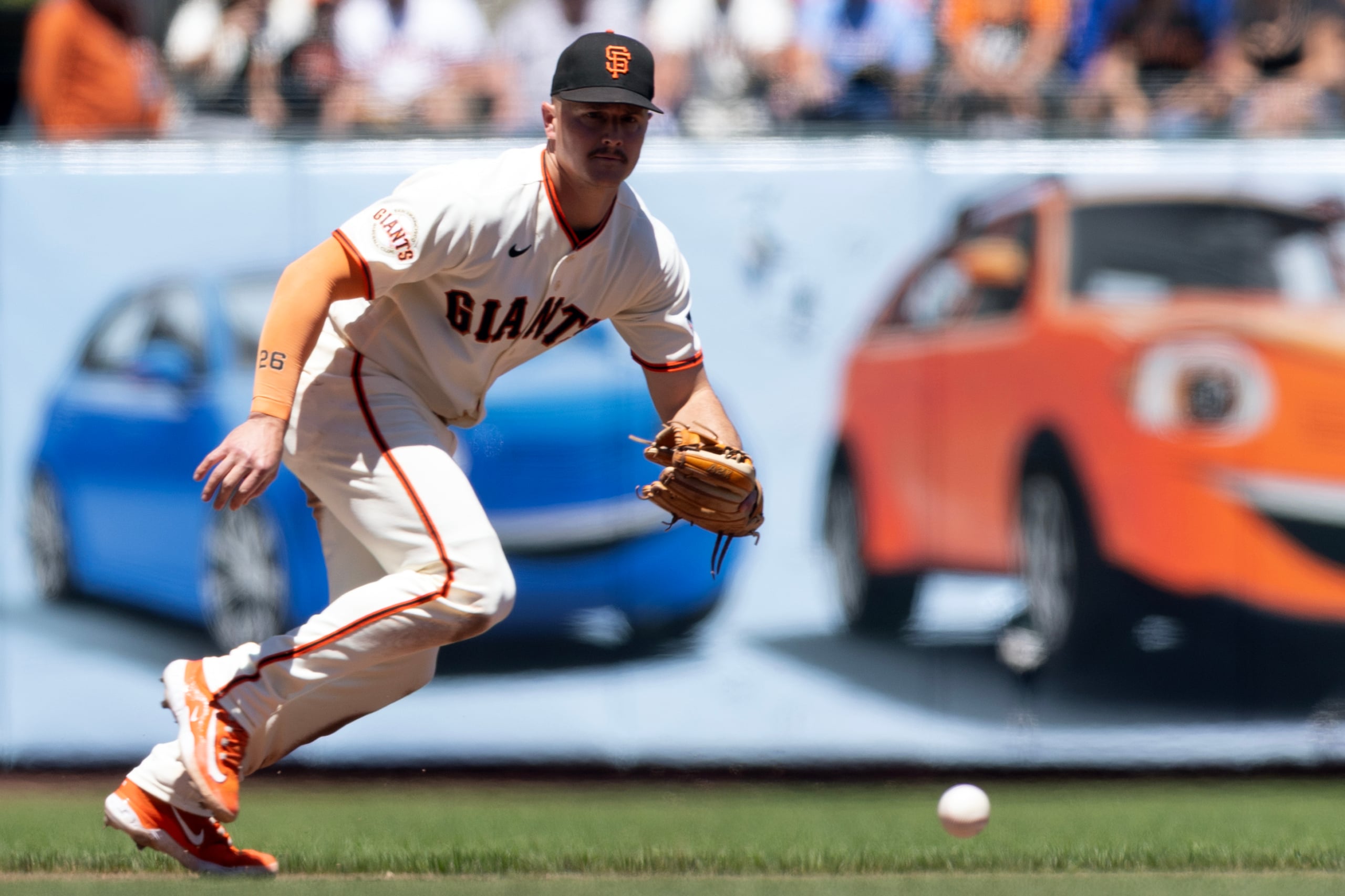
Image: courtesy of Sportsnaut
Matt Chapman's Injury and No-Trade Clause Create a Deadline Quandary for San Francisco Giants
Matt Chapman, the San Francisco Giants' third baseman, is on the 10-day injured list after sustaining an abdominal strain earlier this week. This injury, coupled with his existing no-trade clause, has severely complicated the Giants' already challenging strategy leading up to the August 3rd trade deadline.
Outlook
Background
The San Francisco Giants entered the 2026 season with aspirations of contention, having committed substantial resources to players like Matt Chapman, Rafael Devers, and Willy Adames. These three players alone are owed a combined $451 million after the current season, a significant investment intended to propel the team into a 'win-now' mode. Chapman, specifically, signed a six-year, $151 million contract extension with the Giants, a deal that included a critical no-trade clause.
However, the season has not unfolded as planned. As of July 1, the Giants stand at 32-46, a full 14 games under .500, making any playoff push a distant dream. This stark reality has shifted the team's focus, with President of Baseball Operations Buster Posey now reportedly concentrating on being a 'seller' at the trade deadline, aiming to bolster the organization's prospect pool.
The injury to Chapman, an abdominal strain suffered in Tuesday's loss to the Arizona Diamondbacks, throws a wrench into these plans. A player on the injured list is inherently more difficult to trade, as any acquiring team must factor in recovery time and future performance uncertainty. Add to this Chapman's no-trade clause, which grants him the power to veto any potential deal, and the Giants' options become even more constrained. This clause means that even if a trade partner were identified, Chapman would need to approve the move, a decision often influenced by factors like team competitiveness, market size, and personal preferences, including his expressed desire to 'win here' in San Francisco.
His performance this season has also been a point of concern. While he was an All-Star with the Oakland Athletics in 2019, hitting 36 home runs, his offensive output with the Giants has underwhelmed. This underperformance, combined with his substantial contract, already made him a challenging asset to move. The injury now compounds this difficulty, potentially forcing the Giants to absorb more of his remaining salary or accept a significantly reduced return in any hypothetical trade, if one can even be engineered.
Precedents
Major League Baseball's trade deadline often sees teams scrambling to offload players, but doing so with a significant, underperforming contract is always a heavy lift. When that player also has an injury and a no-trade clause, the historical precedent suggests a steep uphill battle for the selling team.
Teams in similar positions have often found themselves needing to sweeten the deal for potential buyers. This can mean including cash to cover a portion of the player's remaining salary, or attaching additional assets, such as lower-tier prospects, to make the trade more palatable. The goal is often less about maximizing return for the expensive player and more about shedding salary and clearing a roster spot for future flexibility.
In situations where a player has a no-trade clause, their agency in the process is paramount. Past examples show players waiving these clauses for specific destinations — often contenders or teams in desirable markets — but rarely for a move to another rebuilding club, unless there are significant financial incentives or long-term guarantees involved. If Chapman's stated desire to 'win here' remains strong, it suggests he would be less inclined to approve a trade to another non-contending team, further limiting San Francisco's options to a select few, if any.
The market for injured players is also notoriously thin. Buyers are typically looking for immediate impact, especially in the weeks leading up to the deadline. A player on the injured list represents a delayed return on investment, making a trade a higher-risk proposition unless the price is heavily discounted.
The confluence of Matt Chapman's injury, his contract, and the no-trade clause represents more than just a logistical hurdle for the Giants; it's a critical test of the front office's strategic agility and a potential determinant of the team's rebuild timeline. The Giants are facing a scenario where their most expensive assets are also the hardest to move, directly impacting their ability to acquire the young talent Buster Posey seeks.
For the organization, this situation could mean a slower, more painful pivot towards competitiveness. If they cannot shed significant salary or acquire valuable prospects by August 3rd, they risk carrying expensive, underperforming players into next season, limiting their financial flexibility for future free agent classes or extensions. This directly affects capital allocation and the team's long-term payroll structure.
For the fanbase, it signals a potentially longer wait for a return to contention. The expectation was a quick retool, but this development suggests a more drawn-out process, demanding patience. It also raises questions about the initial strategy of making large commitments to players who have not delivered, and the clauses included in those contracts.
Ultimately, the Giants' handling of this complex situation will set a precedent for how they manage future high-value, high-risk acquisitions and how effectively they can course-correct when a 'win-now' strategy falters.
Scenarios
AnalysisOne highly probable outcome is that the Giants find it impossible to construct a satisfactory trade for Matt Chapman by the August 3rd deadline. His abdominal injury, combined with the no-trade clause and his underperformance, makes him a profoundly difficult asset to move without significant concessions. In this scenario, the Giants would likely keep Chapman for the remainder of the season, hoping for a return to health and improved performance that might make him more tradable in the offseason, or simply accepting his presence on the roster for the foreseeable future. This would force the front office to shift its trade focus entirely to other players like Rafael Devers or Willy Adames, where the contractual situations might offer slightly more flexibility, even if still challenging. They might also explore trading mid-tier veterans or relievers who could fetch prospects.
A less likely, but still possible, outcome involves a highly conditional trade for Chapman. This would almost certainly require him to recover quickly from his injury and then agree to waive his no-trade clause for a specific destination. Such a deal would likely see the Giants absorbing a substantial portion of his remaining contract, or attaching a valuable prospect to him to entice a buyer. The acquiring team would likely be a contender looking for a short-term upgrade at third base, willing to take a calculated risk on Chapman's health and potential rebound. The return for San Francisco in this scenario would be modest, focused primarily on shedding salary and gaining some future payroll flexibility, rather than acquiring top-tier prospects.
A more aggressive, but speculative, path could see the Giants fully commit to a long-term rebuild by using their financial capacity to take on other teams' undesirable contracts in exchange for high-upside prospects. This strategy, sometimes employed by teams looking to rapidly replenish their farm system, would essentially see the Giants 'buying' prospects by absorbing salary. While this wouldn't directly address the Chapman situation, it could be an alternative way for Buster Posey to accelerate the influx of young talent, even if it means carrying a larger, less efficient payroll in the short term. This implies a significant shift in capital allocation towards future assets.
Timeline
2019
Matt Chapman's All-Star Season
Matt Chapman earned All-Star honors with the Oakland Athletics, hitting 36 home runs, showcasing his potential as a premier third baseman.
2026-03-01
Giants Sign Chapman to Extension
The San Francisco Giants and Matt Chapman agreed to a six-year, $151 million contract extension, including a no-trade clause, signaling a commitment to a 'win-now' strategy.
2026-07-01
Abdominal Strain Injury
Matt Chapman exited Tuesday's game against the Arizona Diamondbacks with an abdominal strain, leading to his placement on the 10-day injured list.
2026-08-03
MLB Trade Deadline
The Major League Baseball trade deadline, seven weeks from the date of Chapman's injury news, represents the final opportunity for the Giants to make roster changes via trade.
Frequently Asked Questions
Matt Chapman is currently on the 10-day injured list due to an abdominal strain, sustained during Tuesday's game against the Arizona Diamondbacks.
Discussion
Be the first to share your thoughts.