
The WNBA is poised for a significant transformation in 2027, regardless of who is at the helm. Readers should expect the league to move forward with its announced plans for a 50-game regular season, a centralized replay center to enhance officiating, and a groundbreaking international game. The new collective bargaining agreement (CBA), which includes substantial salary increases for players and mandated air charter travel, is also expected to be finalized soon, setting the financial and operational framework for the coming years. The ongoing expansion, with three new franchises already in the pipeline, will continue to broaden the league's footprint. The primary unknown is the leadership continuity, which could influence the pace and strategic direction of these changes.
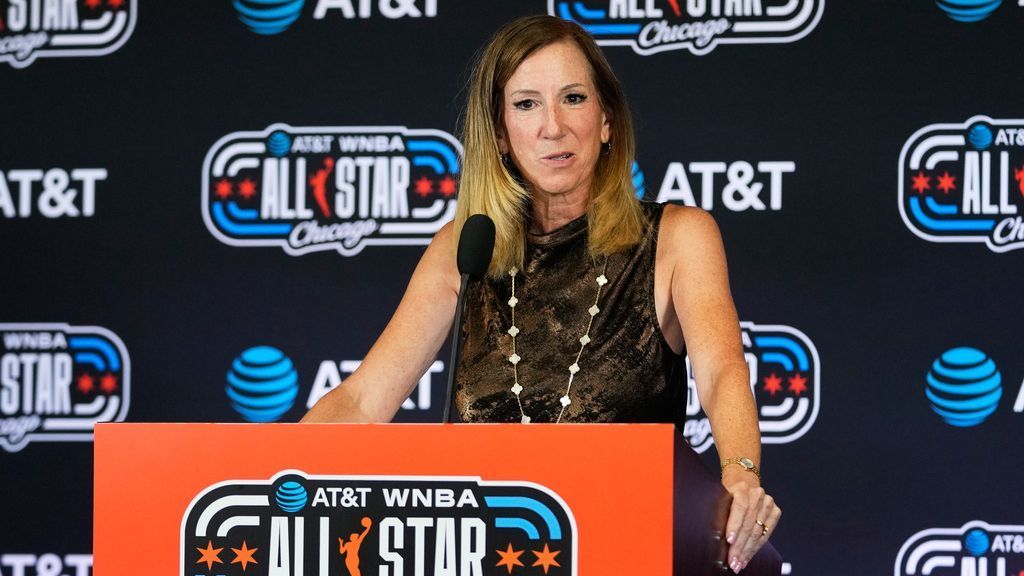
Image: courtesy of ESPN
The Stakes for the WNBA's 2027 Vision as Commissioner Engelbert Weighs Her Future
WNBA Commissioner Cathy Engelbert's silence on her job status beyond 2026 casts a shadow of uncertainty over the league's ambitious plans for the 2027 season. With a 50-game schedule, a new centralized replay center, and the first overseas game on the horizon, the WNBA stands at a critical juncture of growth. Engelbert, who took the helm in July 2019, has overseen significant changes, including a $75 million capital raise and league expansion. Her decision will shape the execution of these pivotal initiatives, which are designed to elevate the league's profile and solidify its financial footing.
Outlook
Background
The WNBA has experienced a period of notable growth and change under Cathy Engelbert's leadership since she became commissioner in July 2019. Her tenure has been marked by several significant achievements, including guiding the league through the operational challenges of the COVID-19 pandemic. Engelbert also orchestrated a first-ever $75 million capital raise, a crucial injection of funds that supported various league initiatives and improved player conditions. Under her watch, the league has also expanded, with the Golden State Valkyries franchise reportedly paying a $50 million expansion fee. There are plans for two additional teams, bringing the total expansion to three new franchises.
Critically, Engelbert has been instrumental in two collective bargaining agreement negotiations, most recently securing a deal that promises substantial improvements for players. The upcoming CBA, estimated at 400 to 500 pages and said to be close to finalization, includes a $7 million salary cap for the 2026 season, with maximum salaries increasing to $1.4 million in 2026 and over $2.4 million by 2032. Rookie-scale contracts are also set to increase, and teams will maintain roster minimums of 12 players, alongside two additional developmental slots that do not count against the salary cap. A key player demand — codified air charter travel — has also been agreed upon. These financial and operational improvements reflect a concerted effort to professionalize the league and attract top talent.
Despite these advancements and the clear trajectory, Engelbert has remained tight-lipped about her intentions for 2027. During her annual All-Star Weekend news conference, she avoided direct questions about her job status. NBA Commissioner Adam Silver confirmed last month that he had not yet discussed Engelbert's future with her, indicating that her decision is still an open question within the league's highest levels. This silence comes as the WNBA prepares for a watershed 2027 season, making the leadership question particularly pressing.
Precedents
Commissioner tenures in professional sports leagues often align with major strategic cycles or collective bargaining agreements. For instance, NBA Commissioner Adam Silver's various extensions have typically coincided with periods of significant league growth, media rights negotiations, or labor peace. A commissioner’s role is demanding, requiring a balance of business acumen, labor relations, public relations, and strategic vision. The WNBA, as a younger league compared to its male counterparts, has seen commissioners navigate periods of significant financial instability and player advocacy. Former WNBA President Lisa Borders, for example, stepped down in 2018 after two years, a relatively short tenure. Val Ackerman, the league's first president, served from 1997 to 2005, laying much of the foundational work. The decision to stay or depart is often influenced by a combination of personal factors, the completion of key strategic objectives, and the desire for fresh leadership to tackle new challenges. Historically, a commissioner overseeing a period of significant growth and successful labor negotiations often earns the trust of owners and players, making a continuation more likely if both parties are amenable. However, the intensity of the role can also lead to leaders seeking new opportunities once major milestones are achieved.
The question of Cathy Engelbert's future at the WNBA's helm is more than just a personnel decision; it directly impacts the league's ability to execute its ambitious growth strategy for 2027 and beyond. The WNBA is in a delicate, yet promising, phase. It has secured significant financial investment, expanded its team base, and negotiated a player-friendly CBA. These are all critical building blocks for long-term success, but their successful implementation requires consistent, experienced leadership.
If Engelbert chooses to depart, the league would face the challenge of finding a new commissioner to step into a role that demands immediate oversight of a 50-game schedule increase, the launch of a new replay center, and the logistical complexities of an international game. A leadership transition at such a pivotal moment could introduce delays or shifts in strategic priorities. While a new leader might bring fresh perspectives, the continuity of vision and relationships built over years, particularly with players and team owners, would be lost. The WNBA has historically struggled with consistent financial stability and mainstream visibility, making the current growth trajectory particularly precious. Maintaining momentum is paramount, and a leadership change, even if ultimately positive, introduces an element of execution risk during a critical expansion period for the league. For players, owners, and fans, the stability of leadership during this expansion phase could dictate how smoothly the league transitions into its next era of growth.
Scenarios
AnalysisThere are two primary scenarios regarding Commissioner Engelbert's job status for 2027, each carrying distinct implications for the WNBA's future:
Outcome 1: Cathy Engelbert Continues as Commissioner
If Engelbert decides to extend her tenure, it would provide crucial continuity for the WNBA's ambitious 2027 plans. She has been the architect of many of these initiatives, from securing the capital raise to negotiating the new CBA and driving expansion. Her continued presence would mean a steady hand guiding the implementation of the 50-game schedule, the new replay center, and the league's first overseas game. This continuity could foster confidence among players, who have seen their relationship with the league office improve under her leadership, and among team owners, who have invested significantly in expansion. The league would likely maintain its current strategic direction, leveraging the momentum built over the past several years. However, the demands of the role are intense, and even an effective leader may eventually face burnout or a desire for new challenges.
Outcome 2: Cathy Engelbert Departs, and a New Commissioner Is Appointed
Should Engelbert choose not to continue, the WNBA would embark on a search for a new leader at a critical juncture. A new commissioner would inherit a league with significant growth potential but also the immediate challenge of executing a complex set of initiatives for 2027. While a fresh perspective could be beneficial, a leadership transition might introduce a period of adjustment. A new commissioner would need to quickly build rapport with team owners, the players' association, and key stakeholders, as well as assimilate the intricacies of the league's ongoing projects. This scenario could lead to minor adjustments in strategic priorities or a different approach to international expansion and media rights negotiations. However, the core plans for 2027 — the schedule, replay center, and international game — are already confirmed by the league, suggesting a new commissioner would be tasked with overseeing their implementation rather than fundamentally altering them.
Timeline
Frequently Asked Questions
Discussion
Be the first to share your thoughts.