
Veridact
TechSportsFinanceGaming🎯 PredictionsAbout
Sign InSign Up
Veridact

AI-powered anticipation analysis. We cover tech, sports, finance, and gaming events before they happen — with historical context, scenario modeling, and evolving coverage.

Stay ahead of the story

Analysis delivered before events unfold.

Coverage

  • Tech
  • Sports
  • Finance
  • Gaming

Company

  • About Us
  • Privacy Policy

© 2026 Veridact. AI-assisted analysis platform.

Analysis is AI-generated and not professional financial, legal, or medical advice.

Sports
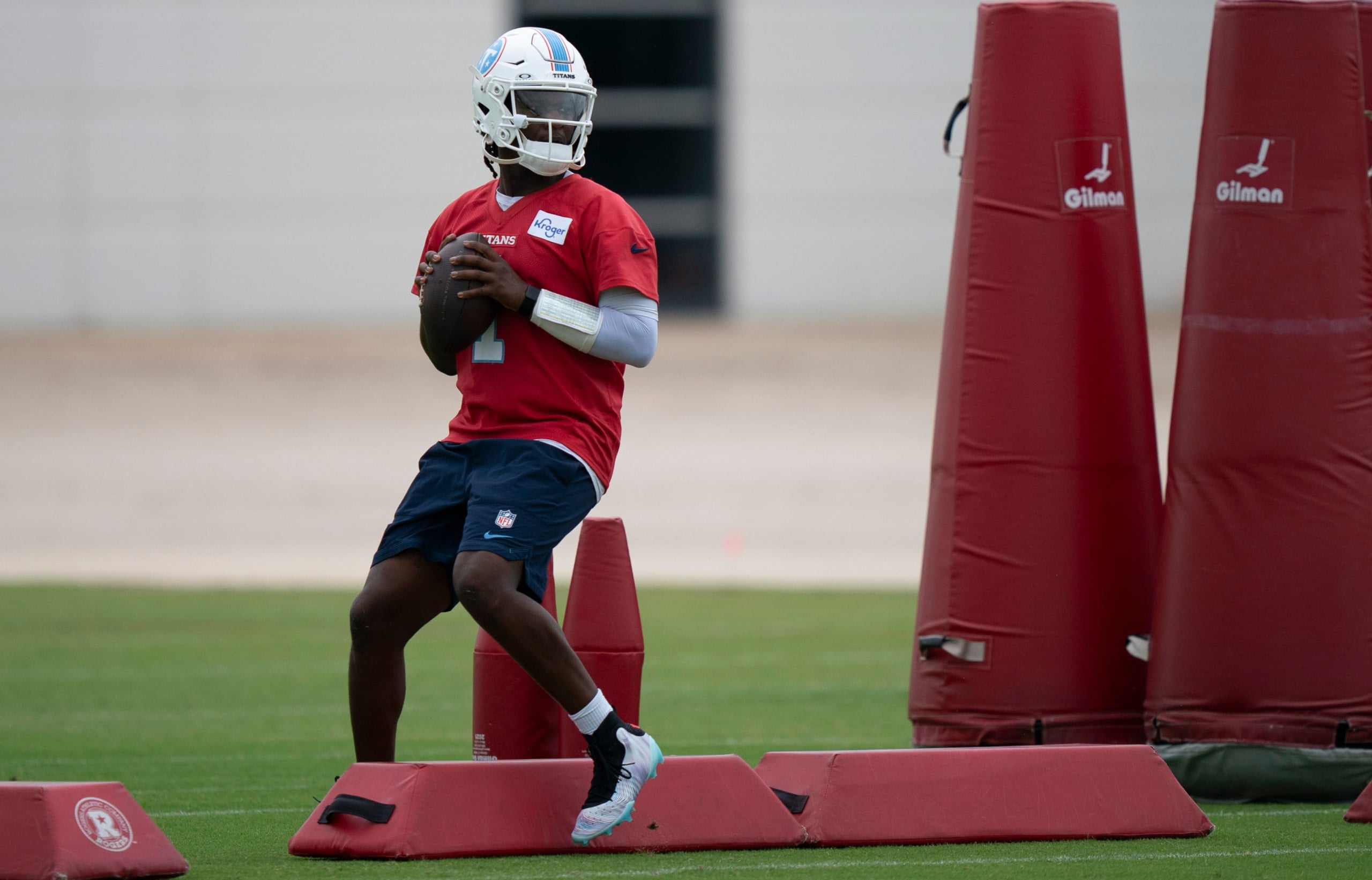
Cam Ward’s Minicamp Performance Drew Strong Criticism from Tennessee Titans Reporter

Image: courtesy of Sportsnaut

sportsJune 15, 2026By Veridact EditorialUpdated Jun 15

Under the Microscope: Why Cam Ward's Early Minicamp Struggles Reveal the Steep Climb Ahead for the Titans' Rookie Quarterback

A highly critical report from a Tennessee Titans beat writer has cast a spotlight on rookie quarterback Cam Ward's performance during the team's mandatory offseason workouts. The critique focused on slow decision-making, holding onto the ball too long in simulated pass-rush scenarios, and multiple turnovers during team drills. While early June practices are notoriously difficult for rookie quarterbacks adjusting to complex NFL defensive schemes, the public call-out highlights the immediate pressure facing Ward as he transitions from his collegiate playstyle to the structured passing offense favored by head coach Brian Callahan. This early friction suggests that Ward's path to earning meaningful playing time will require a significant mechanical and mental adjustment before training camp begins in late July.

What to Expect

As the Tennessee Titans head into their summer break before training camp, the coaching staff is expected to focus heavily on streamlining Cam Ward's transition to the professional game. Analysts suggest that the team will likely assign Ward a dedicated developmental plan over the next six weeks, focusing on footwork timing and quickening his post-snap progression.

When players return to the facility in late July, the intensity will increase. Observers should expect the coaching staff to structure early training camp practices to rebuild Ward's confidence, potentially giving him more reps with the second-team offensive line to establish a rhythm. However, if the decision-making delays and turnovers persist once the pads are on, the Titans may limit Ward's reps in preseason games to protect his development, opting to rely more heavily on experienced depth to run the offense.

One key area to watch is how Callahan adjusts his coaching style. Known for his patience with young quarterbacks, Callahan's response to these early struggles will indicate how quickly the franchise expects Ward to compete for a backup or starting role.

Key Context

To understand why Cam Ward's minicamp performance drew such sharp criticism, one must look at the stark contrast between his collegiate environment and the expectations of the Titans' offensive system. At the University of Miami, Ward operated in a system that frequently allowed him to extend plays, rely on off-platform throws, and use his natural athleticism to escape pressure. While this backyard-style playmaking made him one of the most exciting prospects in college football, it often runs counter to the timing-based, West Coast-influenced passing game that Brian Callahan brought to Nashville.

In Callahan's system, quarterbacks are expected to throw to a spot before the receiver even makes his break. The footwork must be perfectly synchronized with the route concepts. During the recently concluded minicamp, local reporters noted that Ward frequently hitched in his dropback, holding the ball for four to five seconds—a lifetime in the NFL. In unpadded practices, where defenders cannot actually tackle the quarterback, these delays are marked as simulated sacks, which heavily disrupted the flow of the offense.

Furthermore, the jump in defensive complexity from the collegiate level to the NFL is immense. Defensive coordinator Dennard Wilson is known for deploying disguised coverages and pre-snap rotations. For a rookie quarterback still trying to translate the playbook in his head, reading these moving parts in real-time often leads to hesitation. This hesitation was the primary catalyst for the interceptions and pass breakups highlighted in the beat reporter's critical assessment.

Historical Patterns

History shows that rookie quarterback struggles during June minicamps are the rule rather than the exception. Unpadded summer practices are notoriously tilted in favor of the defense. Without the threat of a real pass rush or a running game to keep them honest, defensive backs can play more aggressively, jump routes, and crowd passing lanes.

Several highly successful NFL quarterbacks experienced disastrous minicamp runs as rookies. For instance, high-profile draft picks often throw multiple interceptions in June as they test the limits of what they can get away with against professional secondaries. The transition from spread or air-raid collegiate offenses to pro-style systems historically takes months of repetition.

However, there is a flip side to this pattern. While early struggles are normal, quarterbacks who fail to show incremental improvement in their processing speed by the second week of training camp often struggle to recover their confidence. The transition from 'thinking' to 'playing' is the ultimate divider of rookie success. If Ward's internal clock does not speed up once pads are donned in August, historical precedents suggest he could face a prolonged developmental period on the bench, similar to other highly drafted prospects who were forced into action before they were ready.

The Real Stakes in Nashville

Potential Outcomes

Analysis

Analysis of the Titans' quarterback situation suggests three potential paths forward as the team prepares for the upcoming season:

In the first scenario, Ward utilizes the six-week summer break to master the playbook, resulting in a much sharper showing when training camp opens. By correcting his footwork and speeding up his release, he quickly secures the primary backup role behind the established starter. This outcome would validate the front office's investment and position Ward as the franchise's long-term option if the starter struggles or suffers an injury.

In an alternative scenario, Ward's timing and decision-making issues persist into August. The coaching staff, recognizing that the rookie is not yet ready for game speed, limits his exposure during the preseason and carries him as an inactive third quarterback on game days. This approach would signal a 'redshirt' year for Ward, allowing him to develop behind the scenes without the pressure of immediate performance expectations.

A third, more volatile scenario could emerge if the starting quarterback suffers an early-season injury, forcing a struggling Ward into action prematurely. This could compel the coaching staff to heavily simplify the playbook, relying on a run-heavy scheme and quick screen passes to protect the rookie, potentially limiting the team's offensive ceiling for the duration of his playing time.

Timeline

2026-04-25
Ward Selected by Titans
The Tennessee Titans draft quarterback Cam Ward, bringing his dynamic playmaking ability to Nashville to compete in a rebuilt quarterback room.
2026-05-15
Rookie Minicamp Debuts
Ward takes his first snaps in a Titans uniform, showing flashes of arm talent but also the expected early adjustment hurdles.
2026-06-11
Mandatory Minicamp Concludes
The final practices of the spring session draw sharp criticism from local beat reporters, highlighting Ward's struggles with turnovers and slow processing.
2026-07-24
Training Camp Begins
The Titans will report to camp, marking the first time Ward will face defensive pressure in full pads.
2026-08-14
Preseason Opener
Ward is expected to receive significant playing time in the second half, offering the first true public test of his offseason adjustments.

Frequently Asked Questions

The beat reporter highlighted Ward's tendency to hold onto the ball too long in the pocket, resulting in multiple simulated sacks. Additionally, the critique noted several instances of late throws over the middle that resulted in interceptions or pass breakups during 7-on-7 and 11-on-11 drills.

Discussion

0/100
0/1000

Be the first to share your thoughts.

Related Coverage

sports

The Cautionary Tale of June Reps: Inside Gabe Jacas’s Patriots Minicamp Absence

Jun 15
sports

The $7 Billion Liquidation: Inside the Emerging Timeline for the Seattle Seahawks Sale

Jun 14
sports

The $9.25 Million Dilemma: Why Darnell Nurse’s Reported Trade List Is Just the First Step in a Complex Cap Puzzle

Jun 14
sports

Cole Caufield Wins Big Vote to Join the Very Best Players in Hockey

Jun 13

Stay ahead of the story

AI analysis delivered before events unfold. No spam.

ⓘ

Disclosure: This article contains AI-assisted analysis based on publicly available information.