
Fans can anticipate a third season of 'Twisted Metal' that leans more heavily into its video game origins, now bolstered by the presence of a voice actor synonymous with one of its most iconic characters. The show, known for its blend of dark humor, chaotic action, and post-apocalyptic setting, is expected to continue exploring the 'Twisted Metal' tournament and its various drivers. Mark Hamill's involvement, especially if he reprises his role as the voice of Sweet Tooth, is likely to be a major narrative and promotional hook. This could mean more direct references to the game's intricate backstory and character motivations, potentially offering a richer experience for long-time fans while still being accessible to new viewers. The creative team will likely leverage Hamill's star power and his deep understanding of the character to add new layers to the show's established tone. Viewers should prepare for an escalation in the vehicular combat and character development that defined the first two seasons, with Hamill's contribution potentially providing a central anchor to the franchise's identity.
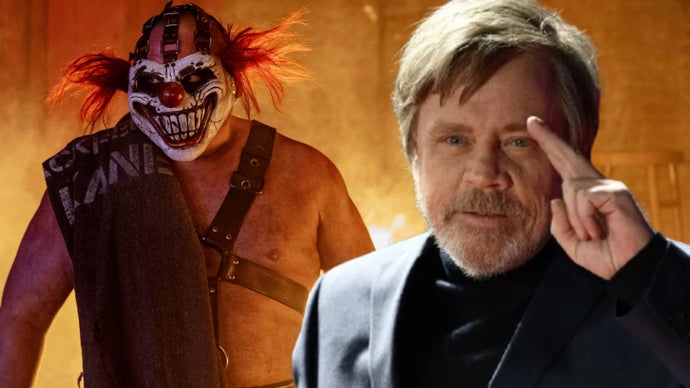
Image: courtesy of EuroGamer
Mark Hamill Joins 'Twisted Metal' Season 3, Deepening Its Game Roots
The 'Twisted Metal' television series, which airs on Peacock, has been greenlit for a third season following a successful second run. Adding significant weight to the upcoming season, legendary actor Mark Hamill has been confirmed to join the cast in what producers describe as a 'familiar role.' This casting decision not only elevates the show's profile but also signals a deeper commitment to the video game franchise's lore, particularly given Hamill's previous association with the character Sweet Tooth in the original games. The move comes as Hollywood continues to find varying degrees of success in adapting video game intellectual property for the screen, with 'Twisted Metal' emerging as a notable success story.
Outlook
Background
The 'Twisted Metal' series debuted on Peacock and quickly carved out a niche for itself by embracing the anarchic spirit of the PlayStation-era vehicular combat games. Unlike many video game adaptations that struggle to translate gameplay mechanics into compelling narrative, 'Twisted Metal' focused on character-driven stories within its violent, post-apocalyptic world. Its second season, which concluded recently, built on this foundation, expanding the roster of characters and deepening the lore surrounding the titular tournament. The show's success comes at a time when the entertainment industry is actively seeking out established intellectual property, and video games represent a vast, largely untapped reservoir of potential. Recent successes like 'The Last of Us' and 'Fallout' have demonstrated that faithful, high-quality adaptations can attract massive audiences and critical acclaim, challenging the long-held notion of a 'video game curse.' Mark Hamill's casting is particularly resonant because of his extensive history as a voice actor, most notably as the Joker in various Batman animated series and, crucially, as Sweet Tooth in several 'Twisted Metal' video games. His return to a 'familiar role' is a clear nod to this legacy and a strategic move to excite fans who grew up with the games.
Precedents
The history of video game adaptations is littered with cautionary tales, often characterized by creative liberties that alienated source material fans and failed to attract new audiences. For decades, attempts to translate popular game franchises to film and television frequently resulted in critical and commercial duds. However, the tide began to turn in the mid-2010s, with productions like 'Detective Pikachu' and 'Sonic the Hedgehog' finding success by blending fan service with broader appeal. More recently, streaming services, with their capacity for longer-form storytelling, have proven particularly effective. 'The Witcher' on Netflix, 'Arcane' also on Netflix, and 'The Last of Us' on HBO, along with 'Fallout' on Amazon Prime Video, have set new benchmarks for quality and audience engagement. These successes often share common traits: respect for the source material's core themes and characters, a willingness to collaborate with original creators, and significant production budgets to achieve high cinematic quality. The casting of iconic voice actors or actors deeply associated with the original property has also been a recurring pattern in successful adaptations, leveraging nostalgia and authenticity. For instance, the return of original voice actors in animated adaptations or even certain live-action roles has often been met with enthusiasm, reinforcing the connection between the new medium and the beloved original. 'Twisted Metal' appears to be following this playbook, learning from both the failures and triumphs of its predecessors to build a robust, multi-season narrative.
Mark Hamill's involvement in 'Twisted Metal' Season 3 carries significant implications for the show, the broader landscape of video game adaptations, and the entertainment industry's approach to intellectual property. For 'Twisted Metal,' it means a substantial boost in credibility and fan engagement. Hamill is not just a beloved actor; he is a voice acting legend, and his association with Sweet Tooth is deeply ingrained in the franchise's identity. His return, even if only as a voice, provides an authentic link to the games that few other adaptations can boast. This could translate into increased viewership, critical buzz, and a stronger sense of legitimacy for the series. For the video game adaptation genre, this is another data point demonstrating that successful adaptations are not flukes but the result of strategic decisions, including respectful treatment of IP and smart casting. It reinforces the idea that game franchises hold immense value as cinematic universes, encouraging more studios to invest in similar projects. The decision to bring in a high-caliber actor like Hamill also elevates the perceived quality of the show itself, signaling to both audiences and industry peers that 'Twisted Metal' is a serious contender, not just a niche curiosity. This could also influence future talent decisions across the industry, potentially making it easier to attract A-list actors to game-based projects, further blurring the lines between traditional Hollywood and gaming culture. Ultimately, it suggests a maturing understanding within Hollywood of how to effectively adapt and expand beloved gaming worlds for a mainstream audience.
Scenarios
AnalysisOne potential outcome is that Mark Hamill's presence significantly elevates the third season of 'Twisted Metal,' drawing in a wider audience beyond existing fans of the game or the show. His iconic status and deep connection to the 'Twisted Metal' lore could make Season 3 a critical and commercial high point, potentially leading to further seasons or even spin-off projects within the 'Twisted Metal' universe. This success could solidify Peacock's position as a platform for genre content and high-profile adaptations, attracting more subscribers and reinforcing its content strategy. The positive reception might also encourage other game studios to pursue adaptations with similar fidelity to their source material and a willingness to bring in legacy talent.
Conversely, there is always the risk that even with Hamill's involvement, the show could fail to meet heightened expectations. While his casting is a strong positive, the quality of writing, direction, and overall execution for Season 3 will still be paramount. If the new season underperforms, it could dampen the enthusiasm around 'Twisted Metal' as a franchise, despite the star power. This might lead to a more cautious approach from Peacock regarding renewals or future investments in the IP. Furthermore, if Hamill's role is not as substantial or as 'familiar' as fans anticipate, or if it deviates too much from expectations, it could lead to fan disappointment, potentially impacting viewership and critical sentiment in the long run. The high bar set by recent successful adaptations means that audiences are increasingly discerning, and even beloved actors cannot single-handedly salvage a flawed production.
Timeline
Frequently Asked Questions
Discussion
Be the first to share your thoughts.