
The immediate expectation is that Valve will honor warranties for affected Steam Machine units, likely offering replacements given the nature of the GPU failure and the device's integrated design. Consumers who have recently received or are awaiting their Steam Machines may experience heightened anxiety and scrutiny regarding their units' performance. The gaming hardware market will be watching closely to see if this is an isolated incident or the first sign of a more widespread manufacturing defect, which could prompt a more significant response from Valve, potentially including public statements or a broader recall if reports escalate.
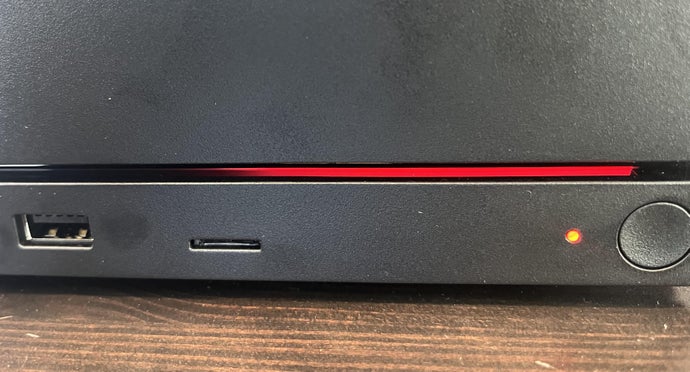
Image: courtesy of EuroGamer
Steam Machine's 'Red Line of Death' Echoes Past Console Failures: What It Means for Valve's Hardware Future
Valve's new Steam Machine has encountered its first major hardware fault, swiftly dubbed the 'Red Line of Death' (RLOD) by the gaming community. The issue, a confirmed GPU failure, emerged shortly after a user updated their device and began playing *No Man's Sky*, rendering the unit unusable. This incident draws immediate and uncomfortable parallels to the infamous 'Red Ring of Death' (RROD) that plagued Microsoft's Xbox 360, raising questions about the scale of the problem and Valve's quality control as it pushes further into the living room gaming market.
Outlook
Background
On July 3, 2026, a Reddit user, identified as u/me_hill, shared images of their recently acquired Steam Machine displaying a blinking red light on its front-facing LED bar. This visual anomaly has quickly been nicknamed the 'Red Line of Death,' a direct reference to the Xbox 360's 'Red Ring of Death' hardware failure. According to Valve's official support documentation, a blinking red bar on the right side of the LED indicates a Graphics Processing Unit (GPU) failure. The user confirmed their unit ceased to function, unable to boot or provide any display output, after reportedly playing No Man's Sky for just five minutes and following a system update.
Valve opened reservations for the Steam Machine in late June 2026, making u/me_hill one of the early adopters. The device is Valve's latest attempt to establish a presence in the living room gaming space, building on its SteamOS platform and leveraging the vast library of PC games available on Steam. Unlike traditional consoles, Steam Machines are essentially pre-built gaming PCs designed for ease of use with a controller interface. The reported GPU failure, particularly in a unit so new and with minimal use, immediately raised concerns within the community regarding the hardware's reliability. The fact that the GPU is reportedly integrated directly into the motherboard suggests that repair for individual units would be challenging, if not impossible, making full unit replacement the most probable solution for affected customers.
See also
Precedents
The 'Red Line of Death' nickname is not accidental; it carries significant historical weight within the gaming industry, directly invoking memories of the Xbox 360's 'Red Ring of Death' (RROD). The RROD was a catastrophic hardware failure that affected a substantial portion of early Xbox 360 consoles, causing three or four red lights to appear around the power button, indicating a general hardware malfunction. Microsoft eventually confirmed this issue was primarily due to thermal stress causing solder joints on the GPU to crack.
The RROD crisis was a defining moment for Microsoft's Xbox division. It led to an estimated cost of over $1 billion for the company, primarily for extended warranties and mass console replacements. The sheer scale of the problem forced Microsoft to undertake a massive logistics and customer service operation, and it cast a long shadow over the console's initial reputation, even though the Xbox 360 ultimately became a commercial success after subsequent hardware revisions.
This historical precedent highlights why the Steam Machine's RLOD is being met with such immediate concern. Hardware failures, especially those affecting core components like the GPU, can quickly erode consumer trust and incur immense costs for manufacturers. For Valve, a company with a more limited history in mass-market hardware production compared to Microsoft or Sony, any widespread hardware defect could prove particularly challenging to manage. While the Steam Deck, Valve's popular handheld gaming PC, has seen its share of minor hardware quirks, it has largely avoided a systemic, critical failure on the scale of the RROD. The Steam Machine now faces the early test of proving its manufacturing robustness in a market segment where reliability is paramount.
The emergence of the 'Red Line of Death' on a brand-new Steam Machine unit is significant for several reasons, extending beyond the inconvenience to a single user. First, it directly challenges the perception of the Steam Machine as a reliable, console-like alternative for living room PC gaming. Valve's strategy with the Steam Machine, much like the Steam Deck, is to offer a curated, user-friendly experience that removes the complexities often associated with traditional PC gaming. A critical hardware failure so early in the product's lifecycle undermines this core promise, potentially deterring mainstream consumers who prioritize stability and ease of use.
Second, the financial and reputational stakes for Valve are considerable. While one unit failure is not a crisis, if u/me_hill's experience proves to be part of a larger pattern, Valve could face substantial costs associated with warranty claims, repairs, or full replacements. More importantly, negative publicity surrounding a widespread hardware defect could severely damage the Steam Machine's sales trajectory and, by extension, Valve's broader hardware ambitions. The company has invested heavily in its hardware ecosystem, from the Steam Controller to the Valve Index VR headset and the highly successful Steam Deck. The Steam Machine is a continuation of this effort, and its success is crucial for validating Valve's vision of integrating its software and hardware platforms.
Finally, this incident could influence investor confidence and market dynamics. Valve is a privately held company, so it does not face direct public shareholder pressure, but its partners and the broader PC gaming hardware market will be observing closely. A robust, reliable Steam Machine could expand the market for PC games by making them more accessible. Conversely, a flawed launch could reinforce the dominance of traditional consoles and other small form factor PCs, limiting Valve's reach in this competitive space. The 'Red Line of Death' is not just a technical glitch; it's an early litmus test for the Steam Machine's viability and Valve's manufacturing prowess.
Scenarios
AnalysisThe situation surrounding the Steam Machine's 'Red Line of Death' could evolve in several distinct ways, each with different implications for Valve and the gaming hardware market.
One possible outcome is that the incident remains an isolated manufacturing anomaly. This scenario suggests that u/me_hill's unit was a rare case of a faulty component or assembly, rather than a systemic design flaw. Valve's quality control processes, while not perfect, would largely contain such issues to a very small percentage of units. In this instance, Valve would quietly replace the affected units under warranty, and the broader consumer base would likely not encounter similar problems. The 'Red Line of Death' would fade into a minor footnote in the Steam Machine's history, having little impact on its long-term sales or reputation. This would align with the experiences of many hardware launches where a few initial defects are expected but quickly addressed without broader consequence.
A second, more concerning outcome is that the 'Red Line of Death' proves to be the first sign of a widespread manufacturing defect. This would imply a fundamental issue in the Steam Machine's design, component sourcing, or assembly process that affects a significant portion of shipped units. If more users report identical GPU failures within short periods of ownership, Valve would face a situation comparable to Microsoft's RROD crisis. Such a development would necessitate a much more aggressive response, potentially involving a public acknowledgment of the issue, a widespread recall, and a costly redesign of the affected hardware. This could severely damage consumer confidence, significantly impact sales, and become a major financial drain for Valve, potentially forcing a re-evaluation of its commitment to the Steam Machine project or even its broader hardware strategy.
A third scenario involves a contained but persistent issue with specific batches or components. Here, the problem would not be as catastrophic as a full-blown RROD, but it would affect more than just a handful of units. Perhaps a particular supplier's GPU batch is faulty, or a specific manufacturing line has an intermittent defect. In this case, Valve might initiate a targeted recall or repair program for units within certain serial number ranges, without necessarily acknowledging a 'systemic' issue to the broader public. While less damaging than a full-scale recall, this would still lead to increased operational costs for Valve and some level of negative sentiment among affected customers, potentially slowing adoption of the Steam Machine as initial reviews and word-of-mouth are impacted by reliability concerns.
Timeline
2026-06-20
Steam Machine Reservations Open
Valve opens reservations for its new Steam Machine, allowing early adopters to secure units.
2026-06-30
First Units Reach Consumers
The initial batch of Steam Machines begins shipping to and arriving with customers who placed reservations.
2026-07-03
First 'Red Line of Death' Reported
Reddit user u/me_hill posts about their new Steam Machine displaying a blinking red light, indicating a GPU failure, after minimal use and an update. The issue is quickly dubbed the 'Red Line of Death.'
2026-07-03
Gaming Media Reports Emerge
Major gaming news outlets, including Eurogamer.net, Android Authority, and Tom's Hardware, report on the 'Red Line of Death' incident, highlighting its severity and drawing parallels to the Xbox 360's RROD.
Frequently Asked Questions
The 'Red Line of Death' (RLOD) is a hardware fault reported on a Valve Steam Machine, characterized by a blinking red light on the device's front-facing LED bar. Valve's support documentation confirms this specific error code indicates a Graphics Processing Unit (GPU) failure, rendering the unit unusable.
Discussion
Be the first to share your thoughts.