
If a re-reveal happens this year, it would likely take the form of a new trailer or gameplay demonstration, accompanied by official statements from Saber Interactive and Embracer Group. Fans should expect a clear update on the game's current development status, the studio leading the charge, and potentially a firmer release window. The goal would be to re-establish confidence, clarify the project's direction, and showcase tangible progress after a period where its very existence was questioned.
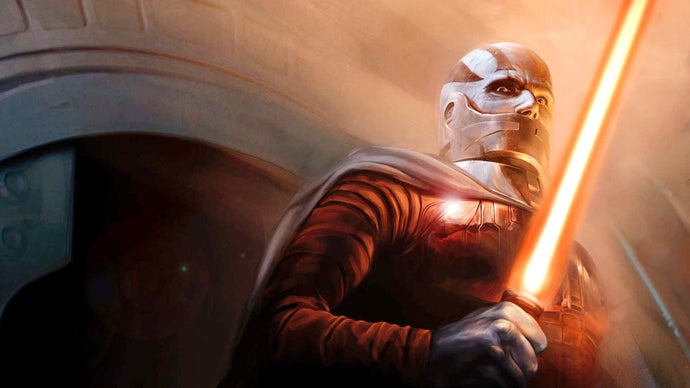
Image: courtesy of EuroGamer
KOTOR Remake: What a New Reveal Means After Years in Development Limbo
After years of reported development turbulence and a near-total blackout on official updates, a new report suggests the Star Wars: Knights of the Old Republic remake could see a re-reveal this year. This potential re-emergence from a prolonged silence would mark a critical juncture for a project that has become emblematic of the challenges in remaking beloved classics, carrying significant implications for developer Saber Interactive, parent company Embracer Group, and a generation of expectant Star Wars fans.
Outlook
Background
The Star Wars: Knights of the Old Republic remake was first announced in September 2021 by Aspyr Media, slated as a timed console exclusive for PlayStation 5. The reveal generated considerable excitement, promising a modern reimagining of BioWare's critically acclaimed 2003 RPG. However, that initial enthusiasm quickly gave way to concern.
By July 2022, Bloomberg News reported that development on the game had been halted. This marked the beginning of a period of intense speculation and minimal official communication. Reports surfaced in 2025 suggesting that Aspyr had been removed from the project, with Mad Head Games, a studio involved in titles like Hellraiser: Revival, taking over. While these specific studio changes were never officially confirmed by all parties involved, they contributed to a widely held belief that the project was in significant trouble.
Amid the uncertainty, Embracer Group, the parent company of both Aspyr and Saber Interactive, has consistently maintained that the game will eventually be released. As recently as March 2026, comments from Saber Interactive's chief business officer indicated the remake was 'still in development' and pointed towards a potential 2028 release window. Despite these reassurances, concrete details, screenshots, or gameplay footage have remained absent since the initial 2021 reveal. The game's status has been a source of ongoing frustration for fans, who have received little beyond an '11-word update' at one point, highlighting the extreme scarcity of information. A reported tease ahead of Star Wars Day 2026 (May 4th) also appears to have not led to a major public re-reveal, adding to the project's elusive history.
See also
Precedents
The gaming industry has a long history of high-profile remakes and reboots struggling through prolonged development cycles, often dubbed 'development hell.' Projects like Duke Nukem Forever famously spent over a decade in limbo, changing developers and engines multiple times before a largely disappointing release. More recently, Final Fantasy VII Remake faced its own extensive development period, though it ultimately delivered a product that largely met expectations.
These protracted developments often stem from a mix of factors: ambitious scope, technical challenges in modernizing older game mechanics, engine changes, creative disagreements, or financial pressures. When a game changes hands between development studios, as is reported to have happened with the KOTOR remake, it frequently leads to restarts, re-evaluation of existing assets, and a loss of institutional knowledge, all of which consume significant time and resources. For a remake of a beloved classic like KOTOR, the pressure is amplified by immense fan expectations, making any misstep or prolonged silence particularly damaging to public confidence. The market often views a project in 'development hell' with deep skepticism, a hurdle any re-reveal would need to directly address.
A re-reveal of the Star Wars: Knights of the Old Republic remake this year is more than just a marketing event; it's a crucial test for a project that has been shrouded in uncertainty for years. For Embracer Group, its parent company, the successful revival and eventual release of the KOTOR remake is important. The company has undergone significant restructuring and divestments recently, making a high-profile, successful launch a valuable signal to investors about its ability to deliver on its pipeline.
For Saber Interactive, the studio now reportedly leading the charge, this project represents a substantial reputational challenge and opportunity. Successfully delivering a remake of this scale and importance could solidify its standing as a premier developer capable of handling complex IP. Conversely, continued delays or a poorly received re-reveal could further damage confidence.
Most importantly, for the millions of Star Wars fans and RPG enthusiasts, KOTOR holds a special place. Its remake promises to introduce a new generation to its acclaimed story and characters, while offering a modern experience for veterans. The long wait has fostered a mix of intense anticipation and deep skepticism. A compelling re-reveal could reignite excitement and rebuild trust, demonstrating that the project is indeed viable and worthy of the wait. Failing to do so, or presenting a product that falls short of expectations, risks alienating a dedicated fanbase and leaving a significant legacy unfulfilled.
Scenarios
Analysis1. A Strong Re-reveal and Renewed Momentum: Saber Interactive could present a polished new trailer, showcase compelling gameplay, and provide a clear, confident development roadmap, possibly with a confirmed 2028 release window. This would signal that the project has overcome its internal hurdles, is firmly on track, and has a clear creative vision. This outcome would likely reignite fan excitement and reassure investors that Embracer's commitment is paying off.
2. A Tentative Re-reveal with Lingering Questions: The re-reveal might offer new footage but lack substantial detail or a firm release date, or it could be accompanied by vague statements. This could suggest that while the project is indeed moving forward, significant challenges remain, or its scope has been adjusted. Such a scenario might temper expectations, leaving fans and analysts to wonder about the true state of development and the likelihood of further delays.
3. No Re-reveal This Year: Despite the reports, a re-reveal might not materialize in 2026. This would extend the period of silence, further deepening skepticism and potentially leading to renewed speculation about the project's viability. It could imply that development is still too unstable, or that the teams involved are not yet confident enough to make a public presentation, pushing any new information further into the future.
Timeline
2021-09-09
KOTOR Remake Officially Announced
Aspyr Media reveals the Star Wars: Knights of the Old Republic remake for PlayStation 5, with timed console exclusivity.
2022-07-26
Development Reportedly Halted
Bloomberg News reports that development on the KOTOR remake has been paused, sparking concerns about the project's future.
2023-05-01
Embracer Reaffirms Commitment
Embracer Group, parent company of Aspyr and Saber Interactive, states that the game will eventually be released, despite ongoing silence.
2025-01-01
Reports of Studio Change
Claims surface that Aspyr Media was removed from the project, with Mad Head Games reportedly taking over development.
2026-03-01
Saber Interactive Confirms Ongoing Work, 2028 Window
Saber Interactive's chief business officer confirms the remake is 'still in development' and suggests a 2028 release window.
2026-05-04
Star Wars Day Tease Fails to Deliver
Reports suggest a reveal was teased ahead of Star Wars Day, but no major public re-reveal for the KOTOR remake materialized.
2026-07-21
New Report Suggests 2026 Re-reveal
A new report emerges, indicating that the Star Wars: Knights of the Old Republic remake might see a public re-reveal this year.
Frequently Asked Questions
While initially developed by Aspyr Media, reports from 2025 indicated Aspyr was removed. More recent comments from March 2026 suggest Saber Interactive is heavily involved, with their chief business officer confirming they are 'still in development' on the project.
Discussion
Be the first to share your thoughts.