
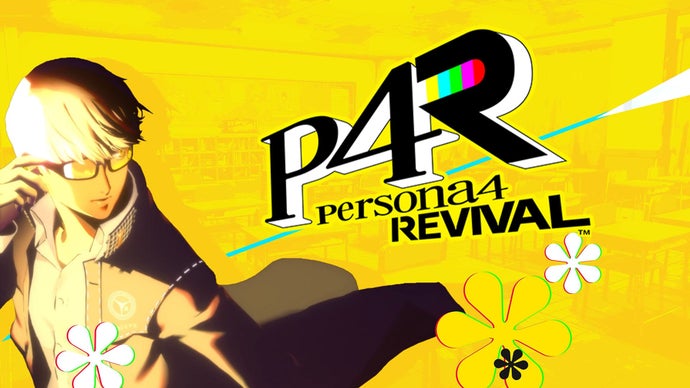
Image: courtesy of EuroGamer
Sega’s Subscription Playbook: Why Persona 4 Revival on Game Pass is More Than a Licensing Deal
On June 7, 2026, Sega and Atlus confirmed that Persona 4 Revival will launch in February 2027, landing on Xbox Game Pass as a day-one title. This strategic move, arriving during an intensely crowded release window, highlights the evolving economics of subscription licensing and Sega's aggressive multi-platform expansion. By utilizing Microsoft's upfront capital to mitigate the financial risks of a high-budget remake, Atlus is positioning its classic JRPG to capture immediate global scale while preserving lucrative retail revenues on PlayStation and PC.
What to Expect
When Persona 4 Revival arrives in February 2027, players can expect a complete ground-up reconstruction of the 2008 PlayStation 2 classic, utilizing the modernized Unreal Engine framework that powered Persona 3 Reload. This means fully modernized 3D environments, a revamped user interface that retains the original's iconic yellow aesthetic, re-recorded voice acting, and streamlined dungeon-crawling mechanics designed to eliminate the repetitive friction of the original's procedurally generated corridors.
But the real story isn't just the visual upgrade; it is the timing. February has quietly transformed into the industry's preferred launchpad for massive, time-intensive role-playing games, acting as a critical window for publishers looking to bolster their fiscal fourth-quarter earnings. By targeting this specific month, Atlus is entering an exceptionally crowded market where player attention and disposable income are stretched thin.
How does a publisher cut through that noise? The answer lies in the day-one Xbox Game Pass launch. For millions of subscribers, the friction of a standard $70 retail purchase is instantly removed. This ensures an immediate, massive player base on launch day, generating the kind of organic social proof and community engagement that traditional marketing budgets struggle to buy.
For those playing on Xbox and PC, the game will be accessible at no additional cost beyond their monthly subscription. Meanwhile, PlayStation 5 and Steam players will be expected to pay full retail price. This dual-distribution model creates a fascinating dynamic: a premium, high-budget single-player experience operating simultaneously as a subscription driver and a traditional retail blockbuster. Atlus is betting that the buzz generated by Game Pass users will spill over, driving full-price purchases on platforms where the subscription is not available.
Key Context
To understand why Sega is willing to place one of its most valuable intellectual properties on a subscription service on day one, one must look at the shifting corporate relationship between Sega Sammy Holdings and Microsoft. Historically, Japanese role-playing games were deeply tribal, almost exclusively bound to PlayStation hardware. Xbox was non-existent in Japan, and Japanese developers saw little reason to allocate engineering resources to porting their games to Microsoft's platforms.
That isolationist era is officially over. Over the past five years, Microsoft has aggressively pursued Japanese publishers, using its deep pockets to secure high-profile content for Xbox Game Pass in an effort to broaden the service's appeal in Asian markets and among JRPG enthusiasts globally. Sega has been the primary beneficiary of this strategy.
These deals are not made out of platform loyalty; they are driven by cold, hard capital allocation. Microsoft pays substantial upfront licensing fees—often referred to as minimum guarantees—to secure day-one placement on Game Pass. For a developer like Atlus, these guaranteed payments significantly de-risk the development process. High-fidelity remakes are no longer cheap to produce; the cost of modernizing a 100-hour RPG with full voice acting and high-end assets can easily run into tens of millions of dollars.
By securing a massive upfront payment from Microsoft, Sega effectively guarantees that Persona 4 Revival is profitable before a single retail copy is sold. This financial cushion allows Atlus to focus on execution risk rather than market risk. It also provides Sega with predictable, high-margin licensing revenue that pleases shareholders, even as hardware sales across the console industry show signs of stagnation. The partnership represents a pragmatic compromise: Microsoft gets a premium system-seller to justify its subscription fees, and Sega gets a guaranteed return on investment while maintaining its right to sell the game at full price to the massive PlayStation and Steam audiences.
Historical Patterns
The strategy surrounding Persona 4 Revival is not an experiment; it is the execution of a proven playbook. We have seen this exact sequence of events play out before, most notably with the release of Persona 3 Reload on February 2, 2024. That title also launched day-one on Xbox Game Pass, prompting widespread industry speculation that subscription availability would cannibalize traditional retail sales.
Yet, the historical data tells a completely different story. Within its first week on the market, Persona 3 Reload sold over 1 million physical and digital units globally, becoming the fastest-selling game in Atlus's history.
So why did subscription availability fail to kill retail demand? The answer lies in platform distribution and consumer behavior. The vast majority of the Persona series' established fanbase resides on PlayStation and PC. These players are historically platform-loyal and are highly unlikely to purchase an Xbox console or subscribe to PC Game Pass just to play a single release. They prefer to own their games on their platform of choice.
Meanwhile, the Game Pass availability acted as a massive, platform-holder-subsidized marketing campaign. The millions of players who downloaded the game on Xbox created a tidal wave of social media engagement, streaming content, and word-of-mouth recommendations. This viral momentum actively drove retail sales on PlayStation and Steam, creating a halo effect that benefited all platforms.
Sega repeated this multi-platform, day-one approach with other major franchises, including the Like a Dragon series, consistently finding that subscription partnerships do not cannibalize premium sales if the game is high quality and the fanbases are segmented. Atlus's decision to launch Persona 4 Revival in the exact same February window, with the exact same Game Pass partnership, suggests that the financial metrics from 2024 were not an anomaly, but a highly repeatable success story.
The broader significance of this release extends far beyond the boundaries of a single JRPG franchise. It represents a fundamental shift in how premium, single-player games are monetized and distributed in an era of rising development costs and shifting consumer expectations.
For Microsoft, securing Persona 4 Revival is a critical defensive maneuver. The Xbox platform has struggled to maintain hardware momentum in Europe and Asia, making the value proposition of Game Pass the central pillar of its entire gaming division. To keep subscribers from churning, Microsoft must consistently deliver high-caliber, recognizable intellectual properties on day one. A title like Persona 4—widely regarded as one of the greatest role-playing games ever made—carries immense cultural weight. It signals to Japanese developers and western fans alike that Xbox remains committed to the JRPG space, even as the platform holder navigates its own internal structural transitions.
For Sega, this release is a validation of its multi-platform, global-simultaneous launch strategy. The days of Japanese games launching in Japan first and trickling over to the West six months later are dead. By launching globally across all major platforms simultaneously, Sega maximizes the impact of its marketing spend and prevents the community fragmentation that used to plague Japanese releases.
Ultimately, the industry is watching this launch to answer a fundamental question: can a publisher continue to pull off this double-dipping strategy indefinitely? As subscription services mature and consumer spending habits tighten, the balance between upfront platform licensing fees and long-term retail sales will become increasingly delicate. If Persona 4 Revival replicates the dual-success of its predecessor, it will cement this hybrid distribution model as the gold standard for mid-to-high-budget Japanese releases for the remainder of the console generation.
Potential Outcomes
AnalysisAnalysis of the market dynamics suggests two primary paths for the release of Persona 4 Revival in early 2027:
In the first scenario, the game replicates the precise trajectory of Persona 3 Reload. The day-one Game Pass launch drives massive engagement metrics on Xbox and PC, securing high monthly active user (MAU) counts for Microsoft during a crucial winter period. Concurrently, the intense nostalgia for the characters of Inaba, combined with the visual overhaul, drives robust full-price retail sales on PlayStation 5 and Steam. Sega comfortably surpasses the 1 million units sold milestone within the first week, proving that the hybrid subscription-retail model remains highly lucrative and paving the way for Persona 6 to potentially adopt a similar multi-platform strategy.
In the alternative scenario, the increasingly crowded February 2027 release window leads to market oversaturation. Facing intense competition from other high-profile RPGs and action titles, casual consumers opt to play Persona 4 Revival 'for free' via their existing Game Pass subscriptions rather than purchasing it at retail on other platforms. PlayStation and Steam sales fall short of internal projections as a result of subscription fatigue and a crowded marketplace. While the game is deemed a critical success, the lower-than-expected retail margins force Sega to re-evaluate the financial viability of placing its most prestigious Atlus titles on subscription services on day one, leading to a more conservative, retail-first approach for future major releases.
Timeline
Frequently Asked Questions
Discussion
Be the first to share your thoughts.