
Netflix appears to be refining its approach to gaming, moving away from broad, undefined ambitions towards a specific niche: cloud-streamed games playable directly on televisions, using smartphones as controllers. This strategy, highlighted by the release of Unhinged and FIFA World Cup in July 2026, represents a significant departure from its earlier attempts to build out a more traditional game development arm. The company plans to expand this lineup of cloud games, suggesting that future releases will likely follow a similar model, prioritizing ease of access and integration with the existing Netflix user experience. Rather than building dedicated gaming hardware or complex gamepads, the focus is on frictionless engagement for its existing audience.
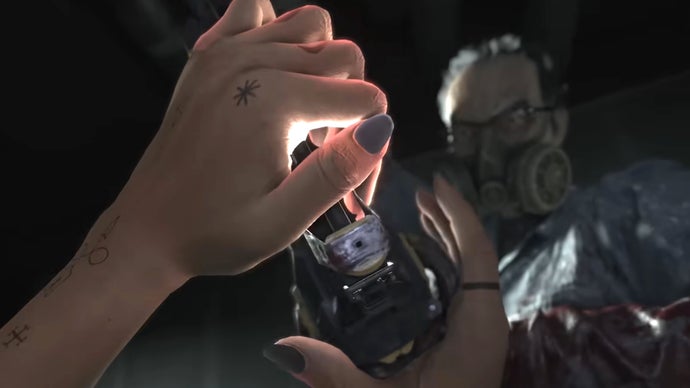
Image: courtesy of EuroGamer
Netflix's Gaming Strategy Has Been a Muddle. Can Night School Studio's *Unhinged* Chart a New Course?
Netflix's ambitious foray into video games has been marked by strategic missteps, including studio layoffs and the shuttering of a high-profile development team. Yet, the recent release of *Unhinged*, a horror game from its acquired Night School Studio, hints at a potential pivot. This new title, alongside a casual *FIFA World Cup* game, suggests Netflix might be narrowing its focus to accessible, cloud-based TV games controlled by smartphones, aiming to leverage its vast subscriber base rather than compete directly with traditional console or PC gaming.
Outlook
Background
Netflix's journey into gaming began with considerable fanfare, particularly with its acquisition of Oxenfree developer Night School Studio in 2021. This move was widely seen as a signal that the streaming giant was serious about establishing a foothold in the video game industry. However, the years that followed proved challenging. Internally, Night School Studio experienced layoffs, and a separate 'triple-A' team, assembled with veteran talent, was ultimately shuttered. Industry observers have frequently characterized Netflix's broader gaming strategy as 'a mess' or 'directionless,' noting a lack of clear vision that led to what appeared to be a series of reactive decisions rather than a cohesive plan.
The initial strategy seemed to involve a mix of mobile games tied to Netflix IP and more traditional development. Yet, the market response has been muted, and subscriber engagement with the gaming offerings has not reached the levels the company likely anticipated. Now, with Unhinged and FIFA World Cup, both of which leverage phone controls for TV-based play, Netflix seems to be converging on a specific type of experience. This indicates a potential shift from trying to be all things to all gamers, to focusing on a unique, accessible gaming experience that complements its core streaming service.
Precedents
Companies transitioning from one entertainment medium to another often face significant hurdles, and Netflix's experience with gaming is hardly unique. Amazon's own ventures into game development, for instance, have seen mixed results despite substantial investment. Historically, success in gaming has often come from deep specialization and a clear understanding of gamer culture and technical demands – areas where a streaming company might not have inherent advantages.
However, there is precedent for success in accessible, casual gaming. Nintendo's Wii console, for example, broadened the gaming audience significantly by introducing intuitive motion controls that appealed to non-traditional gamers. Similarly, the rise of mobile gaming on smartphones proved that a vast audience would engage with games that required minimal setup and could be played anywhere. Netflix's current pivot towards phone-controlled TV games taps into this historical pattern of lowering the barrier to entry. It avoids the high-cost, high-risk development of traditional AAA titles and instead focuses on the mass market appeal of simple, engaging experiences. The challenge, as always, is converting a passive streaming audience into active gamers, and doing so without alienating its core subscriber base or diluting its brand.
The evolving strategy at Netflix Games carries significant implications for its long-term business and the broader entertainment industry. For Netflix, a successful gaming arm could be a crucial component in subscriber retention, offering added value beyond its film and television library. In an increasingly competitive streaming market, any differentiator that reduces churn and attracts new users is invaluable. Analysts like Tascan estimate a global gaming audience of 3 billion, with Netflix's own audience exceeding 700 million. This 'large Venn diagram' represents a massive, untapped opportunity for the company to cross-sell and deepen engagement.
For developers like Night School Studio, this strategic refinement could mean clearer direction and more defined opportunities. After a period of uncertainty and layoffs, a focused vision might allow them to truly innovate within a specific creative and technical framework. The phone-as-controller model, while not entirely new, could also push boundaries in game design, especially for genres like horror where unique input methods can enhance immersion. If Netflix can indeed 'own' this niche, it would represent a new distribution channel and business model for games, potentially influencing how other media companies approach interactive entertainment. The shift signals that the company is not abandoning games but rather recalibrating its approach, seeking a path that aligns more closely with its existing infrastructure and user behavior.
Scenarios
AnalysisNetflix's refined gaming strategy, centered on accessible cloud-based TV games with phone controls, could lead to two distinct paths.
One possible outcome is that Netflix successfully carves out a unique and profitable niche. By focusing on casual, pick-up-and-play experiences that leverage its existing TV app and subscriber base, the company could attract a significant portion of its 700 million-plus audience who are not traditional gamers. The unique control schemes, as seen in Unhinged's horror elements and FIFA World Cup's sports action, could differentiate its offerings and create new forms of interactive entertainment. This would provide a valuable subscriber retention tool, potentially opening new revenue streams through premium game passes or in-game purchases, and solidify Netflix's position as a multifaceted entertainment provider. Success here would not be about competing with Xbox or PlayStation, but about expanding the definition of 'gaming' for a mass audience.
Conversely, the strategy could continue to struggle with engagement and adoption. Despite the innovative control scheme and the appeal of titles like Unhinged, the 'messy' legacy of Netflix Games might be difficult to overcome. If the new releases fail to consistently convert passive viewers into active players, or if the quality and variety of games don't meet audience expectations, the gaming division could remain a costly experiment. This could lead to further restructuring, a reduction in investment, or even a complete re-evaluation of its gaming ambitions. The challenge lies in convincing subscribers that Netflix is a genuine destination for games, not just an add-on, and that the phone-as-controller experience is compelling enough to overcome any perceived limitations.
Timeline
Frequently Asked Questions
Discussion
Be the first to share your thoughts.