
Veridact
TechSportsFinanceGaming🎯 PredictionsAbout
Sign InSign Up
Veridact

AI-powered anticipation analysis. We cover tech, sports, finance, and gaming events before they happen — with historical context, scenario modeling, and evolving coverage.

Stay ahead of the story

Analysis delivered before events unfold.

Coverage

  • Tech
  • Sports
  • Finance
  • Gaming

Company

  • About Us
  • Privacy Policy

© 2026 Veridact. AI-assisted analysis platform.

Analysis is AI-generated and not professional financial, legal, or medical advice.

Gaming
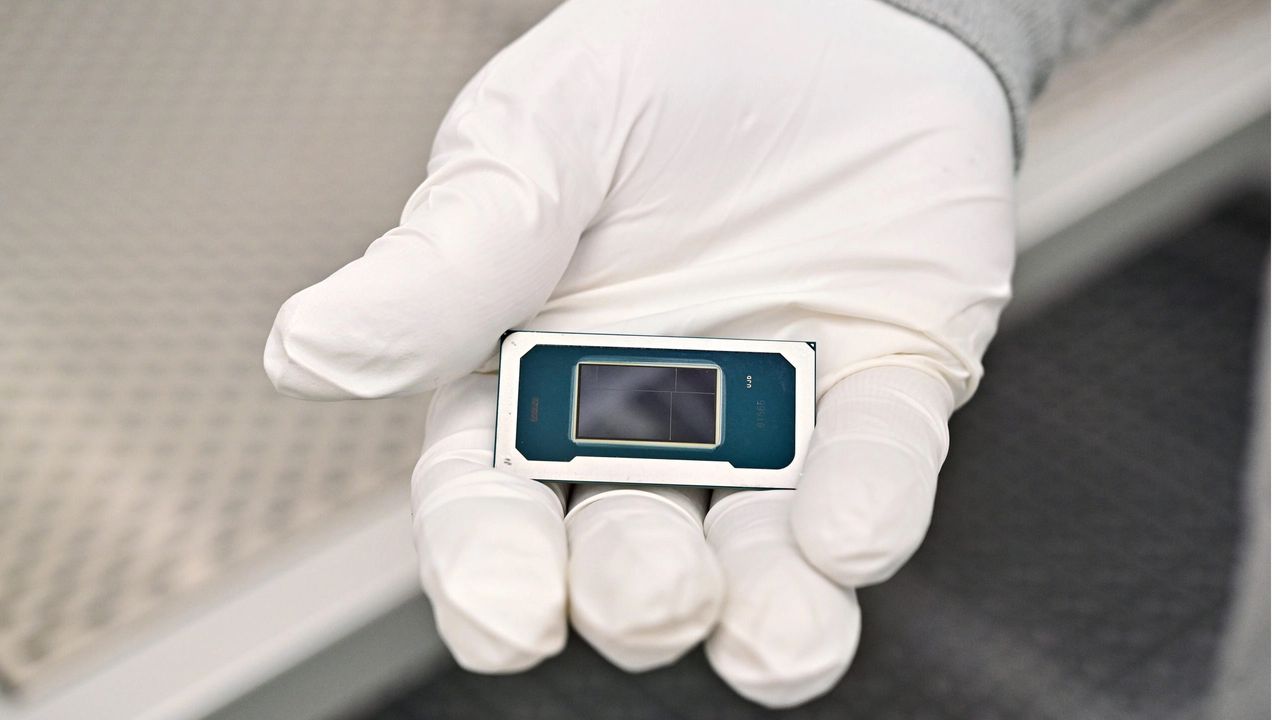
New report claims Intel is 'struggling' to supply laptop CPUs based on its latest 18A node after speaking to Computex sources

Image: courtesy of PC Gamer

gamingJune 5, 2026By Veridact EditorialUpdated Jun 5

Intel 18A Reality Check: Why Computex Whispers of Laptop Chip Shortages Threaten the Foundry Turnaround

Reports out of Computex 2026 suggest Intel is facing early yield and supply bottlenecks for its crucial 18A-based Panther Lake laptop processors, threatening the company's aggressive timeline to reclaim manufacturing leadership from TSMC.

What to Expect

Behind the closed doors of Taipei's Grand Hyatt during the Computex trade show, a quiet anxiety began to circulate among major laptop manufacturers. While Intel spent its public keynotes showcasing the immediate promise of its Lunar Lake and Arrow Lake architectures, supply chain sources began whispering about a bottleneck further down the road. The issue centers on Panther Lake, the highly anticipated consumer processor family scheduled for a 2025-2026 rollout, which is slated to be the first mass-market client chip built on Intel's proprietary 18A (1.8-nanometer) manufacturing node.

According to multiple hardware partners, Intel is currently struggling to guarantee the high-volume supply required for a synchronized global retail launch of 18A laptops. The engineering samples circulating among developers are functional, but the manufacturing yields at Intel's fabs are reportedly not yet at the commercial threshold required to sustain millions of shipments. This is not a failure of design, but a classic physics and scaling bottleneck.

For device manufacturers, this supply uncertainty creates a massive headache. Laptop design cycles require twelve to eighteen months of lead time, meaning OEMs must decide now whether to allocate their engineering budgets to Intel's next-generation silicon or hedge their positions by expanding their product lines with AMD's Ryzen AI processors or Qualcomm's Snapdragon platforms. If Intel cannot guarantee steady silicon delivery, PC brands will quietly shift their premium chassis designs to competitors to avoid empty retail shelves during critical shopping seasons.

Key Context

To understand why a potential supply constraint on a future laptop processor is causing such a stir, one must look at the broader corporate strategy of Intel Chief Executive Pat Gelsinger. When Gelsinger returned to lead the silicon pioneer, he committed the company to an aggressive roadmap known as 'five nodes in four years.' The ultimate destination of this breakneck journey is the Intel 18A process node.

Intel 18A is not just another incremental step; it is the technological line in the sand where Intel intends to leapfrog TSMC. It introduces two radical engineering shifts: RibbonFET, which is Intel's implementation of a gate-all-around transistor architecture, and PowerVia, a backside power delivery system that separates the power lines from the signal lines on the silicon wafer. TSMC is not planning to implement backside power delivery until its N2P node, giving Intel a theoretical window of technological superiority if it can execute.

So why would Intel show off working silicon if the supply chain is flashing yellow? The answer is that 18A is a marketing campaign as much as a manufacturing process. Intel has split its business into a design division and a manufacturing division, Intel Foundry. To justify the tens of billions of dollars in capital expenditure and government subsidies under the US CHIPS Act, Intel Foundry must secure major external customers. Companies like Microsoft and federal defense contractors have signed on, but they are watching Intel's internal execution with Panther Lake as a litmus test. If Intel cannot yield enough 18A wafers to supply its own premier laptop chips, external fab customers will hesitate to trust the company with their own multi-million-dollar designs.

Related Coverage

Victims of cheaters in Marvel Rivals will be refunded all the ranked points they lost if they report them thanks to NetEase's new Anti-Cheat Rank Compensation System→

Historical Patterns

This tension is deeply familiar to anyone who has watched the semiconductor industry over the last decade. Intel's current predicament echoes the agonizing delays that plagued its 10-nanometer and 7-nanometer transitions. During those transitions, which stretched from 2015 to 2021, Intel repeatedly assured the market that its manufacturing processes were on track, even as it was forced to refresh its older 14-nanometer architecture over several successive generations.

That delay changed the balance of power in the PC market. AMD, which had spent years in the wilderness, outsourced its manufacturing to TSMC's rapidly advancing nodes. The result was a dramatic shift in market share. AMD's Zen architecture, built on superior TSMC silicon, offered better power efficiency and performance, allowing AMD to capture significant territory in both the lucrative server market and the high-end gaming laptop space.

If Intel's 18A node suffers a similar volume bottleneck, the consequences could be even more severe. Unlike during the 10nm crisis, Intel now faces a two-front war. Qualcomm has established a genuine foothold in the Windows ecosystem with its ARM-based Snapdragon X Elite processors, offering battery life that traditional x86 architectures struggle to match. Laptop makers are no longer captive to an Intel-dominated market. They have viable, high-performance alternatives ready to step in.

The Real Stakes

Potential Outcomes

Analysis

Analysis of the current manufacturing trajectory suggests three distinct paths for the PC market over the next eighteen months.

In the first scenario, Intel opts for a 'paper launch' of Panther Lake to preserve its public roadmap commitments. Under this strategy, Intel would ship a very limited quantity of 18A processors to select partners for high-profile, low-volume halo products. This would allow the company to claim victory in the race to 1.8-nanometer commercial production, keeping Wall Street and government backers satisfied. However, the bulk of the laptop market would be forced to rely on older Arrow Lake refreshes or TSMC-manufactured tiles, diluting the financial benefits of the 18A transition and leaving OEMs frustrated by the lack of true next-generation volume.

In the second scenario, the supply constraints prove persistent, prompting a significant structural shift in the PC market. Recognizing that Intel cannot supply premium silicon in volume, major OEMs like ASUS, Lenovo, and HP shift their flagship gaming and creator laptops to AMD's Zen 5 and Zen 6 platforms, alongside Qualcomm's next-generation ARM chips. This would result in a permanent loss of premium market share for Intel, as consumers grow accustomed to the performance and battery life of competing platforms, cementing a multi-architecture laptop market.

In the third, most optimistic scenario, Intel's engineering teams successfully resolve the 18A yield issues at its Oregon and Ohio development fabs by late 2026. This would allow Intel to rapidly scale up production, meeting OEM demand for Panther Lake in early 2027. If achieved, Intel would vindicate Gelsinger's turnaround strategy, proving that its foundry model can compete directly with TSMC on both technology and volume, securing the company's long-term future as a dual-design and manufacturing powerhouse.

Timeline

2021-03-23
Gelsinger Announces IDM 2.0 Strategy
Intel commits to an aggressive turnaround plan, establishing Intel Foundry Services and pledging to deliver five nodes in four years to regain manufacturing leadership.
2024-02-21
Intel 18A Clears Major Milestones
Intel reveals that its 18A node has been cleared for external customer designs, with Microsoft announced as a major customer for a custom chip design.
2026-06-03
Computex Supply Chain Reports Surface
OEM sources in Taipei report that Intel is struggling to guarantee initial high-volume supply for its 18A-based Panther Lake laptop processors.

Frequently Asked Questions

Intel 18A is the company's 1.8-nanometer class manufacturing node. It is the technological foundation of Intel's strategy to surpass TSMC in silicon manufacturing by introducing advanced transistor designs like RibbonFET and backside power delivery via PowerVia.

Discussion

0/100
0/1000

Be the first to share your thoughts.

Related Coverage

gaming

Gears of War E-Day Confirms Horde and Versus as Xbox Rebuilds Its Legacy

Jun 9
gaming

Capcom's Monster Hunter: World Hits 30 Million Sales, Redefining Global Action-RPGs

Jun 9
gaming

Sega’s Subscription Playbook: Why Persona 4 Revival on Game Pass is More Than a Licensing Deal

Jun 8
gaming

Capcom's Final Fantasy Crossover Is a Brilliant Business Move That Exposes Fighting Game Fandom's Deepest Rift

Jun 8

Stay ahead of the story

AI analysis delivered before events unfold. No spam.

ⓘ

Disclosure: This article contains AI-assisted analysis based on publicly available information.