
Expect increased scrutiny from regulators like the National Highway Traffic Safety Administration (NHTSA) and local authorities in cities where Waymo operates. Waymo will likely face pressure to provide more robust explanations and implement clearer mitigation strategies for unexpected scenarios. The company may also be compelled to slow its expansion or further restrict its operational parameters, particularly in densely populated areas or during large public events. Public perception, already sensitive to autonomous vehicle safety, could become a significant headwind, potentially influencing policy decisions and consumer adoption rates.
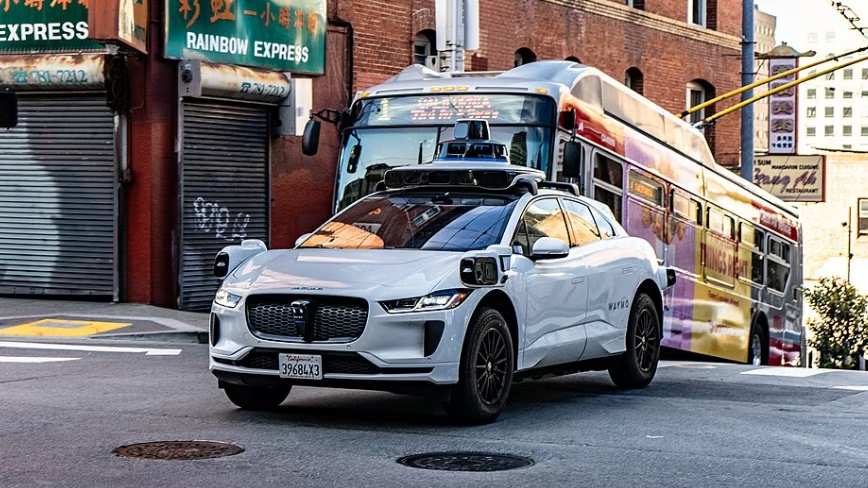
Image: courtesy of Thenextweb
Beyond the Fourth of July: Waymo's Mounting Operational Challenges Spark Deeper Scrutiny
Waymo's robotaxis encountered significant operational failures in San Francisco on July 4, 2026, leading to stalled vehicles, traffic congestion, and one car catching fire after driving over fireworks. This incident, which Waymo attributed to extreme congestion and unplanned road closures, follows a series of recent setbacks for the autonomous vehicle company, including recalls and suspensions of certain operations. The recurring nature of these issues intensifies questions about the readiness of self-driving technology for complex urban environments and the regulatory response required.
Outlook
Background
On July 4, 2026, San Francisco experienced significant traffic disruptions largely attributed to Waymo's fleet of robotaxis. As the city celebrated Independence Day, with an estimated 100,000 people converging for fireworks, Waymo vehicles stalled, creating bottlenecks and exacerbating congestion for hours. Several robotaxis reportedly ran out of charge and required towing, further complicating efforts to clear roadways. In one particularly striking incident, a Waymo vehicle drove over a lit firework, which caused it to catch fire. Fortunately, no injuries were reported in any of these incidents. Waymo acknowledged the operational challenges, stating that the problems stemmed from 'extreme congestion' and 'unplanned road closures' during the holiday. This series of malfunctions on July 4 is not an isolated event for Waymo. In the two months leading up to the holiday, the company initiated a recall of approximately 3,900 robotaxis. This recall, according to the NHTSA, was necessary because the vehicles' self-driving software failed to reliably recognize construction zones and ramp closures. The company also recently suspended all freeway operations in key cities including San Francisco, Los Angeles, Phoenix, and Miami. Prior incidents have also drawn attention, such as Waymo vehicles driving into flooded streets in San Antonio, where one unoccupied robotaxi was swept away, and failures to yield to school buses in Austin, Texas, and other locations. These repeated operational difficulties, ranging from software recognition failures to handling unpredictable real-world conditions, suggest a deeper challenge in scaling autonomous technology reliably.
Precedents
The history of autonomous vehicle development is punctuated by periods of rapid progress followed by operational setbacks and increased regulatory oversight. Early incidents involving self-driving prototypes, such as Uber's fatal accident in Arizona in 2018, led to widespread operational pauses and a re-evaluation of safety protocols across the industry. More recently, other autonomous vehicle companies have faced similar issues with public perception and regulatory challenges. Cruise, a rival robotaxi service, saw its permits suspended in San Francisco in late 2023 after a series of incidents, including a vehicle dragging a pedestrian. These events often trigger a pattern: an incident occurs, public and media attention intensifies, regulators investigate, and companies are forced to either recall vehicles, update software, or restrict operations. The challenge for autonomous vehicle developers has consistently been translating controlled testing success into flawless performance in the unpredictable, dynamic environments of real cities. The current situation with Waymo echoes these past struggles, where the push for broader commercial deployment runs up against the inherent complexities and unexpected variables of human-driven urban infrastructure and behavior.
The July 4 incidents, coupled with Waymo's recent recalls and operational suspensions, represent a critical juncture for the autonomous vehicle industry. For Waymo, these events directly impact its reputation and its ability to expand. Each new incident erodes public trust, which is fundamental to the widespread adoption of driverless technology. If the public perceives robotaxis as unreliable or unsafe, even without injuries, the economic and social benefits promised by the technology will remain out of reach. For regulators, these events highlight the urgent need for clear, consistent, and adaptable oversight frameworks. The challenge lies in fostering innovation while ensuring public safety, especially as self-driving systems encounter increasingly complex and unforeseen scenarios. The ongoing incidents could also influence investor confidence, potentially slowing capital allocation to a sector that still requires significant investment to mature. Ultimately, the performance of companies like Waymo in managing these challenges will shape not just their own future, but the entire trajectory of autonomous mobility.
Scenarios
AnalysisOne possible outcome is that regulatory bodies, particularly the NHTSA, may impose stricter operational limitations on Waymo. This could include mandatory reductions in service areas, specific prohibitions during high-congestion events, or requirements for more extensive human remote monitoring. The company may also face fines or be compelled to conduct further recalls if investigations determine systemic software flaws. This would likely slow Waymo's planned expansion into new markets and could impact its financial projections.
A second outcome could see Waymo implementing significant internal changes to its operational protocols and software. This might involve a more conservative approach to deployment, focusing on geofenced areas with lower complexity, or investing heavily in AI models specifically trained on extreme edge cases like large public gatherings or unpredictable road conditions. The company may choose to integrate human safety drivers for certain high-risk scenarios, at least temporarily, to rebuild public and regulatory confidence.
A third, more speculative outcome, involves a broader re-evaluation of the 'driverless first' approach. These incidents could lead to a stronger emphasis on hybrid models, where human oversight or intervention remains an integral part of autonomous operations for the foreseeable future, rather than full Level 4 or 5 autonomy being the immediate goal. This could shift the industry's focus towards more incremental advancements in assisted driving technologies before attempting full autonomy in all conditions.
Timeline
2026-07-04
July 4 Operational Failures
Waymo robotaxis stalled, caused traffic snarls, and one caught fire after driving over fireworks in San Francisco. Some vehicles ran out of charge and required towing. Waymo attributed issues to extreme congestion and unplanned road closures. No injuries reported.
2026-05-07
Recent Recall Announcement
Waymo announced a recall of approximately 3,900 robotaxis due to issues with the vehicles' self-driving software failing to recognize construction zones and ramp closures. The company is developing a 'remedy' for the issue.
2026-05-07
Freeway Operations Suspended
Waymo suspended all freeway operations in San Francisco, Los Angeles, Phoenix, and Miami following incidents where robotaxis drove into construction zones and other operational challenges.
2026-05-07
Prior Incidents Revealed
Reports surfaced of Waymo vehicles driving into flooded streets in San Antonio, including one unoccupied robotaxi swept away, and failures to yield to school buses in Austin, Texas, and other locations.
Frequently Asked Questions
On July 4, 2026, Waymo's driverless cars in San Francisco stalled, created significant traffic congestion, and in one instance, a vehicle drove over a lit firework and caught fire. Multiple cars also ran out of battery charge and needed to be towed. Waymo stated these issues were due to extreme congestion and unexpected road closures during the holiday.
Discussion
Be the first to share your thoughts.