
Starting in 2027, asylum seekers arriving in the UK, particularly those without clear documentation whose age is disputed, will likely be subjected to facial scans to estimate their age. The Home Office views this technology as a tool to streamline age assessments and reduce what it describes as "fake claims." However, given the documented flaws in the technology, a surge in legal challenges from individuals and advocacy groups is widely expected, alongside intensified public scrutiny of the system's accuracy and fairness once it becomes operational.
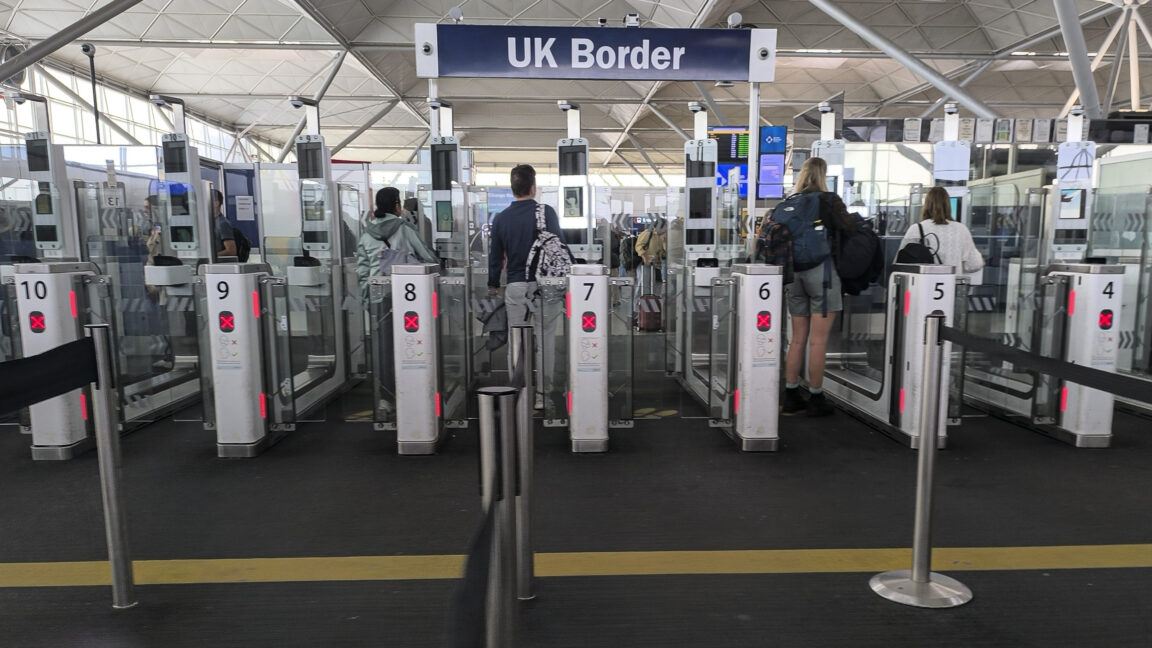
Image: courtesy of Ars Technica
Despite Known Flaws, UK Pushes Ahead with AI Age Checks for Asylum Seekers
The UK government is set to deploy facial age estimation (FAE) technology starting in 2027 to help determine the age of asylum seekers, a move that has drawn sharp criticism. Internal Home Office tests have already shown the AI system frequently misclassifies 17-year-olds as adults, raising significant concerns about the legal and ethical implications for vulnerable children seeking refuge.
Outlook
Background
The UK Home Office announced in May 2026 its intention to use 'cutting-edge' AI for age assessment at the border from 2027. This decision follows internal Home Office tests that explicitly revealed the facial age estimation (FAE) technology frequently misidentifies 17-year-olds as adults. The government's stated objective is to "crack down on fake claims by small boat arrivals posing as children." Home Office data for the year ending March 2026 indicates that out of more than 6,400 migrants claiming to be children who underwent age assessment, 43% were ultimately found to be adults. To power this system, the Home Office has signed a contract with Cognitec Systems, a Dresden-based facial recognition company. Critics argue that incorrectly classifying a child as an adult can strip them of crucial legal protections, welfare support, and access to education, leaving them at heightened risk of exploitation and harm.
Precedents
The challenge of accurately assessing the age of undocumented asylum seekers is a long-standing issue across many nations, not just the UK. Historically, various methods have been employed, ranging from controversial dental and bone density scans to psychological assessments. Almost all these approaches have faced significant ethical and scientific scrutiny, often criticized for their lack of precise accuracy, invasiveness, or reliance on methods lacking broad scientific consensus for definitive age determination. The introduction of facial recognition and AI for age estimation represents a newer technological frontier, yet it inherits many of the same concerns surrounding bias, potential for false positives or negatives, and the disproportionate impact on specific demographics or age groups. Past attempts to automate sensitive decisions within immigration systems have frequently led to legal challenges, public outcry, and allegations of unfairness, particularly when the underlying technology or decision-making process is perceived as opaque.
The deployment of a facial age estimation system, especially one known to be flawed, carries profound human and ethical consequences. For a genuine child asylum seeker, being wrongly classified as an adult means the immediate loss of critical legal safeguards, access to specialist child protection services, age-appropriate accommodation, and the right to education. It can expose them to adult detention facilities, adult criminal justice processes, and significantly increase their vulnerability to exploitation and trafficking, fundamentally altering their life trajectory. Beyond individual cases, this move raises serious questions about the ethical boundaries of AI use in sensitive government functions, particularly where human rights are directly at stake. It challenges the fundamental principle of 'do no harm' in technology deployment and sets a troubling precedent for how governments might use automation to manage complex social and humanitarian issues, even when the tools are known to be imperfect. The decision also intensifies concerns about algorithmic bias, as AI systems can inadvertently perpetuate or amplify biases present in their training data, potentially leading to discriminatory outcomes for certain ethnic or racial groups.
Scenarios
AnalysisOne possible outcome is that the UK government will proceed with the FAE system's full deployment in 2027, maintaining that it is a necessary tool for border control and administrative efficiency. This approach would almost certainly trigger a wave of legal challenges from human rights organizations and individual asylum seekers who are wrongly classified, leading to prolonged court battles. The Home Office may opt for limited transparency regarding specific case outcomes or the algorithm's internal workings, which could further intensify public and political debate.
Alternatively, significant legal pressure and accumulating evidence of misclassification could compel the government to review or significantly refine the FAE system. This might involve pausing its full rollout, implementing more robust human oversight protocols, or commissioning independent audits to verify its accuracy and fairness. Such a shift would indicate a greater acknowledgment of the technology's limitations and the ethical imperative to protect vulnerable individuals.
A third scenario suggests that if the UK's system is perceived as 'successful' in reducing asylum claims—regardless of its actual accuracy—other nations facing similar migratory pressures might consider adopting comparable technologies. This could initiate a broader trend of using AI for age assessment in immigration contexts globally, simultaneously amplifying international scrutiny and calls for universal standards and ethical guidelines for such sensitive AI applications from bodies like the Council of Europe or the United Nations.
Finally, the FAE system could prove less effective than initially hoped, leading to its gradual marginalization within the broader age assessment process. Legal aid groups and asylum seekers might develop strategies to mitigate the technology's impact, potentially rendering its overall efficacy debatable in the long term and forcing the Home Office to rely more heavily on traditional, albeit imperfect, assessment methods.
Timeline
2026-05
Home Office Announces AI Age Checks
The UK Home Office publicly announced its plan to use facial age estimation (FAE) technology for age assessment at the border, aiming for deployment from 2027.
2026-06-20
Reports Detail Known Flaws
Media reports emerged, citing internal Home Office tests that confirmed the FAE technology frequently misclassifies 17-year-olds as adults, raising alarm among critics.
2027-01-01
Planned System Deployment Begins
The facial age estimation system is scheduled to commence deployment for asylum seekers arriving in the United Kingdom, marking the first known use of its kind at a national border.
Frequently Asked Questions
FAE is a technology that leverages artificial intelligence to scan an individual's face and estimate their chronological age based on observable facial features. While sometimes used in commercial settings for age verification, its application in asylum contexts is new and contentious.
Discussion
Be the first to share your thoughts.