
The initial euphoria around SpaceX's public debut has quickly given way to hard financial scrutiny. Investors are now grappling with the company's aggressive capital allocation strategy, particularly its heavy investments in Starlink and AI. Future earnings reports will serve as critical checkpoints, revealing whether these massive outlays translate into a clearer path toward sustainable profitability or if they will continue to fuel investor skepticism about the company's financial discipline and long-term valuation.
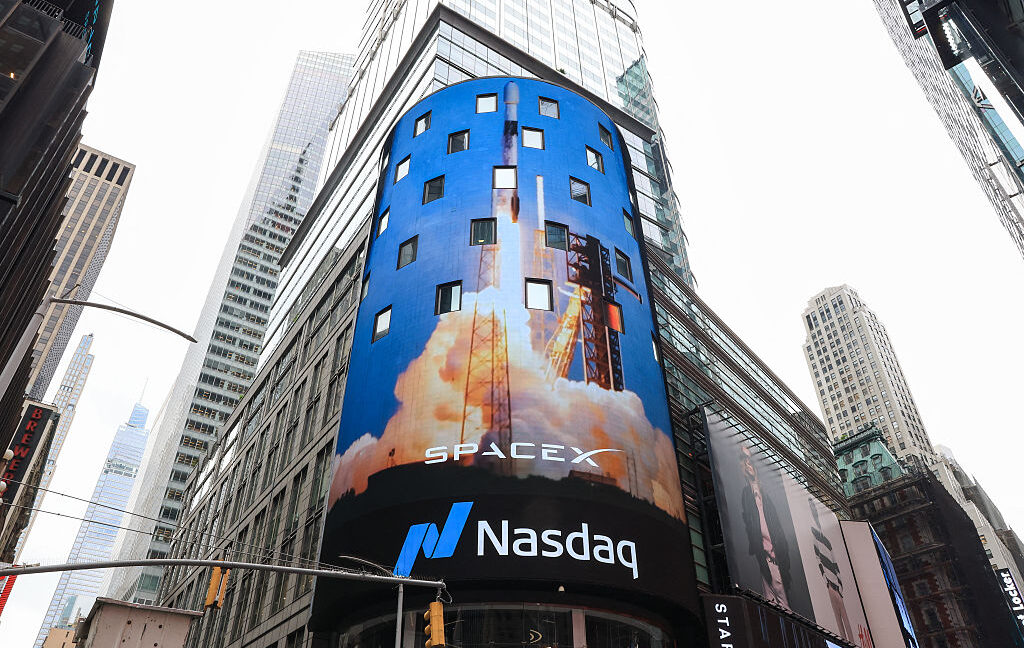
Image: courtesy of Ars Technica
SpaceX's First Earnings Report Reveals a Trillion-Dollar Question for Investors
SpaceX's debut public earnings report, released on Wednesday, painted a mixed financial picture that ultimately spooked investors. The company confirmed a 92% surge in second-quarter revenue to $7.8 billion, outperforming analyst expectations. However, this impressive growth was overshadowed by a sixfold increase in quarterly spending, leading to a net loss of $541 million. The market reacted swiftly, sending the stock tumbling and contributing to a $1 trillion decline in market capitalization since its June IPO.
Outlook
Background
When SpaceX made its highly anticipated public debut on June 12, 2026, shares were offered at $135 and closed up 19% on their first day of trading. The IPO was a landmark event, briefly elevating the company's valuation to rival established tech giants. However, the initial excitement proved short-lived. Since that soaring debut, the stock has shed roughly $1 trillion in value, trading consistently below its initial public offering price.
The company's Q2 2026 financial report, its first as a public entity, showed revenue hitting $7.8 billion, a substantial 92% increase from the previous year and nearly $1 billion above Wall Street's consensus estimate of $6.9 billion. This top-line performance was undeniably strong. Yet, the report also detailed a net loss of $541 million for the quarter, an improvement from the $4.3 billion loss in Q1 2026, but still a loss. The primary concern for investors, and the driving force behind the stock's decline on Wednesday, was the staggering sixfold increase in quarterly spending. While specific breakdowns of this expenditure were not immediately available, analysts largely attribute it to the capital-intensive scale-up of the Starlink satellite internet constellation and significant investments in artificial intelligence development, both key long-term growth vectors for the company. Elon Musk, SpaceX's CEO, attempted to reassure the market by reiterating an ambitious target of $1 trillion in revenue by 2030, a forecast he advanced by a year just six weeks prior. Despite this optimistic outlook, shares remained down in after-hours trading following the report.
See also
Precedents
SpaceX's current investor reaction echoes a familiar pattern seen with other high-growth, visionary technology companies in their early public stages. Amazon, in its initial decades, famously prioritized aggressive expansion and capital expenditure over immediate profitability, often reporting losses despite rapidly growing revenue. Early investors had to maintain a long-term view, trusting that the market dominance gained through heavy investment would eventually yield outsized returns. Tesla, another Elon Musk venture, also faced years of skepticism over its capital burn rate and manufacturing challenges before achieving consistent profitability and widespread market acceptance.
The key distinction often lies in the clarity of the path to monetization. While Amazon's e-commerce and cloud (AWS) businesses eventually demonstrated clear profitability models, and Tesla's electric vehicles gained market share, the direct revenue streams and profitability timelines for SpaceX's Starlink and AI initiatives are still evolving. Investors are often willing to tolerate losses for growth, but there is a threshold where the scale of spending, especially a sixfold increase, prompts questions about financial efficiency and execution risk. The market is effectively asking if SpaceX is building tomorrow's infrastructure at a sustainable cost today, or if it is simply burning through capital without a clear return horizon.
The market's reaction to SpaceX's earnings report is not just about a single stock's performance; it highlights a broader tension between ambitious, long-term technological vision and the immediate demands of public market accountability. For SpaceX, the challenge is immense: it must continue to innovate in highly capital-intensive sectors like space launch, satellite internet, and AI, while simultaneously proving to shareholders that these investments will eventually generate substantial, predictable profits. A sustained period of heavy losses and investor skepticism could make future capital raises more difficult or expensive, potentially slowing down critical projects like the full deployment of Starlink or the development of Starship.
For the broader tech and investment community, SpaceX's journey serves as a litmus test for how much patience the market has for 'moonshot' companies. It raises questions about how disruptive innovation, which often requires massive upfront investment, can be reconciled with quarterly earnings cycles and the pressure for financial returns. If SpaceX struggles to convince investors, it could send a chilling message to other privately held, capital-intensive startups considering public offerings, suggesting that the public market is less forgiving than private venture capital when it comes to long-term R&D and infrastructure build-out. The outcome of this balancing act could influence how future generations of groundbreaking technologies are funded and brought to market.
Scenarios
Analysis1. SpaceX Justifies Spending with Accelerating Profitability: One possible outcome is that SpaceX's aggressive capital expenditures, particularly in Starlink and AI, begin to show clearer signs of monetization and a faster-than-expected path to profitability. If subsequent earnings reports demonstrate a significant narrowing of losses, or even a turn to profit, driven by increasing Starlink subscriber numbers, new government or commercial contracts, or breakthroughs in AI applications, investor confidence could rebound. This would validate Elon Musk's long-term vision and potentially restore the stock's valuation closer to its IPO highs, suggesting that the initial spending was a necessary, strategic investment for future market dominance. The company might need to provide more granular detail on capital allocation and project-specific returns to help investors understand the strategy.
2. Continued Investor Skepticism and Pressure for Financial Discipline: Conversely, if SpaceX continues to report substantial losses and high capital burn rates in the coming quarters without a clear, accelerating trajectory towards profitability, investor skepticism could deepen. This might lead to sustained pressure from shareholders for the company to rein in spending, potentially scale back some ambitious projects, or provide a more conservative financial outlook. This scenario could impact SpaceX's ability to raise additional capital at favorable terms, potentially slowing its development timelines for Starlink and Starship. The market could also re-evaluate its valuation of high-growth, capital-intensive tech companies, leading to a more cautious approach to similar IPOs in the future.
3. Strategic Re-evaluation and Operational Adjustments: Faced with persistent market pressure, SpaceX might be compelled to undertake a strategic re-evaluation of its operational priorities and capital allocation. This could involve divesting non-core assets, seeking more external partnerships to share development costs, or focusing more intensely on the most immediately profitable segments of its business. Such adjustments could stabilize the stock price by demonstrating financial prudence, but they might also mean a tempering of some of the company's more ambitious, longer-term goals, or a slower pace of innovation in certain areas, particularly if the market demands immediate returns over future potential.
Timeline
2026-06-12
SpaceX IPO
SpaceX makes its public debut on the Nasdaq, with shares offered at $135 and closing up 19% on the first day of trading.
2026-06-12
Market Cap Peak
Following its IPO, SpaceX briefly eclipses much larger, more established companies in market valuation.
2026 Q1
First Quarter 2026 Results
SpaceX reports a net loss of $4.3 billion for the first three months of 2026, prior to its public earnings report.
2026-08-05
Q2 2026 Earnings Report Released
SpaceX releases its first public earnings report, revealing 92% revenue growth to $7.8 billion but also a sixfold increase in quarterly spending and a $541 million net loss.
2026-08-05
Stock Price Decline
Following the earnings report, SpaceX's stock tumbles, contributing to a $1 trillion decline in market capitalization since its IPO and trading below its initial offering price.
2030
Elon Musk's Revenue Target
Elon Musk predicts SpaceX will achieve $1 trillion in revenue by this year, an acceleration of his previous forecast.
Frequently Asked Questions
While SpaceX's revenue growth was strong, investors were 'spooked' by a sixfold increase in quarterly spending. Public markets often look for a clear path to profitability, and such aggressive capital expenditures, even for growth, can raise concerns about financial discipline and the timeline for returning profits to shareholders.
Discussion
Be the first to share your thoughts.