
The coming weeks will see Skyroot Aerospace attempt to launch its Vikram-1 rocket into orbit, marking India's entry into the private orbital launch market. This event follows the successful suborbital flight of its Vikram-S rocket, which became India's first privately developed rocket to fly. A successful orbital launch for Vikram-1 would validate Skyroot's technology and significantly boost confidence in India's emerging commercial space capabilities. It would also position India as a more diverse player in the global launch services market, offering alternatives to state-backed launches and international competitors. Meanwhile, SpaceX's continued manufacturing output suggests a persistent drive towards higher launch cadence and further cost reduction, which will likely intensify competition for all launch providers, new and old.
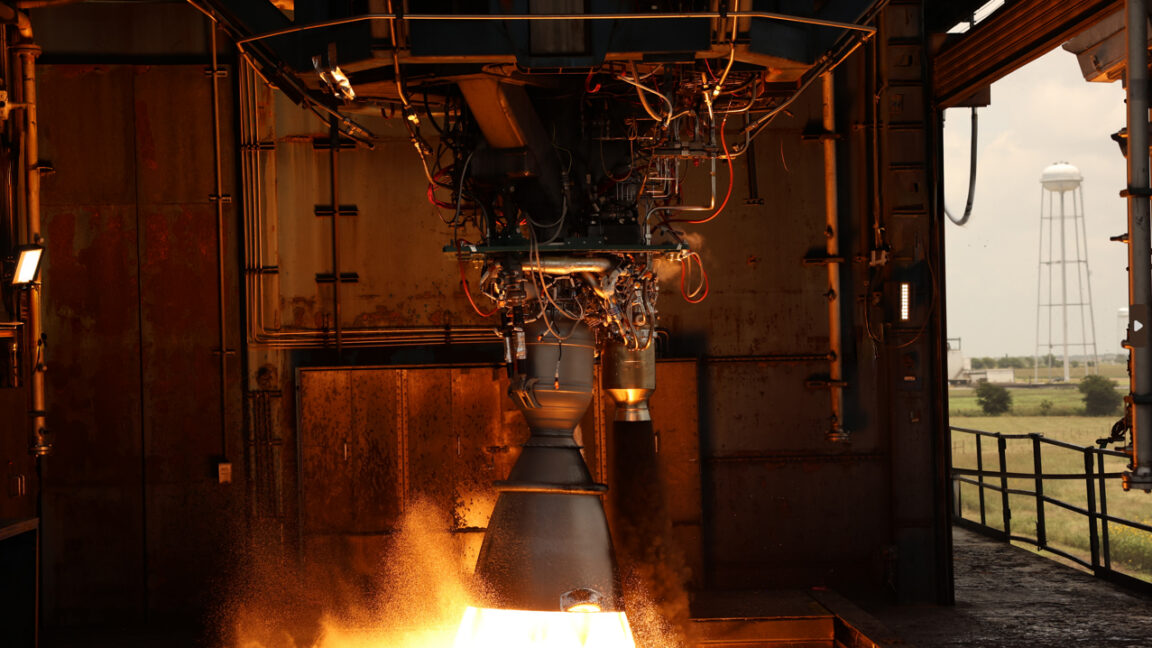
Image: courtesy of Ars Technica
India's Skyroot Aerospace Prepares for Orbital Debut, Challenging the Global Launch Hierarchy
India's private space sector is on the cusp of a significant milestone as Skyroot Aerospace gears up for its first orbital launch of the Vikram-1 rocket, with a launch window set between July 12 and August 4, 2026. This move signals a maturing private space industry in India, aiming to capture a slice of the global small-satellite launch market. The development comes as established players like SpaceX continue to scale, evidenced by its recent production of the 1,000th Merlin 1D engine for its Falcon rockets, highlighting the accelerating industrialisation of space access.
Outlook
Background
The global space industry is in a period of rapid transformation, driven by both technological advancements and the increasing involvement of private capital. India, long a leader in state-backed space exploration through ISRO (Indian Space Research Organisation), has actively encouraged private sector participation in recent years. Skyroot Aerospace emerged as a key player in this shift, successfully launching its suborbital Vikram-S rocket in November 2022.
The Vikram-1, Skyroot's upcoming orbital vehicle, is designed to carry payloads of up to 480 kg to Low Earth Orbit (LEO) and up to 290 kg to Sun-synchronous Orbit (SSO). This capacity positions it squarely in the small-satellite launch market, a segment experiencing high demand due to the proliferation of CubeSats and other micro-satellites for communication, Earth observation, and scientific research. The company has already outlined plans for a more powerful Vikram-II, which will feature a cryogenic engine and boast even greater payload capabilities, up to 900 kg to LEO.
On the other end of the spectrum, SpaceX, the U.S. commercial space giant, recently announced on X (formerly Twitter) that it had manufactured its 1,000th Merlin 1D engine. These engines power the first stages of its Falcon 9 and Falcon Heavy rockets, which have collectively flown 671 times. The milestone reflects SpaceX's unparalleled manufacturing scale and its commitment to reusability, which has fundamentally reshaped launch economics by driving down costs and increasing launch frequency.
See also
Precedents
The current surge in private space activity mirrors historical patterns of innovation and industrialization. Just as commercial aviation followed government-led flight experiments, the commercial space sector is now expanding beyond purely governmental endeavors. The U.S. saw the rise of companies like SpaceX and Rocket Lab, which challenged the traditional dominance of established aerospace contractors. Similarly, Europe and other regions have fostered their own private launch providers. India's push for private space involvement aligns with a broader global trend where nations seek to leverage commercial agility and innovation to enhance their space capabilities and secure economic advantages.
The small-satellite market, in particular, has driven much of this commercial expansion. As satellite technology miniaturizes and becomes more affordable, the demand for dedicated and rideshare launch services has grown exponentially. Companies like Skyroot are designed to meet this specific market need, offering more flexible and potentially more cost-effective options than larger, less frequent government launches. The success of these private ventures often depends on a combination of government support, venture capital funding, and a strong engineering base, all of which are increasingly present in India.
Skyroot's upcoming Vikram-1 launch carries significant weight for several reasons. For India, it represents a tangible step towards becoming a self-reliant and globally competitive player in the commercial space sector. A successful orbital launch would not only validate the technical prowess of an Indian private company but also signal to international clients that India can provide reliable, commercially viable launch services.
This development could also spur further investment and innovation within India's domestic space ecosystem, creating jobs and fostering a new generation of aerospace engineers and entrepreneurs. The ability to launch small satellites more frequently and at competitive prices could attract a larger share of the global market, estimated to be worth billions.
From a broader industry perspective, the rise of new launch providers like Skyroot intensifies competition, which historically drives down costs and accelerates technological development across the board. While SpaceX's manufacturing scale sets a high bar, emerging players aim to carve out niches, offering specialized services or catering to specific regional demands. The increasing number of launch options ultimately benefits satellite operators and research institutions worldwide, making space more accessible and affordable.
Scenarios
AnalysisThe upcoming orbital launch of Skyroot's Vikram-1 presents several potential outcomes, each with distinct implications for the company and the broader space industry.
One possible outcome is a successful and uneventful launch and orbit insertion. This would be a major triumph for Skyroot Aerospace and India's private space sector. It would likely lead to increased investor confidence, potentially attracting more funding for Skyroot's future projects, including the Vikram-II. A successful mission could also secure new contracts for small-satellite launches, establishing Skyroot as a credible commercial launch provider on the global stage. This outcome would further solidify India's position as a significant player in the commercial space market, beyond its state-run programs.
Conversely, a failure during the launch or in reaching orbit remains a possibility, as is common with early-stage rocket development. Such an outcome would undoubtedly be a setback, potentially delaying future launches and impacting investor sentiment. However, historical precedent suggests that even failures can provide invaluable data and learning opportunities, leading to subsequent improvements. Companies like SpaceX experienced early failures before achieving consistent success. A failure would likely necessitate a thorough investigation, engineering adjustments, and a revised launch schedule, but it may not derail India's long-term private space ambitions, given the broader governmental and industrial support for the sector.
Timeline
Frequently Asked Questions
Discussion
Be the first to share your thoughts.