
The coming months will provide critical indicators for both Blue Origin and Relativity Space. For Blue Origin, observers will be watching for tangible progress on the LC-36 launch pad reconstruction and any further details on the New Glenn flight test program. The company's ability to maintain its accelerated schedule will be key. For Relativity Space and Impulse Space, any public statements or operational milestones related to the Terran R rocket and the Mars lander will be scrutinized as the 2026 launch window approaches its conclusion. Delays for either project could ripple through the broader commercial space sector, affecting customer manifests and investor confidence.
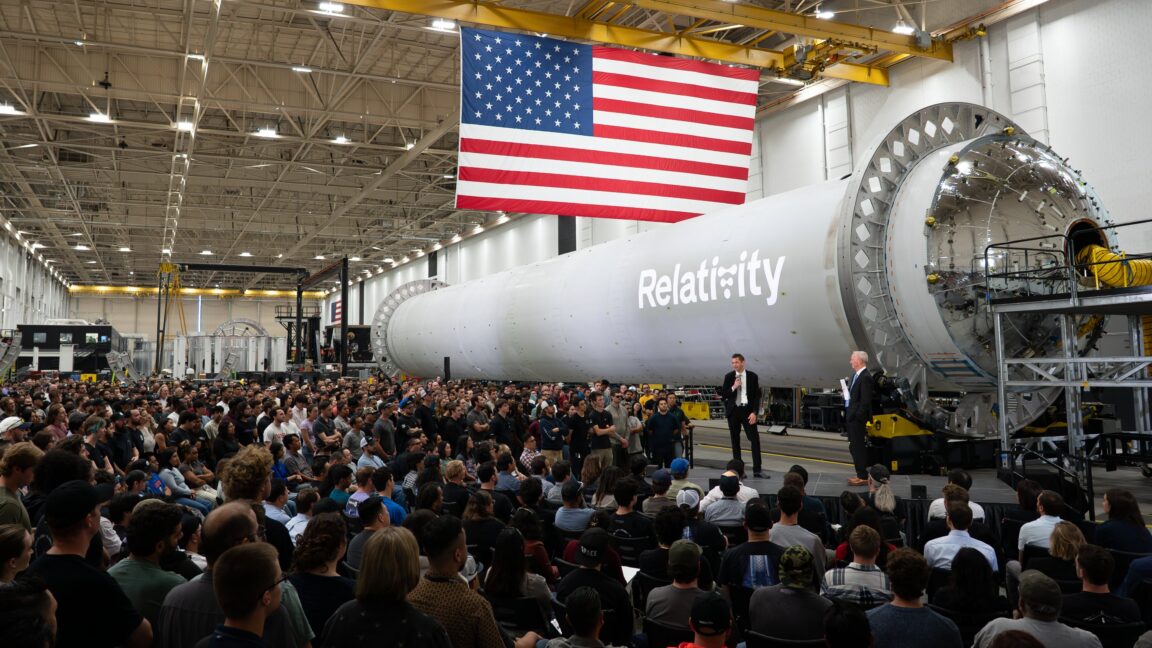
Image: courtesy of Ars Technica
Blue Origin Pushes Aggressive New Glenn Restart as Mars Mission Faces Tight Timeline
Blue Origin has begun rebuilding its Florida launch pad, severely damaged by a New Glenn rocket explosion in May, with CEO Dave Limp targeting a return to flight by the end of 2026. This ambitious timeline contrasts sharply with NASA's assessment that full restoration could take until 2028. Separately, Relativity Space and Impulse Space are facing a rapidly closing window for their planned 2026 commercial Mars mission, with no recent updates on its progress.
Outlook
Background
The commercial space industry operates on a razor's edge, balancing ambitious technological development with the inherent risks of rocket science. Blue Origin, founded by Jeff Bezos, aims to be a major player in heavy-lift orbital launches with its New Glenn rocket, competing with established giants like SpaceX and United Launch Alliance. The explosion of a New Glenn rocket during a ground test at Launch Complex 36 (LC-36) in May 2026 was a significant setback. Blue Origin CEO Dave Limp stated on June 17, 2026, that the company had already started rebuilding the damaged pad and expects New Glenn launches to resume by the end of 2026. This rebuild will focus on supporting the current 7x2 engine configuration, not the planned next-generation 9x4 setup.
However, NASA Administrator Jared Isaacman offered a more cautious outlook, suggesting that the launch pad might not be fully restored until 2028. This discrepancy highlights the complex engineering challenges and potential regulatory hurdles involved in recovering from such an incident.
Meanwhile, Relativity Space, known for its 3D-printed rockets, announced a partnership with Impulse Space in July 2022 to send the first commercial payload to Mars using Relativity's Terran R rocket. The mission was targeting a 2026 launch. While Relativity has seen leadership changes, with former Google CEO Eric Schmidt joining in March 2025, public updates on the Mars mission's 2026 timeline have been scarce as of mid-2026.
Precedents
Launch pad incidents are not uncommon in the history of rocketry, and their recovery timelines often extend beyond initial estimates. For example, SpaceX experienced significant damage to its Starship launch and landing sites in Boca Chica, Texas, following test flights, leading to extensive repair efforts that spanned many months. Similarly, prior to that, a SpaceX Falcon 9 explosion on the pad in 2016 caused substantial damage to Cape Canaveral Space Force Station's Space Launch Complex 40, requiring over a year of repairs. The complexity of infrastructure, safety protocols, and supply chain logistics for specialized components typically dictate a lengthy restoration process.
For interplanetary missions, meeting specific launch windows is paramount. Mars missions, in particular, are constrained by planetary alignment, which occurs roughly every 26 months. Missing a window often means a multi-year delay until the next favorable alignment. Historically, many ambitious space missions, both governmental and commercial, have faced schedule slips due to technical complexities, funding challenges, or unforeseen operational hurdles. The initial announcement of a mission is often followed by a period of quiet development, but as the target launch date approaches, a lack of public updates can often signal internal challenges or a revised timeline.
The speed of Blue Origin's recovery and the success of Relativity's Mars ambition are critical barometers for the broader commercial space industry. For Blue Origin, a rapid return to flight for New Glenn by year-end would demonstrate robust operational resilience and potentially solidify its competitive position against rivals like SpaceX, which currently dominates the heavy-lift market. Delays, however, could erode confidence among its growing list of customers, including entities like Amazon's Project Kuiper. The tension between Blue Origin's aggressive target and NASA's more conservative estimate speaks to the high stakes involved in both technical execution and strategic communication.
For Relativity Space and Impulse Space, the Mars mission represents a bold statement about the feasibility of private deep-space exploration and the potential of 3D-printed rockets. Successfully executing such a mission would be a significant technical and commercial milestone, proving their capabilities beyond low-Earth orbit. Conversely, a delay would be a reminder of the immense challenges inherent in interplanetary travel, potentially affecting investor sentiment and the company's long-term trajectory. Both scenarios underscore the intense pressures on private space companies to deliver on ambitious promises, impacting not just their own revenues but also the perceived viability of the entire commercial space sector.
Scenarios
AnalysisOne outcome for Blue Origin is that its launch pad rebuild progresses faster than NASA's more cautious estimate, allowing New Glenn to attempt a launch by the end of 2026. This would likely involve an intense, highly coordinated effort to repair and re-certify LC-36, potentially prioritizing essential systems for initial test flights over full long-term operational capacity. Such an outcome would bolster Blue Origin's standing and reassure its customers, demonstrating a swift recovery from a significant setback.
Conversely, the complexities of repairing a highly specialized launch facility, coupled with the need for rigorous safety checks after an explosion, could extend Blue Origin's timeline beyond its year-end target. If the full restoration of LC-36 aligns more closely with NASA's 2028 estimate, the company might face difficult decisions regarding its launch manifest and the scheduling of customer payloads, potentially leading to a loss of market share or increased operational costs.
For the Relativity Space and Impulse Space Mars mission, one possibility is that the 2026 target is quietly missed. Given the lack of recent public updates and the tight operational window for a deep-space mission, the companies may opt to formally announce a revised schedule, aiming for the next Mars launch window, likely in 2028. This would allow more time for Terran R development, mission planning, and regulatory approvals.
Another, less likely, scenario for Relativity is a last-minute flurry of activity and announcements that indicate the 2026 Mars mission is still on track. This would require significant behind-the-scenes progress to be unveiled rapidly, demonstrating an ability to overcome the immense technical and logistical challenges of an interplanetary launch on a tight schedule. Such a success would dramatically elevate Relativity's profile and validate its novel approach to rocket manufacturing.
Timeline
2022-07-19
Mars Mission Announced
Impulse Space and Relativity Space announce a partnership to send the first commercial payload to Mars using Terran R, targeting a 2026 launch.
2025-03
New CEO for Relativity Space
Eric Schmidt, former Google CEO, joins Relativity Space as chief executive and makes a significant investment in the company.
2026-05
New Glenn Explosion
A New Glenn rocket explodes during a ground test at Blue Origin's Launch Complex 36 (LC-36) in Florida, severely damaging the pad.
2026-06-17
Blue Origin Rebuild Begins
Blue Origin CEO Dave Limp confirms that reconstruction has begun at the damaged LC-36 pad and targets a return to New Glenn launches by the end of 2026.
2026-06-19
NASA Estimates Longer Repair
NASA Administrator Jared Isaacman suggests that Blue Origin's launch pad may not be fully restored until 2028, a more conservative estimate than Blue Origin's.
Frequently Asked Questions
The damage to Blue Origin's Launch Complex 36 (LC-36) in Florida was caused by an explosion of a New Glenn rocket during a ground test conducted in May 2026.
Discussion
Be the first to share your thoughts.