
Engineering teams at Lockheed Martin and the European Space Agency must modify the propulsion and propellant tank configurations of the Orion service module to accommodate reverse-thrust dynamics during transit. Mission planners will also need to re-evaluate orbital insertion sequences and docking profiles to match the physical constraints imposed by SpaceX's Starship lunar lander architecture.
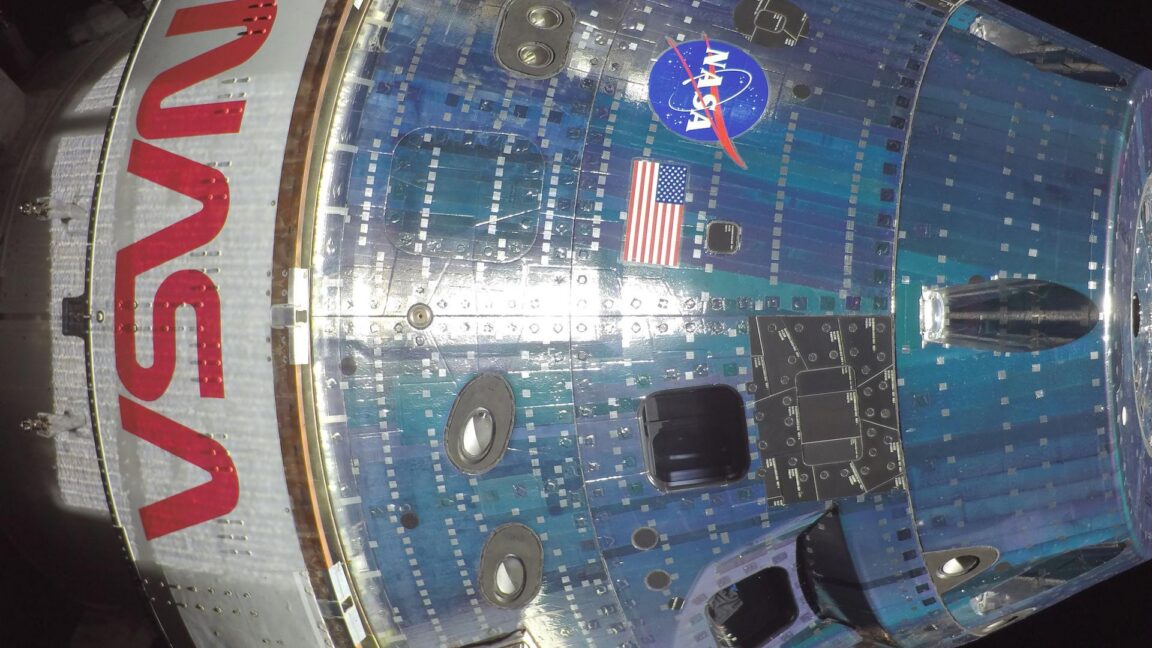
Image: courtesy of Ars Technica
Why NASA’s Evolved Moon Plan Forces the Orion Spacecraft to Fly Backward
NASA's shifting Artemis architecture requires the Lockheed Martin-built Orion capsule to fly toward the Moon in an inverted posture, placing the European Space Agency service module at the top of the stack and creating propulsion hurdles that demand hardware redesigns.
Outlook
Background
The Artemis program has evolved from its initial direct-landing concepts into a complex orbital rendezvous ballet. Under the revised mission profile, SpaceX must fuel a lunar lander in low-Earth orbit before it docks with Orion in high-Earth orbit. Because of how the vehicles must meet and couple, Orion is forced into a backward-facing orientation during its primary lunar transit phase. According to Kirk Shireman, Human Spaceflight Exploration and Orion program manager at Lockheed Martin, this reverses the expected flow of liquid propellant within the tanks, pulling fuel toward the gas inlet side rather than settling it cleanly during engine burns.
Precedents
Aerospace history is filled with cascading engineering compromises where adjustments to one major contractor's vehicle force radical downstream modifications on another. During the Apollo era, lunar module weight increases repeatedly forced changes to the Saturn V flight software and command module procedures. Whenever architectural requirements shift late in a major aerospace program, secondary systems invariably absorb the physical and financial shock.
Space exploration hardware is unforgiving of geometry changes. When a capsule designed for one specific flight posture is forced into another, every propulsion burn, sensor alignment, and life support calculation must be re-vetted. For the aerospace engineers building the hardware, a change in flight direction is not a minor software patch — it is a fundamental mechanical challenge that touches fluid dynamics, structural loads, and mission safety margins.
Scenarios
AnalysisTechnical modifications to the European-built service module propellant tanks could resolve the fuel-sloshing problem in time for upcoming Artemis flights, though schedule delays remain a persistent risk for heavy-lift timelines. Alternatively, NASA and its contractors might be forced to alter mission trajectories or staging altitudes, potentially compressing testing windows for later crewed landing attempts.
Timeline
November 2026
Propulsion Challenges Revealed
Lockheed Martin program leadership publicly details how the Starship docking configuration forces Orion to fly backward, necessitating service module modifications.
Future Outlook
Service Module Redesign
Engineers work to adapt propellant management systems in the European Space Agency service module to handle inverted flight loads and fuel settling.
Frequently Asked Questions
The docking configuration required to transfer astronauts from Orion to SpaceX's Starship lunar lander places the service module at the top of the stack during transit, inverting the capsule's traditional flight posture.
Discussion
Be the first to share your thoughts.