
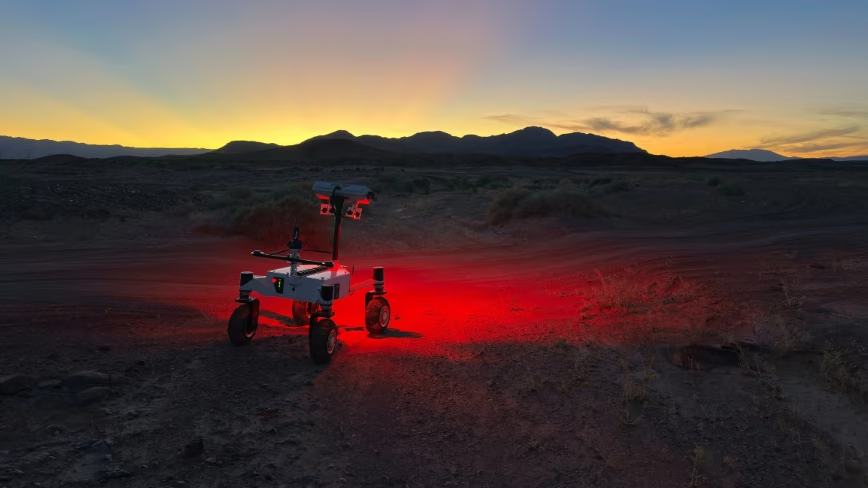
The ERNEST prototype's performance, achieving 0.6 mph over rugged terrain, represents a fundamental shift from the slow, deliberate pace of previous generations of planetary rovers. Current Mars rovers, like Perseverance, operate at an average speed closer to 0.06 mph, often moving only a few hundred meters per Martian day. ERNEST’s ability to cover 16 miles in just 37 hours of drive time means it could theoretically traverse hundreds of miles in a standard lunar or Martian mission timeframe, opening up entirely new possibilities for scientific exploration and resource mapping.
The prototype was tested in the challenging Colorado Desert, a simulated lunar environment, specifically for its potential in future Moon missions. Its key innovations include an active suspension system that allows each wheel to move independently, adapting to uneven ground and climbing over obstacles more efficiently. Complementing this are steerable mesh wheels, designed to provide superior traction and durability across varied, extreme terrains, from loose regolith to rocky outcrops. The rover's enhanced autonomy allows it to navigate these complex environments without constant human input, a critical factor for missions where communication delays with Earth can be significant.