
In the immediate term, Meta is expected to aggressively promote Muse Image across its vast user base. This will likely involve integrating the tool deeply into existing features on Instagram and WhatsApp, making it accessible and easy for users to experiment with AI-generated content. We can also anticipate a push to onboard advertisers, demonstrating how Muse Image can create dynamic, personalized ad creatives at scale. The free tier will act as a funnel, aiming for broad adoption, while the eventual paid features will test user willingness to pay for more sophisticated capabilities. Initial public reception will be crucial, with early reviews from creators and industry observers shaping its perception against established competitors.
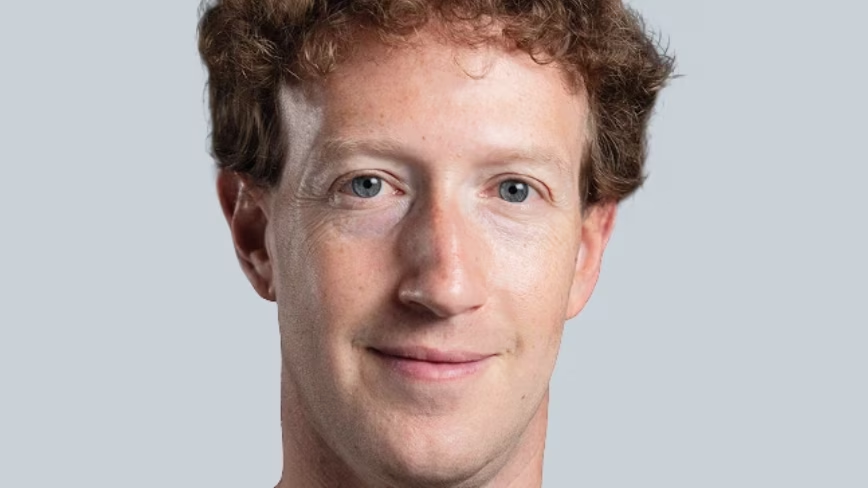
Image: courtesy of Thenextweb
Meta's Muse Image: A $14 Billion Bet on In-House AI to Win Back Creators and Advertisers
Meta Platforms yesterday debuted Muse Image, its first artificial intelligence image generation model developed by Alexandr Wang's Superintelligence Labs. The new AI tool, which was internally codenamed Mango, is now available for free across Meta's core platforms, including Instagram, WhatsApp, and the Meta AI app. Its primary strategic goal is to attract more creators and advertisers to Meta's ecosystem and reduce the company's dependency on external AI technologies. While Muse Image currently trails models like GPT Image 2 in overall performance, it shows stronger capabilities in specific image editing tasks when compared to rivals such as Nano Banana 2. Meta has also indicated plans to introduce a subscription option for advanced features, signaling a clear path towards monetization.
Outlook
Background
The launch of Muse Image is a direct consequence of Meta's significant investment in AI, particularly its reported $14.3 billion commitment to Scale AI, which brought Alexandr Wang in-house to lead its Superintelligence Labs. This move marked a pivotal shift for Meta, signaling an intent to develop proprietary, cutting-edge AI rather than relying solely on partnerships or open-source solutions. The company's historical reliance on third-party technologies for certain functionalities made it vulnerable to external market shifts and licensing costs. By building its own models, Meta aims to gain greater control over its technological destiny, foster innovation directly within its product teams, and create new revenue streams. The competitive landscape for AI image generation is already crowded, with Google, OpenAI, and a host of startups vying for dominance. Meta's entry is a high-stakes play to secure its position in a critical and rapidly evolving segment of the AI market.
See also
Precedents
Meta has a long history of leveraging its massive social network reach to introduce and scale new features, often integrating them seamlessly into existing user workflows. From the introduction of Stories, which mirrored Snapchat's success, to its consistent efforts in video content, Meta has shown a pattern of adapting and integrating successful formats. However, its track record with entirely new, foundational technologies has been mixed. While the company has invested heavily in areas like virtual reality, achieving widespread adoption and significant monetization has proven challenging. In the AI space, many tech giants initially acquire or partner with smaller, innovative firms before attempting to bring talent and technology in-house. Meta's strategy with Alexandr Wang and Superintelligence Labs fits this mold, aiming to replicate the success of others who have integrated AI research directly into product development. The challenge, as always, lies in execution and sustained innovation against well-funded and technically advanced competitors.
This isn't just another product launch for Meta; it represents a critical pivot in its long-term strategy. By developing Muse Image in-house, Meta is directly addressing its need for technological independence and exploring new avenues for monetization beyond its traditional advertising model. For creators, Muse Image could offer powerful new tools, potentially lowering the barrier to entry for sophisticated visual content creation and leading to a surge in AI-assisted creativity on Meta's platforms. For advertisers, it promises more efficient and personalized content generation, which could translate into more effective campaigns and increased ad spending within Meta's ecosystem. The success or failure of Muse Image will serve as an early indicator of whether Meta's multi-billion dollar AI investment can truly position it as a leader in generative AI, rather than a perpetual follower. It also sets a precedent for how Meta intends to integrate advanced AI into its core social experiences, shaping the future of digital interaction for billions of users.
Scenarios
AnalysisOne possible outcome is that Muse Image achieves significant adoption, particularly among Instagram's vast creator community and small businesses. Its free accessibility and deep integration into popular apps could drive rapid experimentation and viral content creation. If Meta can quickly iterate and improve the model's performance, especially in creative tasks, it could attract a new wave of users and advertisers, solidifying its position in the generative AI space and creating a valuable new revenue stream through advanced subscriptions and enhanced ad tools.
Conversely, Muse Image could struggle to differentiate itself sufficiently from more established and technically superior models. If the performance gap with leaders like GPT Image 2 remains significant, or if the subscription features fail to offer compelling value, Meta might find it difficult to convert free users into paying subscribers or attract high-value advertisers. This could lead to a scenario where the substantial investment in Superintelligence Labs yields only incremental gains, leaving Meta still playing catch-up in the fiercely competitive AI market.
A third, more nuanced outcome could see Muse Image finding a niche. It might become highly effective for specific use cases within Meta's ecosystem, such as personalized stickers on WhatsApp or unique filters on Instagram, without necessarily dominating the broader AI image generation market. This would demonstrate Meta's capability in building proprietary AI but would temper expectations for it becoming a universal, industry-leading tool, potentially requiring further, even larger, investments to truly compete at the highest levels.
Timeline
2025-06-01
Alexandr Wang Joins Meta; Superintelligence Labs Formed
Meta reportedly finalizes its $14.3 billion investment in Scale AI, bringing its CEO Alexandr Wang in-house to lead Meta’s new Superintelligence Labs division, signaling a major strategic pivot towards proprietary AI development.
2026-07-07
Meta Debuts Muse Image
Meta officially releases Muse Image, its first AI image generation model from Alexandr Wang’s lab, making it available for free on Instagram, WhatsApp, and the Meta AI app. It is codenamed Mango during development.
2026-07-07
Subscription Plans Hinted
Alongside the free public release, Meta signals future plans to offer a subscription tier for Muse Image, providing access to advanced features and indicating a clear monetization strategy.
Frequently Asked Questions
Muse Image is an artificial intelligence model developed by Meta that can generate images. It's the first major AI image product to come out of Meta's Superintelligence Labs, led by Alexandr Wang, and is designed to help users create visuals directly within Meta's apps.
Discussion
Be the first to share your thoughts.