
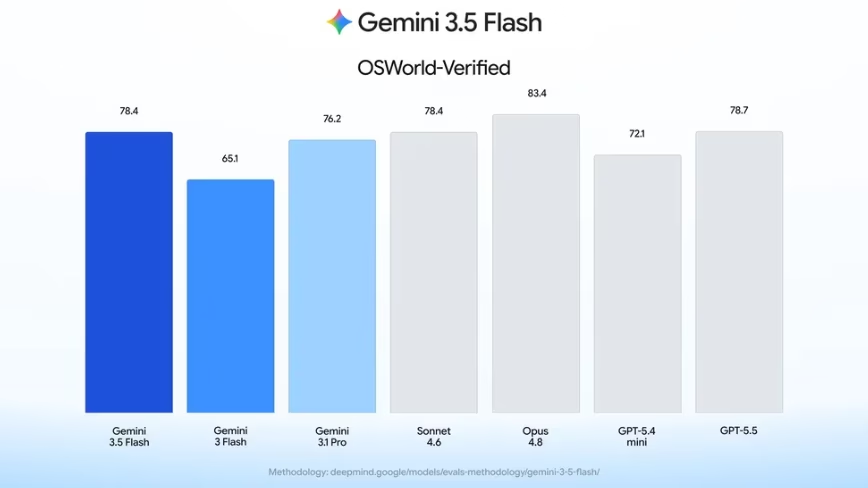
The core change is that Gemini 3.5 Flash now includes 'computer use' as a built-in function. Previously, developers building AI agents that needed to interact with graphical interfaces often had to call upon a separate, dedicated model for such tasks. With this update, that capability is integrated directly into Flash. Developers can activate this screen interaction feature as one of several tools within the model, alongside its existing abilities for code execution, search, and function calling.
What does this mean in practice? Google product manager Mateo Quiros described it as giving Flash the capacity to observe a screen, understand what it's seeing, make decisions based on that understanding, and then execute actions on that screen. This could range from filling out complex forms, navigating software applications, or even automating multi-step processes that typically require human input across various digital platforms.
This enhanced version of Gemini 3.5 Flash became generally available on June 24, 2026. It is accessible through several Google platforms, including Google Antigravity, the Gemini API within Google AI Studio and Android Studio, and crucially, the Gemini Enterprise Agent Platform and Gemini Enterprise offerings. For individual users, the updated Flash model is also available directly in the Gemini app and through AI Mode in Google Search.
For enterprise users of the Gemini Enterprise app, there's an important operational detail: the feature management toggle for Gemini 3.5 Flash was removed after June 8, 2026. This means that as of that date, Gemini 3.5 Flash is enabled by default and cannot be individually turned off by users within the enterprise app. This default-on approach signals Google's intent to rapidly integrate these capabilities into business workflows.