
The immediate focus for the industry is the maiden orbital launch attempt of Galactic Energy's Pallas-1 rocket. Airspace warnings indicate a launch window opening between 9:52 pm ET on August 31 and 12:09 am ET on September 1 (01:52–04:09 UTC, September 1). This launch will test the rocket's core capabilities, and while Pallas-1 is designed for reusability, its first flight will not include a recovery attempt. A successful debut could significantly boost Galactic Energy's standing in the medium-lift market and validate its reusable design approach. In Europe, the coming months will see the initial allocation of the ESA's substantial funding to five selected launch startups as part of the European Launcher Challenge (ELC), with these companies expected to accelerate their development efforts. Rocket Lab's recent entry into the European market, establishing a German subsidiary, suggests a direct challenge to these nascent European players.
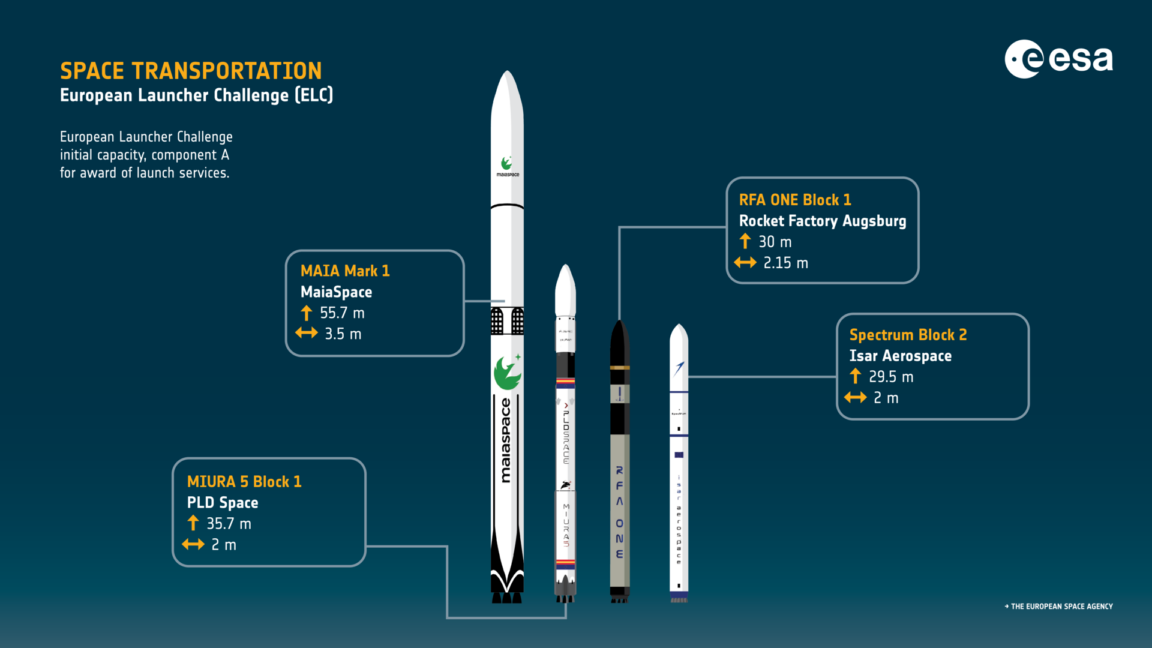
Image: courtesy of Ars Technica
Europe's €900 Million Push and China's Reusable Rocket Debut Reshape Global Launch Race
The global space launch market is on the cusp of significant shifts, with the European Space Agency (ESA) injecting over €900 million into domestic startups to foster independent launch capabilities, even as Chinese commercial firm Galactic Energy prepares for the inaugural flight of its reusable Pallas-1 rocket. These parallel developments signal a deepening competition for satellite deployment, challenging the established dominance of players like SpaceX and aiming to diversify the world's access to orbit.
Outlook
Background
The space launch sector is undergoing a rapid transformation, driven by a surge in satellite constellations and a global push for more cost-effective and frequent access to orbit. This environment has fostered the rise of new commercial launch providers, often leveraging innovative technologies like reusable rocket stages.
Galactic Energy's Pallas-1 Ambition
Galactic Energy, a Chinese commercial firm founded in February 2018, has already built a reputation for reliability with its light-lift Ceres-1 solid rocket. The Pallas-1 represents a significant step up in ambition and capability. It is a liquid propellant, medium-lift orbital launch vehicle, designed to carry up to 7,000 kilograms of payload to a 200-km low Earth orbit. Powering its first stage are seven Welkin engines, which burn RP-1 (refined kerosene) and liquid oxygen, a 'kerolox' propellant combination. Crucially, the Pallas-1's first stage incorporates design features for reusability, including deployable legs and grid fins, drawing parallels to the vertical landing technology pioneered by SpaceX's Falcon 9. The company secured $154 million in C round funding in late 2023, specifically to advance its Pallas-1 plans. A successful, even partial, demonstration of its capabilities would position Galactic Energy as a formidable competitor in the burgeoning commercial launch market, especially in the reusable segment.
Europe's Bid for Autonomy
On the other side of the globe, the European Space Agency (ESA) is making a concerted effort to cultivate its own independent launch capabilities. Recognizing a reliance on foreign launch providers, ESA member states collectively committed €902.2 million in November to five European launch startups. This funding, part of the European Launcher Challenge (ELC), is intended to accelerate the development of small and medium launch vehicles within the continent. The goal is to ensure Europe has guaranteed, sovereign access to space, reducing its dependence on non-European rockets. This initiative comes as the market becomes increasingly crowded. Rocket Lab, a major player in small satellite launches, recently established a German subsidiary, indicating its intent to capture a share of the European market, potentially competing directly with the very startups ESA is trying to nurture.
The Broader Competitive Arena
These developments unfold against a backdrop of intense global competition. SpaceX, with its Falcon 9 and the rapidly developing Starship program, remains the dominant force, having driven down launch costs and increased flight frequency. SpaceX's plans to invest $100 billion in Starship facilities in Louisiana underscore the scale of its ambition and the capital required to compete at the highest levels. The emergence of new players from China and Europe, alongside established commercial firms like Rocket Lab, suggests a future market characterized by diverse offerings, varying price points, and continued innovation in reusability and operational efficiency.
See also
Precedents
The history of space launch has seen several distinct phases. Initially, it was a domain dominated by national governments and their military programs, driven by geopolitical competition during the Cold War. The focus was on heavy-lift capabilities and strategic independence, with cost often a secondary concern.
The late 20th and early 21st centuries saw the emergence of commercial launch providers, though many were still heavily reliant on government contracts or state subsidies. Europe's Arianespace, for example, successfully carved out a niche as a reliable heavy-lift provider, but often at a higher cost compared to later entrants.
The most significant disruption came with SpaceX and its Falcon 9 rocket, which pioneered reliable and routine reusability of orbital-class rocket stages. This innovation dramatically reduced launch costs and increased launch cadence, fundamentally reshaping the market. This shift has created pressure on legacy providers and spurred a new generation of startups to adopt similar cost-saving technologies.
China's commercial space sector, while relatively nascent compared to its state-backed programs, is rapidly expanding. Companies like Galactic Energy are following the commercial model, seeking private investment and developing advanced, often reusable, launch systems to compete on the global stage. This mirrors the trajectory seen in the U.S. over the last two decades, where private companies have increasingly taken on roles once reserved for government entities.
For Europe, the current funding initiative reflects a historical pattern of attempting to foster indigenous technological capabilities to maintain strategic autonomy. From Airbus in aviation to various defense initiatives, Europe has often pooled resources to build competitive industries. The European Launcher Challenge is the latest iteration of this approach, aiming to avoid future reliance on external launch providers for critical missions, especially as geopolitical tensions rise and access to space becomes a strategic imperative.
These converging developments are not merely technical milestones; they represent a fundamental reshaping of the global space economy and the geopolitical balance of power in space.
For satellite operators, increased competition, particularly from reusable rockets like the Pallas-1, could translate into lower launch costs and greater flexibility. This directly impacts the economic viability of new satellite constellations, remote sensing services, and in-orbit manufacturing initiatives. Cheaper access to space means more innovation on orbit.
For Europe, achieving independent, cost-effective launch capabilities is a matter of strategic sovereignty. Without its own launchers, Europe risks being dependent on other nations to deploy its critical defense, scientific, and commercial satellites. The €900 million investment is a declaration of intent to secure this autonomy, but the success of its nascent startups will determine whether this ambition translates into tangible market share.
Galactic Energy's Pallas-1 debut is significant for China's commercial space ambitions. A successful, reusable medium-lift rocket would demonstrate China's growing technical prowess outside of its state-owned enterprises, potentially opening new avenues for international commercial partnerships and further intensifying the global race for space dominance.
The overall trend suggests a future where launch services are more commoditized, forcing all players, including giants like SpaceX and Rocket Lab, to continually innovate and reduce costs. This competitive pressure benefits the broader space industry by making space more accessible, but it also creates immense pressure on new entrants to prove their reliability and cost-effectiveness quickly.
Scenarios
AnalysisThe current dynamics in the space launch market suggest several potential paths forward, each with distinct implications for the industry's structure and major players.
1. Accelerated Diversification and Cost Reduction:
One possible outcome is a significant acceleration in the diversification of launch providers and a sustained downward pressure on launch costs. If Galactic Energy's Pallas-1 proves successful and reliable in its initial flights, particularly if it demonstrates reusability in subsequent missions, it could establish a strong foothold in the medium-lift market. This would introduce a new, cost-competitive player, especially if its pricing undercuts existing services. Simultaneously, if ESA's substantial funding successfully nurtures viable European launch startups, these companies may begin to offer genuinely competitive services within the next few years. This scenario would lead to a more robust, multi-polar launch market, potentially benefiting satellite operators through increased choice and more aggressive pricing, pushing all providers to innovate faster to maintain market share.
2. Consolidation and Continued Dominance:
Conversely, the challenges of developing and operating reusable orbital rockets are immense, both technically and financially. It is possible that Pallas-1's debut, or subsequent flights, could encounter significant technical setbacks, delaying its market entry or undermining confidence in its reliability. Similarly, despite the ESA's investment, European startups may struggle to scale production, achieve the necessary reliability, or compete on price against more established commercial entities like SpaceX and Rocket Lab, which possess larger capital bases and more extensive operational experience. In this scenario, the market could see further consolidation, with the existing dominant players strengthening their positions, potentially absorbing smaller, struggling competitors or simply outcompeting them on cost and cadence. This would mean less market diversification and potentially slower rates of price reduction.
3. Niche Specialization and Regional Focus:
A third outcome could involve a greater degree of niche specialization and regional focus. Pallas-1 might find strong demand within the Chinese domestic market or among nations seeking alternatives to Western providers, without necessarily becoming a global, cross-market leader. European startups, even if they don't achieve global scale, might successfully cater to specific European governmental or commercial needs, ensuring regional launch autonomy but not directly challenging global giants. This outcome suggests a fragmented market where different providers excel in specific payload classes, orbital destinations, or geographic regions, rather than a direct head-to-head competition across all segments. It would offer a degree of resilience by diversifying supply chains but might not lead to the most aggressive overall cost reductions.
Timeline
Frequently Asked Questions
Discussion
Be the first to share your thoughts.