
The coming months will likely see continued debate between the Trump administration and the semiconductor industry over the best approach to securing memory chip supply. One path involves the administration potentially heeding the industry's warnings, focusing on a framework of tax incentives and long-term deals to encourage domestic production and stability without direct market interference. A contrasting path could see the administration move forward with more interventionist policies, potentially including tariffs or stricter domestic production mandates, which the industry argues would exacerbate current shortages. The outcome will shape not only the availability and cost of critical components but also the broader trajectory of US industrial policy in the tech sector.
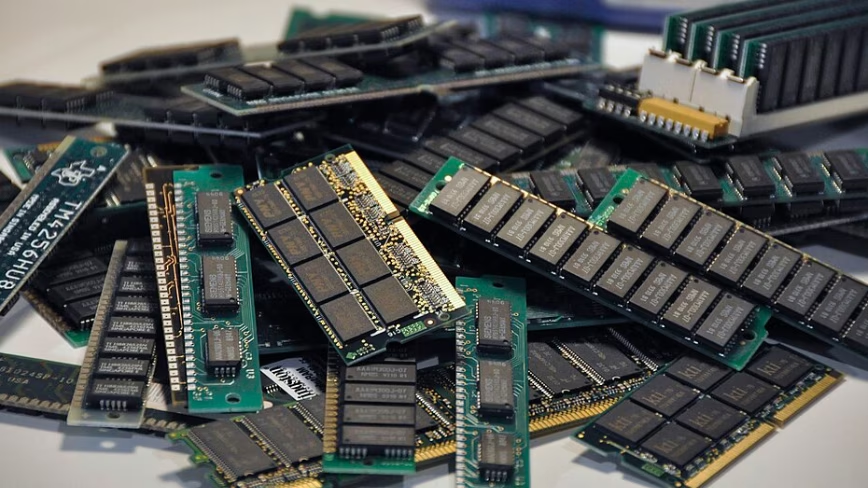
Image: courtesy of Thenextweb
The Memory Chip Crunch: Why Industry Leaders Are Warning Trump Against Market Intervention
The semiconductor industry, represented by SEMI, has issued a stark warning to the Trump administration: direct government intervention in the memory chip market could deepen an already severe supply shortage driven by artificial intelligence demand. Instead of price controls or capacity mandates, the industry advocates for long-term supply agreements and tax incentives, along with consumer tax credits to help offset rising costs for devices like phones and laptops. This comes as the administration continues its push for increased domestic manufacturing and supply chain security, creating a tension between national industrial policy and market realities.
Outlook
Background
The global memory chip market is currently experiencing a significant shortage, primarily fueled by the accelerating demand for artificial intelligence (AI) technologies. AI applications, from large language models to advanced data analytics, require vast amounts of high-bandwidth memory (HBM) and other specialized memory chips to process information efficiently. This surge in demand has outstripped current manufacturing capacity, leading to rising prices for components essential to everything from servers and data centers to consumer electronics like smartphones and personal computers.
Against this backdrop, the Trump administration has maintained a strong focus on bolstering US manufacturing and securing critical supply chains, a policy stance often framed as 'America First.' This includes initiatives like the CHIPS for America Act, which aims to incentivize semiconductor production domestically. Past reports have indicated the US government has warned major memory chipmakers about potential duties or requirements to build production facilities within the United States. This industrial policy, aimed at reducing reliance on foreign supply, now faces a direct challenge from the very industry it seeks to support, particularly regarding the delicate balance of the memory market.
See also
Precedents
The semiconductor industry has historically been characterized by cycles of boom and bust, with periods of high demand and tight supply often followed by overcapacity. Government intervention in such markets has a mixed record. During World War II, direct government controls were crucial for wartime production, but in more complex globalized markets, such interventions can lead to unintended consequences. For instance, attempts to control prices or dictate production capacity in highly capital-intensive and globally integrated industries like semiconductors can distort market signals, discourage innovation, and create inefficiencies. The US has previously used trade policies, including tariffs and anti-dumping duties, to protect domestic industries, but these measures have often led to retaliatory actions or higher costs for consumers. The CHIPS Act, while providing substantial incentives, represents a less direct form of intervention compared to outright price or capacity mandates, learning from past experiences where heavy-handed government control proved counterproductive in dynamic tech sectors.
The warnings from the chip industry carry substantial weight because memory chips are foundational to the modern digital economy. A sustained or worsened shortage directly impacts the ability of companies to develop and deploy cutting-edge AI, cloud computing, and advanced consumer electronics. For consumers, this translates to higher prices for everything from new smartphones and laptops to cloud services. For businesses, it means increased operational costs and potential delays in product development, which can stifle innovation and competitiveness.
Moreover, the tension between government industrial policy and industry recommendations highlights a critical debate: how best to ensure national security and economic resilience in a globalized tech supply chain. If the Trump administration disregards the industry's advice and implements measures that further disrupt the memory market, it could inadvertently undermine the very goals of domestic strength and technological leadership it seeks to achieve. The stakes are not just about chip prices; they are about the foundational infrastructure of the digital age and America's strategic position in the global tech race.
Scenarios
Analysis1. Policy Shift Towards Incentives and Partnerships (Inferred): The Trump administration could heed the industry's warnings and pivot towards non-interventionist strategies. This would likely involve an increased focus on extending tax incentives for research and development (R&D) and manufacturing within the US, alongside fostering long-term supply agreements between chipmakers and their customers. Such an approach would aim to stabilize the market by encouraging investment and predictable demand without distorting pricing or capacity directly. This would align with the industry's preference and might lead to a more stable, albeit still tight, memory supply.
2. Increased Intervention and Market Friction (Speculative): The administration might choose to prioritize its 'America First' industrial policy over the industry's market-based recommendations. This could lead to a continuation or escalation of pressure on chipmakers, potentially through tariffs on imported components or strict domestic production quotas. Such actions, while aimed at securing domestic supply, could create significant market friction, potentially exacerbating current shortages by disrupting existing global supply chains, increasing costs for manufacturers, and ultimately leading to higher consumer prices for electronics. This path could also trigger trade disputes with other chip-producing nations.
3. Hybrid Approach with Targeted Enforcement (Speculative): A third possibility is a hybrid strategy where the administration offers some of the requested tax incentives while simultaneously applying targeted pressure, particularly on companies seen as crucial for national security or those with significant operations in adversarial nations. This could involve selective enforcement of 'build in America' mandates or scrutinizing deals like Apple's reported request to purchase from blacklisted Chinese companies. This approach would attempt to balance industry concerns with strategic national interests, but it carries the risk of creating uneven market conditions and potentially alienating some industry players.
Timeline
Frequently Asked Questions
Discussion
Be the first to share your thoughts.