
Chinese automakers are now under direct orders to shift their operational focus. The immediate consequence will be a deep dive into existing product quality, reliability, and durability, moving away from a 'features first' development cycle. New vehicle models entering the market from July 2027 will face particularly stringent compliance requirements. Regulators are specifically targeting the practice of altering technical specifications through OTA updates after a vehicle's test samples have been approved, aiming to prevent manufacturers from circumventing initial approval processes. This suggests a more cautious approach to software-defined vehicles, at least in the short term, and an emphasis on foundational engineering. Companies will need to invest more in testing and validation protocols for both hardware and software components.
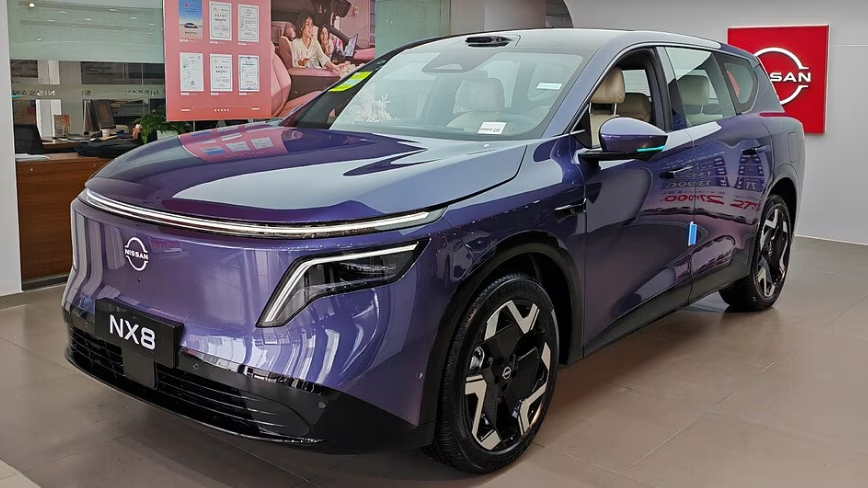
Image: courtesy of Thenextweb
China's Quality Mandate: How Regulators Are Forcing a Strategic Rethink for Carmakers
Chinese regulators have launched a year-long campaign to compel domestic automakers to prioritize vehicle quality and safety over the relentless addition of new features. The directive, issued on August 27, 2026, by four government ministries, demands comprehensive inspections, proactive recall plans for defects, and stricter controls over over-the-air (OTA) updates that alter technical parameters. This move follows a surge in consumer complaints and a significant recall affecting 4.3 million vehicles earlier in August, signaling a pivot in China's automotive industry strategy.
Outlook
Background
For years, China's rapidly expanding automotive sector, particularly in electric vehicles (EVs), has been defined by aggressive innovation and a race to integrate cutting-edge technology. Brands like Xiaomi, BYD, and Nio have differentiated themselves with advanced infotainment systems, sophisticated driver-assistance features, and sleek designs, often at competitive price points. This strategy has fueled domestic sales and propelled Chinese brands onto the global stage. However, this rapid pace of development has also led to a rise in consumer complaints related to product defects and safety concerns. An independent analyst in Shanghai, Gao Shen, confirmed that 'several accidents and growing consumer complaints have spurred the regulators into action.' This pressure culminated in a major recall on August 21, 2026, where Tesla and eight Chinese EV manufacturers recalled a combined 4.3 million vehicles over issues with emergency door-release mechanisms. This incident, the largest automotive recall in China's history, appears to have been a critical catalyst for the new regulatory campaign. The European NCAP's recent protocols, which penalize vehicles for lacking physical buttons for certain functions, also highlight a broader global trend towards balancing digital features with fundamental usability and safety.
See also
Precedents
The automotive industry has a long history of quality crises leading to significant regulatory intervention and industry recalibration. In the 1970s and 80s, Japanese automakers gained a substantial competitive edge in Western markets by relentlessly focusing on reliability and build quality, often outperforming American and European cars that had become complacent with feature bloat. South Korean brands like Hyundai and Kia followed a similar trajectory, initially entering markets on price but steadily building a reputation for quality over decades through sustained investment and rigorous engineering. This pattern suggests that a forced focus on quality, while potentially slowing immediate innovation, can ultimately strengthen an industry's long-term global standing. The Chinese regulators' current campaign reflects a similar institutional response to ensure the foundational integrity of its burgeoning auto sector, preventing an over-reliance on technology from eroding consumer trust and international competitiveness.
This regulatory shift represents a critical juncture for China's automotive industry, particularly its ambitious push into global EV markets. The previous strategy of rapid feature integration allowed Chinese brands to quickly differentiate themselves and capture market share. Now, a forced slowdown to address fundamental quality issues could impact their speed-to-market and perceived technological lead. For consumers, this campaign could translate into more reliable, safer vehicles in the long run, albeit potentially with fewer experimental features. For Chinese automakers, it means a reallocation of capital and engineering resources away from new gadgetry and towards core manufacturing excellence and rigorous testing. This could increase production costs, but also enhance their global brand reputation, which has historically been a challenge for Chinese manufacturers. The move also signals Beijing's intent to mature its industrial sectors, prioritizing sustainable growth and consumer protection over sheer volume and technological novelty. The global automotive landscape, already grappling with the transition to EVs and autonomous driving, will be watching closely to see if this pivot strengthens China's long-term competitive position or temporarily stunts its growth.
Scenarios
AnalysisOne possible outcome is that Chinese automakers, under regulatory pressure, significantly improve the underlying quality and safety of their vehicles. This could lead to enhanced brand perception both domestically and in export markets, allowing them to compete more effectively with established global players on factors beyond just price and features. However, this focus on quality may also slow down the pace of new feature introduction and could increase development and manufacturing costs, potentially impacting their aggressive pricing strategies.
Another scenario is that while quality improves, the industry's characteristic rapid innovation in software and connectivity might be curtailed. This could make Chinese EVs less distinctive in terms of bleeding-edge tech, especially if competitors continue to innovate aggressively in those areas. The stricter rules on OTA updates, for example, could limit the flexibility of automakers to deploy new functionalities or fixes quickly, creating operational friction.
A third outcome could see a consolidation within the Chinese auto industry. Smaller, less capitalized automakers may struggle to meet the more stringent quality and testing requirements, leading to mergers, acquisitions, or even bankruptcies. This could result in a more streamlined, but potentially less diverse, market dominated by a few larger, more robust players who can afford the necessary investments in quality control and engineering rigor.
Timeline
Frequently Asked Questions
Discussion
Be the first to share your thoughts.