
The coming months will likely see Belgian prosecutors build their case against the accused, a process that could be lengthy and complex, given the international dimensions and the technical nature of the alleged secrets. This incident is expected to intensify scrutiny on foreign investments and technology transfers within the European Union, particularly concerning dual-use technologies like advanced semiconductors. Diplomatically, it could add further strain to EU-China relations, especially as Europe attempts to balance economic ties with national security concerns around critical technologies.
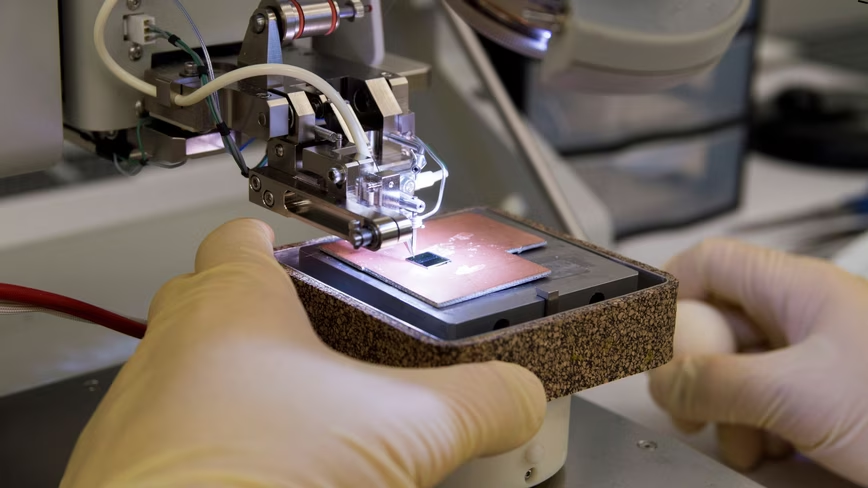
Image: courtesy of Thenextweb
Belgium's Chip Espionage Case: What the Arrest Reveals About Europe's Tech Vulnerability
Belgian authorities disclosed on September 7, 2026, the May 10 arrest of a 52-year-old Belgian-Chinese national suspected of industrial espionage. The man, a former senior researcher at the now-bankrupt Belgian chipmaker BelGaN, is accused of passing sensitive semiconductor trade secrets to a Chinese rival while simultaneously serving as a director for that Chinese company. He faces charges including espionage and unlawful disclosure of trade secrets, highlighting the increasing tension and vulnerability in the global technology supply chain.
Outlook
Background
The Federal Prosecutor’s Office in Belgium announced on Monday, September 7, 2026, the arrest of a 52-year-old man with dual Belgian and Chinese nationality. He was detained on May 10, 2026, at Brussels Airport as he prepared to board a flight to Beijing, and has been held in pre-trial detention since then. The four-month delay in public disclosure suggests the sensitive nature of the ongoing investigation.
The man held a senior research position at BelGaN, a Belgian semiconductor company that declared bankruptcy in 2024, leading to 400 job losses. Simultaneously, he reportedly served as a director for a Chinese rival firm. This dual role is central to the allegations of industrial espionage and unlawful disclosure of trade secrets.
Prosecutors are investigating charges that include espionage, participation in a criminal organization, misuse of company assets, and the unlawful disclosure of trade secrets related to BelGaN. The technology at the heart of the case is understood to be Gallium Nitride (GaN) semiconductors. GaN chips are critical components for high-power, high-frequency applications, essential for next-generation technologies such as 5G telecommunications, electric vehicles, and advanced defense systems. Their efficiency and performance advantages over traditional silicon make them a strategic asset in the ongoing global tech race.
BelGaN's collapse in 2024 left a void in Belgium's domestic chip manufacturing capabilities, a country that once saw a significant, albeit niche, presence in the semiconductor sector. The incident occurs against a backdrop where Europe, through initiatives like the EU Chips Act, is trying to re-establish its footing in the global semiconductor supply chain, aiming for 20% of global chip production by 2030.
See also
Precedents
The alleged espionage case in Belgium is not an isolated incident but rather fits into a broader pattern of global competition for critical semiconductor technology. For years, Western intelligence agencies have warned of concerted efforts by China to acquire advanced technological intellectual property, often through means perceived as illicit. This has frequently involved targeting individual researchers, leveraging joint ventures, or exploiting vulnerabilities in companies with financial difficulties.
Past cases have seen accusations of IP theft across various high-tech sectors, from aerospace to advanced materials. In the semiconductor industry specifically, companies like Dutch lithography giant ASML have previously reported incidents of intellectual property infringement linked to Chinese entities. These events underscore a consistent strategic imperative from Beijing to achieve self-sufficiency in chip manufacturing, a goal intensified by escalating export controls from the United States and its allies. The pursuit of GaN technology, in particular, reflects China's ambition to leapfrog existing semiconductor limitations and secure a lead in emerging power electronics applications, mirroring its broader industrial policy objectives.
This incident carries significant weight, reaching far beyond the confines of a single legal proceeding in Belgium. It crystallizes the acute vulnerability of smaller, often financially strained, European technology companies in the face of sophisticated industrial espionage operations. BelGaN's bankruptcy, followed by allegations of its secrets being siphoned off, paints a stark picture of how economic distress can create openings for strategic rivals.
The alleged theft of Gallium Nitride (GaN) technology is particularly consequential. GaN is not just another chip material; it represents a key enabler for future military applications, resilient 5G networks, and the efficiency of electric vehicles. Control over this technology confers a strategic advantage in areas vital to national security and economic competitiveness. For Europe, already grappling with its diminished role in global chip manufacturing, this case reinforces concerns about its ability to protect its remaining technological crown jewels and maintain a competitive edge.
Furthermore, the dual nationality of the accused and the delay in disclosing the arrest add layers of complexity, potentially fueling diplomatic tensions between the European Union and China. It will likely amplify calls within the EU for a more robust, unified strategy to counter intellectual property theft and strengthen industrial security measures, especially for companies working with dual-use technologies. The outcome of this case could set important precedents for how European nations handle similar incidents, shaping future policies on technology transfer, foreign investment scrutiny, and international legal cooperation.
Scenarios
AnalysisThe legal process surrounding the alleged espionage case is likely to be protracted, with several potential outcomes for the individual and broader implications for the industry and international relations.
One possible outcome is a conviction on some or all of the charges. Prosecutors would need to establish clear intent to commit espionage or unlawful disclosure, prove the proprietary nature and value of the trade secrets, and demonstrate the man's direct involvement in their transfer. Conviction could result in significant prison sentences under Belgian law and would send a strong signal about the EU's commitment to protecting intellectual property.
Alternatively, the case could result in an acquittal or a plea bargain. Proving industrial espionage, especially when involving complex technical information and international actors, is notoriously difficult. Defense arguments might center on the lack of intent, the public availability of some information, or the man's concurrent roles being permissible under certain agreements. A plea bargain, if offered and accepted, could lead to a lesser charge or sentence in exchange for cooperation.
Beyond the individual, the incident will likely lead to heightened scrutiny and policy adjustments across Europe. This could manifest as stricter export controls, more rigorous vetting of foreign investments in critical technology sectors, and enhanced intelligence sharing among EU member states regarding industrial espionage threats. It may also prompt European companies, particularly those developing sensitive technologies, to review and strengthen their internal cybersecurity and intellectual property protection protocols.
Diplomatically, the case could contribute to increased friction between the EU and China. While the EU seeks to maintain trade relations, incidents of alleged IP theft make it harder for policymakers to resist calls for a more assertive stance against Beijing's industrial policies. This may result in a more cautious approach to scientific collaboration and technology transfer agreements with Chinese entities, particularly in strategic areas like advanced semiconductors.
Timeline
2024
BelGaN Bankruptcy
Belgian semiconductor company BelGaN files for bankruptcy, leading to the loss of 400 jobs and marking a significant decline in Belgium's domestic chip manufacturing capabilities.
2026-05-10
Arrest at Brussels Airport
A 52-year-old Belgian-Chinese national is arrested by Belgian police at Brussels Airport as he prepares to board a flight to Beijing, on suspicion of industrial espionage related to semiconductor technology. He is subsequently held in pre-trial detention.
2026-09-07
Arrest Disclosed by Prosecutors
The Belgian Federal Prosecutor’s Office publicly discloses the arrest and ongoing investigation, four months after the detention, citing charges of espionage, participation in a criminal organization, misuse of company assets, and unlawful disclosure of trade secrets.
Frequently Asked Questions
Gallium Nitride, or GaN, is a semiconductor material that offers superior performance compared to traditional silicon in specific applications. It allows for chips that are smaller, faster, and more energy-efficient, making it crucial for cutting-edge technologies like 5G base stations, electric vehicle power electronics, fast chargers, and advanced radar systems for defense. Its strategic importance lies in its ability to enable next-generation power and high-frequency applications.
Discussion
Be the first to share your thoughts.